
Hair Botox in Bangalore: What Local Conditions Change
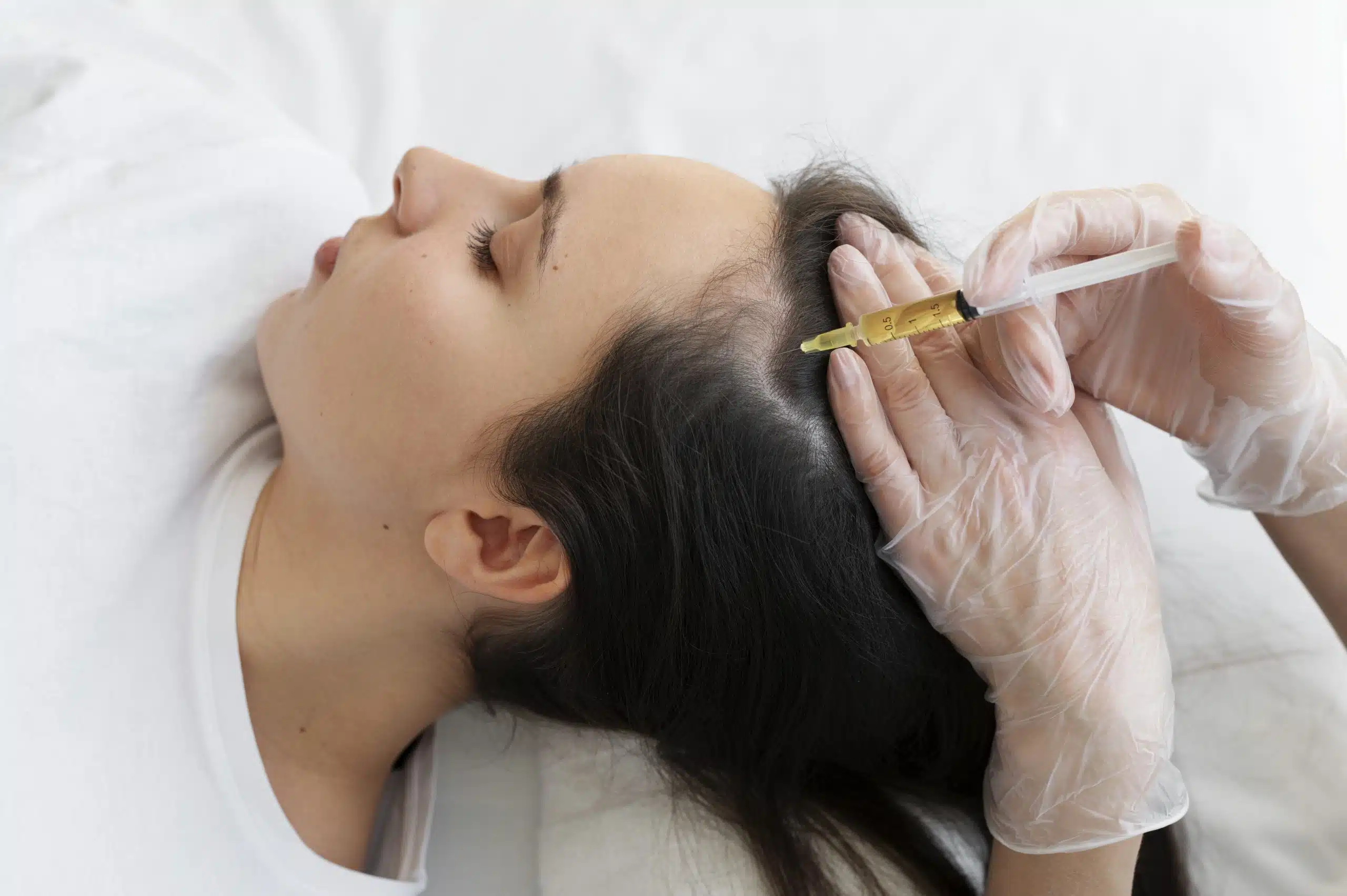
Bangalore's effect on this treatment is mostly a matter of timing and demand rather than technique. The city has no single hot season to plan around; humidity, long commutes and helmets keep scalp sweating in play through most of the year, which is why the problem here tends to be constant rather than seasonal. The treatment itself — doctor-placed micro-injections into the scalp, around 30 minutes, effect typically four to six months — does not change by postcode.
Does Bangalore's climate actually make this worse?
For a scalp that already sweats heavily, the local pattern gives it very little rest. There is no three-month peak to endure and then forget: the monsoon brings months of high humidity in which nothing on your head dries properly, and the milder stretches still involve the same commute in the same traffic. A scalp that soaks through a blow-dry in March will do the same in August for slightly different reasons.
That is the honest local case for Hair Botox as a treatment worth considering here. The benefit our patients describe is exactly this: with scalp sweating calmed, blow-dries and styling survive Bangalore commutes and workouts instead of collapsing by evening.
What does a two-wheeler commute do to a sweaty scalp?
It traps the problem under a helmet for the length of the ride. A helmet is a sealed, unventilated space held against the scalp, twice a day, often in stop-start traffic where there is no airflow at all — and that is a description of the conditions, not a diagnosis of anything. What patients report is consistent: the style survives the mirror and not the ride.
The same goes for anyone whose routine includes a gym session. The complaint we hear most often is a scalp that sweats so much that a blow-dry barely survives the commute, and roots that turn oily and flat by the end of every single day. Reduced sweat and sebum mean the roots stay fresher for longer, so you wash less often and strip the lengths less in the process.
What about Bangalore's hard water?
Here the honest answer separates two problems that get lumped together. Hard water is a real local complaint, and what people notice from it — the film, the roughness, the sense that shampoo never quite rinses out — is happening on the hair shaft and as buildup on the scalp surface. It is a water problem.
This treatment does not act on your water. It acts on your scalp's own output, calming excessive sweating and oiliness. Those are genuinely different inputs, even though they produce a similarly grim end-of-day result. Patients often arrive saying that scalp sweat and buildup are undoing every hair treatment they invest in, and the sweat half of that sentence is the half a scalp injectable addresses. If your issue is entirely the water, the fix belongs somewhere other than a clinic room.
Does year-round sun mean extra precautions?
Not ones we ask for. This is not an energy-based or resurfacing treatment, and we do not publish a sun-avoidance instruction for it — the mapped injection points sit on the scalp, largely under hair, rather than on exposed skin. Downtime is none to minimal, and most people return to their normal routine the same day.
If your doctor gives you a specific instruction for your session, follow that instead of anything you read here. Instructions written for your scalp beat general advice written for everyone's.
When in the year should I book it?
The useful answer is to work backwards from the interval rather than the calendar. The effect typically lasts four to six months, after which scalp sweating gradually returns to its earlier pattern and the treatment can be repeated — so realistically you are deciding which stretch of the year you most want covered, and the review appointment is where the next one gets timed.
For many people in this city the deciding factor is not weather at all. It is a wedding season, a run of client meetings, a return to the office after months of working from home, or the start of a serious training block. Say the date out loud at the consultation and let the doctor tell you how the timing works, rather than assuming an effect is available on demand.
Does the local routine change what the doctor needs to know?
It changes what you should describe. Weekly oiling, tight styles worn to keep hair off a sweaty neck, daily washing purely to manage oil, hair tied under a helmet for two hours a day — none of that is trivial background, and all of it helps the doctor read your scalp accurately. The assessment reviews your sweat and oil pattern, scalp health and medical history before anything is planned, and your routine is part of that pattern.
It is also where sequencing comes up. Hair botox is not a regrowth treatment on its own; if regrowth work matters to you, a calmer scalp complements protocols such as PRP or GFC, and the doctor may suggest pairing them after reviewing your scalp.
What should I expect after the session, here or anywhere?
The local part ends at the clinic door; the medical part is the same wherever you are treated. Small bumps, redness or tenderness at the injection points for a day or two is common and settles on its own, and a mild, short-lived headache can follow scalp injections. Very rarely, nearby muscles can feel temporarily weak, which is why a doctor maps the dose in the first place.
Contact the clinic rather than deciding for yourself what it means if that soreness is still there beyond a couple of days, if anything at an injection point is getting worse instead of quietly settling, if a headache does not pass off, or if you notice weakness in a muscle near the treated area. Call the branch that treated you and ask to be seen — an examination answers that question, and reading does not.
Where to start
Both our clinics are set up for this: Indiranagar and Bellandur, either of which can assess your scalp and tell you whether the treatment fits the problem you have described. Anyone with a neuromuscular disorder, and anyone pregnant or breastfeeding, should not have it, and the doctor confirms candidacy from your history before anything is booked.
Book a consultation — ₹500, waived off against treatment — and bring the specifics of your week. In this city, the commute usually explains more than the season does.