
Hair Botox for Men: What men ask that the marketing never addresses
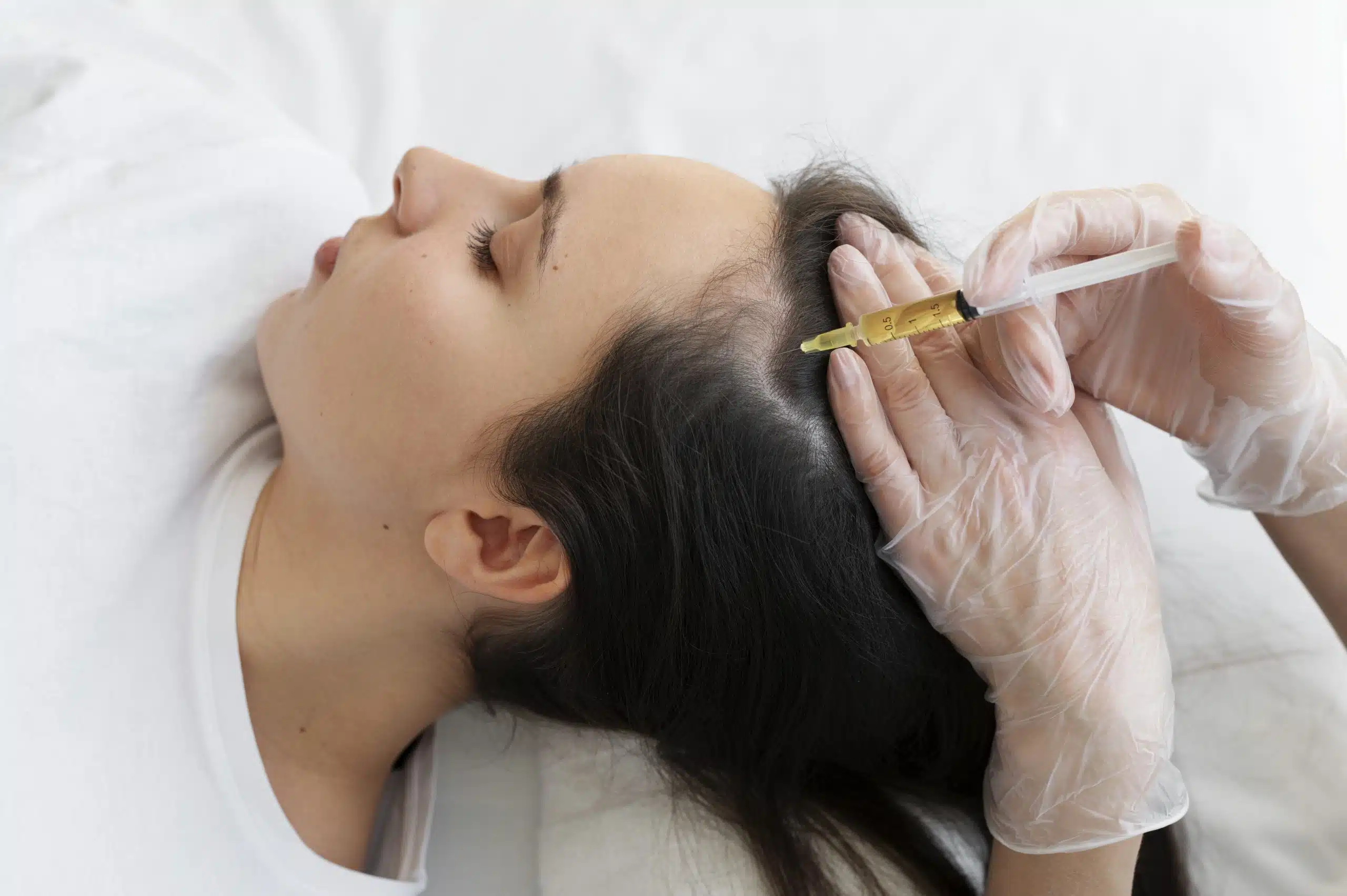
For men, hair botox is almost never a hair problem. It is a sweat problem. The treatment is a set of fine botulinum toxin injections placed into the scalp by a doctor, and its job is to quieten a scalp that sweats and oils heavily. It does not thicken, straighten, condition or regrow anything. If your complaint is a wet scalp under a helmet and roots that look greasy by 2pm, this is the right page.
That distinction is worth pinning down before anything else, because "hair botox" is also the name of a salon conditioning service that involves no botulinum toxin whatsoever and treats the strand rather than the skin underneath it. The two share a name and nothing else. Hair Botox at The Aesthetic Edge is the injectable one, given by a doctor. Below are the questions men actually put to the doctor once that is cleared up.
What do men usually come in complaining about?
Three versions of the same thing, mostly. The scalp that sweats so heavily a blow-dry does not survive the commute. The scalp whose roots have turned oily and flat by the end of every single day. And the man mid-way through some other hair investment who has worked out that sweat and buildup are quietly undoing it.
Bangalore adds its own accents to that list — a helmet on a two-wheeler in April, a gym at 7am and a client meeting at 10, an office that keeps the air conditioning at an ambitious temperature and a commute that does not. None of that is medically special. It just means men here tend to arrive having already tried three shampoos and a dry shampoo before considering that the problem might be the scalp rather than the product.
Will it change how my hair looks or feels?
Not directly, no. The injections go into the scalp and act on what the scalp is producing. The hair itself is not treated, coated, smoothed or altered, and nobody will be able to tell by touching it.
What changes is downstream. With scalp sweating calmed, styling that used to collapse tends to stay put through the day, and with less oil at the roots the hair holds its shape and looks fresher for longer. Men who wash daily largely to feel clean often find they can stop doing that, which is its own small improvement to the hair, since daily washing is not kind to it.
Will this do anything about my hairline or thinning?
No — and this is the answer worth reading twice, because it is the reason a good number of men book. Hair botox is not a regrowth treatment. It calms scalp sweat and oiliness and thereby supports scalp health; it does not address a receding hairline, a widening crown or a thinning density.
Hair loss is a diagnosis-first problem. What is causing it determines what, if anything, will help, and that is a doctor's assessment rather than a menu choice. Where regrowth work is appropriate, the clinic's protocols for it are PRP and GFC, and the doctor may pair one of those with scalp botox after reviewing the scalp — the logic being that a drier, calmer scalp is a better environment for follicles than a permanently sweaty one. The pairing is a clinical decision made after an examination, not a package to select in advance.
Does it hurt?
Less than men expect, in the main. Numbing cream goes on before anything else, and the needles are fine and the injections quick. The common description is a series of brief pinpricks rather than pain, and the whole appointment takes about 30 minutes.
Tenderness afterwards is more noticeable than the injections themselves, and still modest: small bumps, redness or soreness at the points for a day or two, settling without intervention.
Can I train, ride and be at work the same day?
Downtime is documented as none to minimal, with a normal routine the same day. That said, you leave with a written aftercare sheet covering the first 48 hours, and it — not a blog — is what specifies exercise, helmets and washing for your session. If you have a gym session or a long ride booked for that evening, say so in the room and get the answer from the person who did the injections.
Mention the helmet specifically. Men often do not, on the assumption that it is irrelevant; it is not, and it is much easier to plan around before the appointment than after it.
Is anybody going to be able to tell?
There is nothing to see. The injection points are in the scalp, they are small, and the redness around them is short-lived. Nothing about the treatment changes the shape of your face, the way your forehead moves or how your hair looks to someone across a desk.
If discretion is the reason you have been hesitating, that particular worry can be set down.
How often do I have to keep doing this?
The effect typically lasts four to six months. After that the scalp gradually returns to the sweat pattern it had before, and the session can be repeated. In practice that means planning for it two or three times a year, not monthly.
It also means the first session is not a life sentence. If you dislike the result — or, more commonly, decide the difference is not worth the repeat — the effect simply fades and you are back where you started.
What does it cost?
That figure is set at the consultation rather than published, because the dose is mapped to your scalp instead of taken from a fixed template, and what changes the number is how much scalp is being treated and how the doctor has planned the mapping for you. The consultation itself is ₹500, waived against treatment if you go ahead.
Be sceptical of a scalp injection quoted at a flat price before anyone has examined the scalp. The mapping is the treatment.
When is the answer no?
At consultation the doctor reviews your medical history before confirming you are a candidate, and there are clear situations where this treatment is not appropriate — a neuromuscular disorder among them. Botulinum toxin is a prescription medicine, and screening is not a formality.
Two practical notes on that. Bring an accurate list of what you take, including anything from a gym or supplement shelf, and mention any diagnosed muscle or nerve condition even if you consider it long settled. And afterwards, if the soreness at the injection sites is climbing rather than settling after the first couple of days, if you notice new heaviness or drooping around the brow or eyelids, or if a headache is severe or persistent, telephone the clinic rather than working out what it means yourself. That is what the number is for.
If the sweat-and-oil description above sounds like your scalp, book a consultation at Indiranagar or Bellandur and have a doctor look at it. If it turns out your actual problem is the hair rather than the scalp, you will be told that instead — which is the more useful outcome of the two.