
Hair Botox on Indian Skin: What Changes and Why It Matters
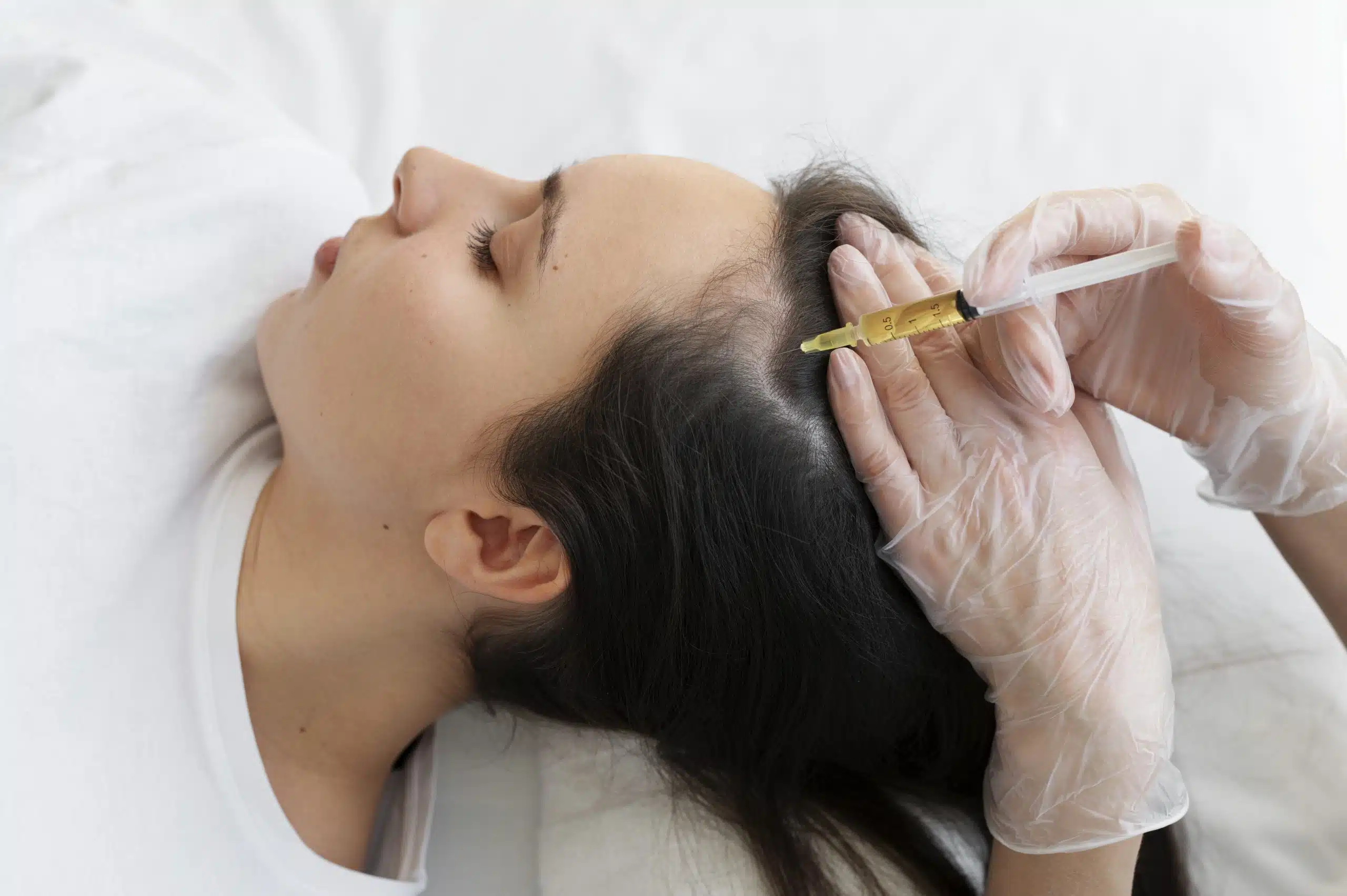
Deeper skin does not change what hair botox does or how the medicine behaves, because this is an injectable rather than an energy-based treatment — there is no light, no heat and no device setting to select for your tone. What richly pigmented skin genuinely changes is the healing side: how injection points settle, how readable redness is on your scalp, and which parts of your history the doctor needs before mapping a dose.
That distinction matters because most skin-tone advice online was written for lasers, and copying it across to an injection is simply wrong. Here is what actually applies.
Does having deeper skin change how the treatment works?
No. Hair Botox at The Aesthetic Edge is a doctor placing micro-injections of botulinum toxin into the scalp to calm excessive sweating and oiliness. The medicine acts on the glands and nerves involved in sweating; melanin plays no part in that mechanism, and there is no energy being absorbed by pigment. So there is no "setting" to adjust for Fitzpatrick IV, V or VI, and any clinic telling you otherwise has confused this treatment with a laser.
What is individualised is the map. Injection points and dosing are worked out by a doctor for your scalp rather than applied as a one-size template — but that mapping follows your sweat and oil pattern and your scalp health, not your complexion.
Then what does deeper skin actually change?
Healing at the injection points. Richly pigmented skin tends to respond to inflammation anywhere on the body by producing pigment, which is why a spot, a scratch or an insect bite so often leaves a dark mark behind long after the original problem has gone. That tendency is a property of the skin, not of any one treatment, and it is the honest reason skin tone is worth raising before a procedure that breaks the surface at all.
Our own documented experience of this treatment is that small bumps, redness or tenderness at injection points for a day or two is common and settles on its own. What we do not publish — because we do not hold the data — is any figure for how often injection points leave a lingering mark on deeper skin specifically. Rather than estimate one, we would rather you raise it at the consultation, where a doctor can look at how your skin has healed from past injuries and answer for your skin instead of for a category.
Will the injection points leave marks on my scalp?
The documented picture is short-lived: small bumps, redness or tenderness for a day or two, settling without intervention. Two things reduce the visibility of anything that does linger. The injections are fine and quick, and the mapped points sit on the scalp under hair, which is not skin that spends the day exposed the way a face does.
If you know your skin marks easily, or has left dark patches behind after acne, folliculitis or a scratch, say so at the assessment. Sweat and oil pattern, scalp health and medical history are all reviewed before anything is planned, and that is the moment for this information to arrive — not afterwards.
Why does redness read differently on richly pigmented skin?
Because erythema is genuinely harder to see. On deeper skin, inflammation often shows as a subtle darkening or a violaceous tone rather than the obvious pink flush that illustrated guides use, and on the scalp it may be hidden by hair as well. The practical consequence is that "does it look red?" is a poor self-check for you, and touch is more informative than sight: tenderness, swelling, warmth or a bump that is growing rather than settling.
None of that is for you to interpret. It is for you to report.
When should I contact the clinic?
Get in touch with us rather than waiting or diagnosing yourself if, after your session, the soreness or bumps at the injection points are still there beyond the couple of days we would expect, if anything at an injection point is spreading, warming or getting worse instead of quietly settling, if a headache follows and does not pass off, or if you notice any weakness in the muscles near the treated area.
We are not asking you to work out what any of that means — that is our job, and it needs an examination. We are asking you to tell us early, so a doctor who knows your map and your dose can look at it. Call the clinic or come in; either branch will find your notes.
Does the concern itself present differently on deeper skin?
The concern is not a pigmentary one, so the honest answer is that excessive scalp sweating and oiliness looks and feels much the same whatever your tone. The patient descriptions we hear are the same across the board: a scalp that sweats so much that a blow-dry barely survives the commute, roots that turn oily and flat by the end of every day, and scalp sweat and buildup undoing every hair treatment being paid for.
What can differ is the routine wrapped around it — how often hair is oiled, how tightly it is tied, how much washing is being done to manage the oil, and what those habits are doing to the lengths. Those are worth describing at the assessment, because they change the picture the doctor is reading even though they have nothing to do with skin tone.
What should I bring up at the consultation?
Bring the history that changes candidacy rather than the history that changes technique. Anyone with a neuromuscular disorder, and anyone pregnant or breastfeeding, should not have this treatment; the doctor reviews your medical history before confirming you are a candidate at all. Beyond that, mention how your skin heals, any scalp condition you are being treated for, and any regrowth work already under way — hair botox is not a regrowth treatment by itself, though a calmer scalp complements PRP or GFC protocols, and the doctor may suggest pairing them after a scalp review.
The session itself is unremarkable in any skin tone: numbing cream first, fine micro-injections across the mapped zones, around 30 minutes, and downtime that is none to minimal, so you return to your normal routine the same day. The effect typically lasts four to six months.
Book a consultation at Indiranagar or Bellandur — it is ₹500, waived off against treatment — and raise your skin's healing history at that appointment rather than reading a laser article and assuming it applies to a needle.