
Hair Botox Aftercare: The First Week, Day by Day
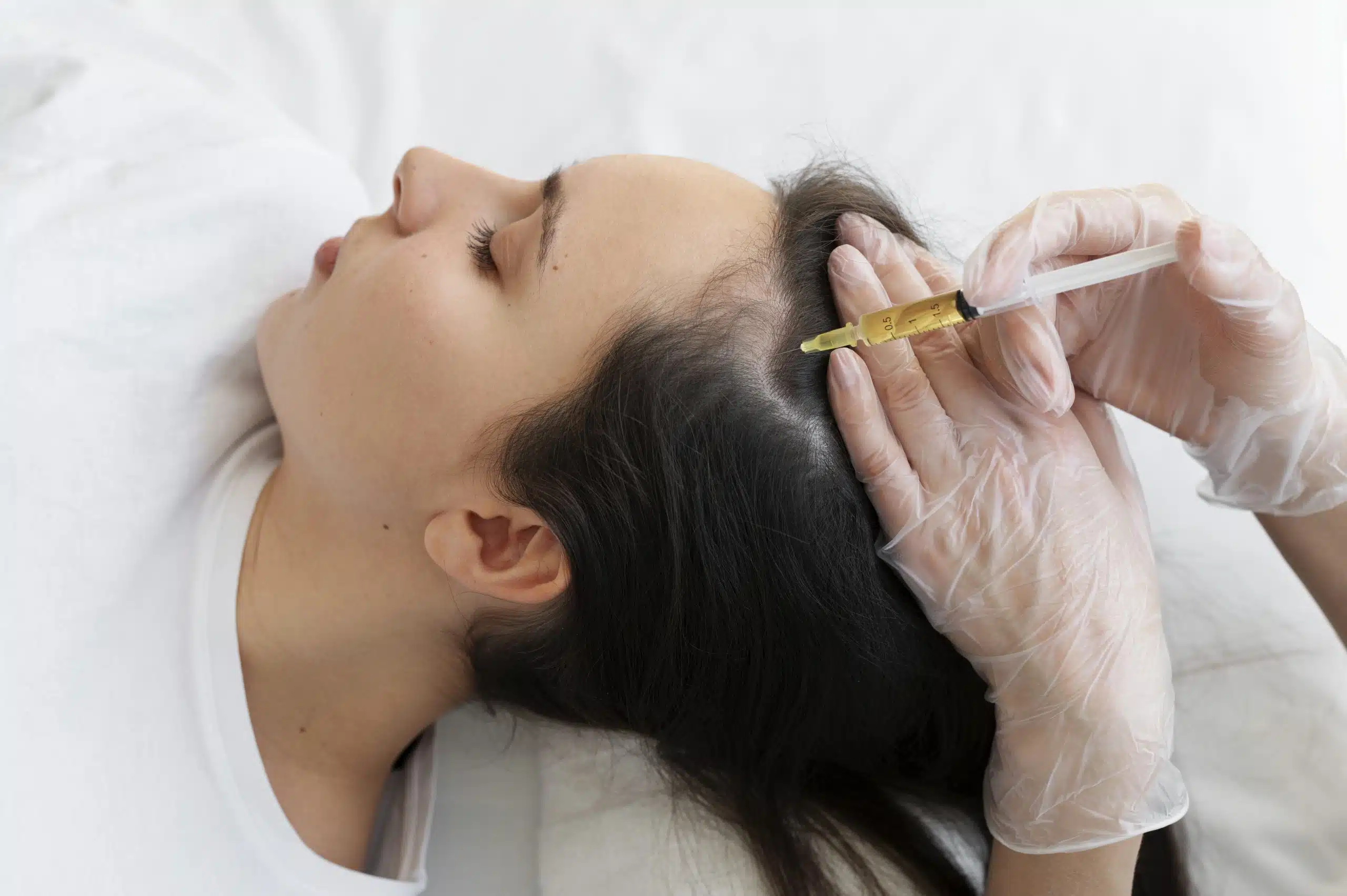
Recovery from a hair botox session is unusually undemanding. Downtime is none to minimal, and most people carry on with their normal routine the same day. Expect small bumps, redness or tenderness where the needles went in for a day or two, and possibly a short-lived mild headache. The effect itself builds over about two weeks.
So the honest headline is that there is not very much to do. What the week does have is a shape — a couple of uncomfortable days, then several quiet ones in which nothing appears to be happening and it is tempting to conclude the appointment was wasted. This is a walk through that week after Hair Botox at The Aesthetic Edge, and a note on the few things that are worth a telephone call rather than a wait-and-see.
One thing first. You leave your appointment with a written aftercare sheet covering the first 48 hours. That sheet, and whatever your own doctor added to it out loud, is the authority on the particulars for your scalp. Where anything below reads differently, theirs wins — they examined you and this page has not.
What does the rest of the treatment day look like?
Ordinary, for most people. The session runs around 30 minutes, downtime is none to minimal, and the usual plan is to go back to whatever you were going to do anyway. Nobody needs collecting and nothing needs cancelling.
What you may notice on the way home is the scalp itself: small raised points where the injections went, a little pinkness around them, and a scalp that feels tender if you press it. Numbing cream is applied before the injections, so it is fairly common for the tenderness to become more noticeable an hour or two later as that wears off, rather than during the appointment.
Read the 48-hour sheet before you get distracted by the evening. It is short, and it is the only document in this process written specifically about you.
What should days one and two feel like?
Tender, and then progressively less so. Injection-site soreness — small bumps, redness or tenderness at the points themselves — is common for a day or two and settles on its own without anything being applied to it.
A mild, short-lived headache can also follow scalp injections. It is a recognised effect rather than a sign that something has gone wrong, and it tends to pass on its own.
The direction of travel is what matters more than the intensity on any given morning. Soreness that is fading day on day is the ordinary picture. Soreness that is climbing is the thing to ring about, and that is covered below.
When can I wash my hair, style it or go back to the gym?
Follow the sheet, and this is deliberately the one section here that does not give you a number. Your clinic's written aftercare covers the first 48 hours, and washing, heat styling and exercise timing are exactly the sort of detail it exists to specify for your scalp and your session. Inventing a figure on a page that has not seen either would be worse than useless.
What is documented is the general shape: downtime is none to minimal and the expectation is a normal routine the same day. If you have a workout, a helmet commute or a wedding-week blow-dry in the diary within 48 hours, raise it in the room before you leave rather than working it out afterwards from a search result.
What should make me telephone the clinic instead of waiting?
Some things are worth a call rather than a week of watching, and none of them are for you to interpret at home. Contact The Aesthetic Edge if:
- the soreness, redness or swelling at the injection points is getting worse after the first couple of days rather than settling;
- you notice new weakness, heaviness or drooping in muscles near the treated area — the forehead, brow or eyelids;
- a headache is severe, or has not passed;
- the injection sites feel hot, or you develop a fever;
- anything about the scalp is worrying you enough that you are reading about it late at night.
Rare, temporary muscle effects near the injection sites are a documented possibility with this treatment, which is exactly why dose mapping is done by a doctor. The point of the list is not to tell you what any of it means — that is the clinic's job, with your notes in front of them — but to save you deciding in isolation whether it is worth mentioning. It is.
Separately, and stated plainly because botulinum toxin is a prescription medicine and understating it would be dishonest: difficulty breathing or swallowing, trouble speaking, or weakness spreading well beyond the treated area are not things to assess at home or sleep on. Seek urgent medical care. These are recognised warnings for botulinum toxin treatment generally, they are very rare, and they are written here so you know where the line sits — not because they are expected.
Days three to seven — is anything meant to be happening?
Not much, and that is correct. By the middle of the week the injection points have usually stopped announcing themselves, and there is nothing to apply, take or monitor. The scalp, meanwhile, is probably still behaving exactly as it did before the appointment.
This is the part of the week people misread. Nothing visible happening at day four is not evidence of a failed session; it is the timeline working normally.
When does the effect actually show up?
The change builds over roughly two weeks, so the first week is mostly the waiting half of it. Sweating and oiliness calm gradually rather than switching off, and the difference is usually noticed in ordinary situations first — a style that is still holding at the end of the day, roots that have not gone flat by evening, a wash you did not feel you had to do.
Once it has settled, the effect typically holds for four to six months, after which the scalp gradually drifts back towards its old pattern and the treatment can be repeated.
What if the first week has changed nothing at all?
Then it has done what a first week does. Judging this treatment at day seven is like judging a haircut in the mirror of the salon — too early to be a verdict on anything.
The proper checkpoint is the follow-up, where the doctor reviews how the effect has settled and whether anything about the mapping or dose should change next time. If you are genuinely unconvinced by then, say so there; that review exists partly to catch it.
Does any of this change if hair botox is part of a bigger plan?
Sometimes, and it is worth asking. Where scalp botox is being used alongside a regrowth protocol such as PRP or GFC, those treatments have aftercare of their own and their own spacing, and the sequence is planned by the doctor rather than assembled by you across two websites. The reason for combining them at all is that a drier, calmer scalp is a better environment for the follicles to sit in.
If you are weighing up a first session, or have had one and the week is not reading the way you expected, book a consultation at Indiranagar or Bellandur — ₹500, waived against treatment — and have someone look at the scalp rather than at a description of it.