
Hair Botox for New Mothers: Timing, breastfeeding and what to postpone
While you are breastfeeding, this treatment is not for you — pregnancy and breastfeeding are both on the list of reasons to avoid it, and a doctor confirms candidacy from your medical history before anything is planned. When it becomes appropriate afterwards is a decision made in the consultation room, not by a rule on a webpage.
That is the short version, and if it is the only thing you take from this page it is enough. What follows is the part that is more useful to a new mother: what the treatment is actually for, why it is very often not the thing the hair problem after childbirth needs, and which appointment is still worth making while the treatment itself waits.
Why is breastfeeding on the exclusion list?
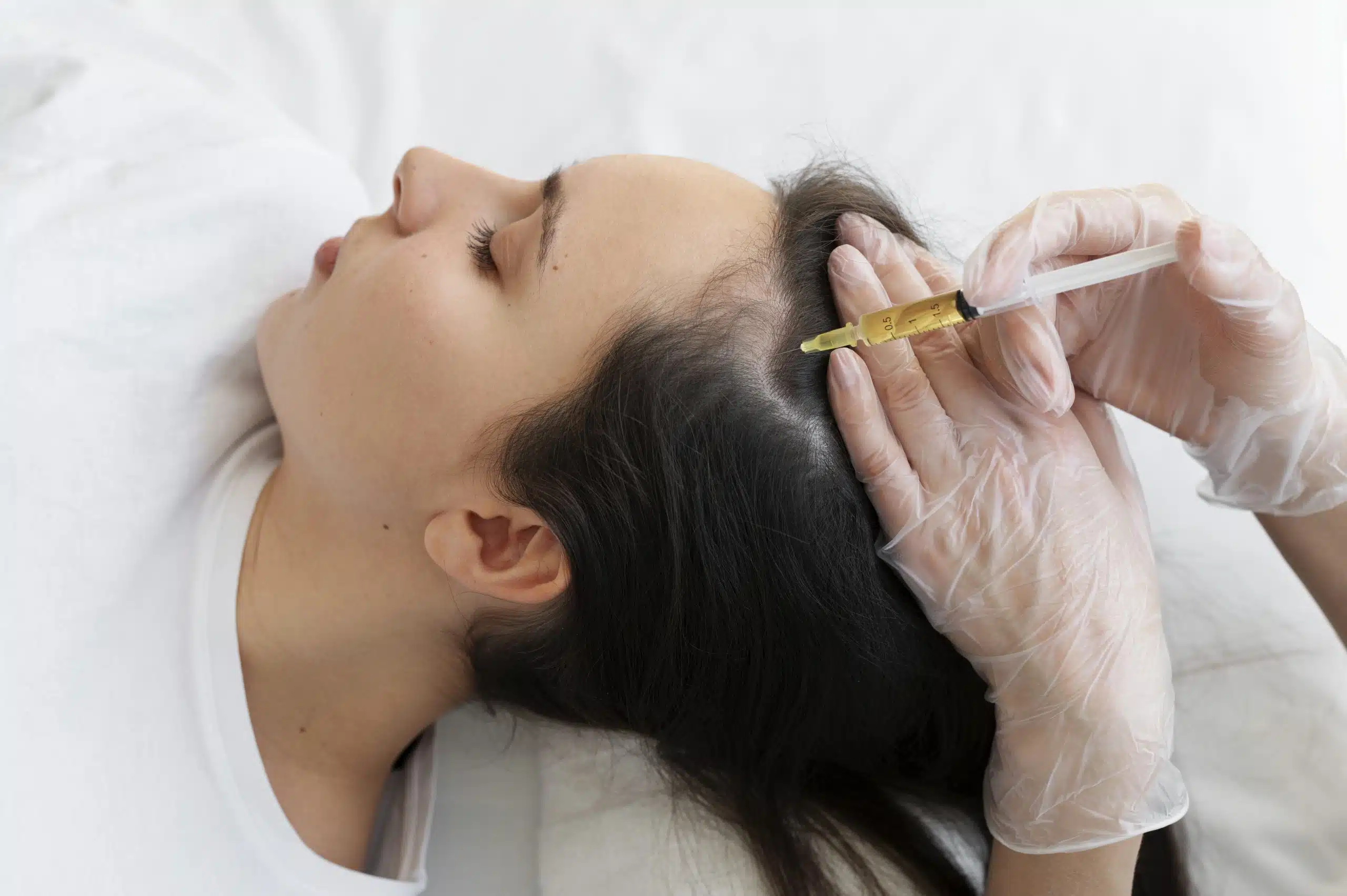
Because hair botox at The Aesthetic Edge is an injectable. A doctor places fine micro-injections of botulinum toxin into the scalp to calm excessive sweating and oiliness. It is not a topical mask or a conditioning treatment, whatever the name suggests elsewhere, and that is precisely why the exclusion list exists at all.
Two groups are named on it: anyone with a neuromuscular disorder, and anyone who is pregnant or breastfeeding. The doctor reviews your medical history at the consultation before confirming you are a candidate — so this is not a question you have to raise and hope someone listens to. It is part of the assessment.
Tell the clinic you are breastfeeding when you book, not when you arrive. Not because anyone will be surprised, but because it changes what the appointment is for, and everybody's time is better spent on the right conversation.
How long after I stop breastfeeding can I have it?
We are deliberately not putting a number here, and the reason is worth explaining rather than hiding.
A specific waiting period published on a page would be a clinical instruction given to someone nobody has examined, with no knowledge of how you are feeding, where you are in weaning, or anything else in your history. The timing and the suitability are both decided at the consultation. If you want an answer before you are ready to book, ask for it at the consultation and plan from there — that appointment costs ₹500, waived off against treatment, and asking "when, if at all" is a completely legitimate reason to take it.
What you can rely on from this page: nothing about the treatment changes for new mothers. There is no separate protocol, no gentler version, no shortened session. It is the same thirty-minute doctor-placed procedure with the same assessment in front of it, and either you are a candidate or you are not yet.
Is hair botox even the right treatment for post-pregnancy hair fall?
Very often, no — and this is the part most worth reading, because the two things get conflated constantly.
Hair botox is not a regrowth treatment. Its own description says so: it calms scalp sweating and oiliness, which supports scalp health, and for regrowth the doctor may pair it with something else after a scalp review. So if what has changed since your baby arrived is how much hair is coming out, this treatment is not aimed at that problem, and would not become the answer even once you were eligible for it.
Hair shedding after childbirth is common, and it usually settles on its own over time. Common and self-limiting is not the same as "ignore it" — but it does mean the most likely honest answer to "what should I do about this shedding" is different from the answer you would give about a treatment schedule. A doctor's assessment is what tells you which situation you are in, and that is not a judgement anyone can make from a photograph or a webpage.
For regrowth specifically, the treatments in that conversation are ones like PRP or GFC — and whether any treatment is appropriate for you right now is exactly the question the consultation exists to answer. Do not read their presence on this page as a suggestion that they are available to you while you are breastfeeding. Ask.
So what is hair botox actually for?
The problem it addresses is a scalp that sweats and oils more than you can work around. The recognisable version: a blow-dry that barely survives the commute, roots that turn flat and oily by the end of every single day, and the sense that scalp sweat and buildup are undoing whatever else you do for your hair.
That is a real problem, and for some new mothers it is genuinely the thing that has changed — daily washing, no time to style, a scalp that will not stay fresh. If that is your description rather than the shedding one, then this treatment is aimed at your problem. It is simply aimed at it later.
What is worth doing now, and what should wait?
Wait on: the treatment itself, until a doctor has confirmed the timing with your history in front of them.
Do not wait on: the conversation, if something about your hair or scalp is genuinely worrying you. Booking an assessment is not booking a procedure. The first step of the process is a review of your sweat and oil pattern, scalp health and medical history, and that step is useful entirely on its own — it is where you find out whether what you are seeing is the common post-pregnancy pattern, whether anything else deserves attention, and what a realistic plan looks like once your circumstances allow one.
And do not wait at all if something is wrong. If you have already had this or any other treatment and something is not settling the way it was described to you, contact the clinic rather than waiting for a scheduled follow-up.
What actually happens at that consultation?
It is short and it is a conversation. The doctor reviews your sweat and oil pattern, the state of your scalp and your medical history — which is where breastfeeding, and anything else you are managing, gets taken into account. If you are a candidate, injection points and dose are mapped for your scalp rather than applied from a template. If you are not a candidate yet, you leave knowing that, and knowing what would change it.
Bring the practical things with you: whether you are breastfeeding and roughly where you are in that, what you have noticed about your hair and when it started, and anything you have already tried. Bring the question about timing explicitly — it is the one this article deliberately will not answer for you, and the room is the right place for it.
In short
Breastfeeding rules this treatment out for now. Post-pregnancy shedding is a different problem from the one it addresses, and usually settles by itself. The scalp-sweat problem it does address is worth treating when the time is right — and the assessment that tells you when is available whenever you want it.
Book a consultation at our Indiranagar or Bellandur clinic when you have the time and the inclination, and say up front that you are breastfeeding. It changes the appointment into the right one.