
GFC vs PRP for Hair Loss: How We Decide Which One a Patient Gets
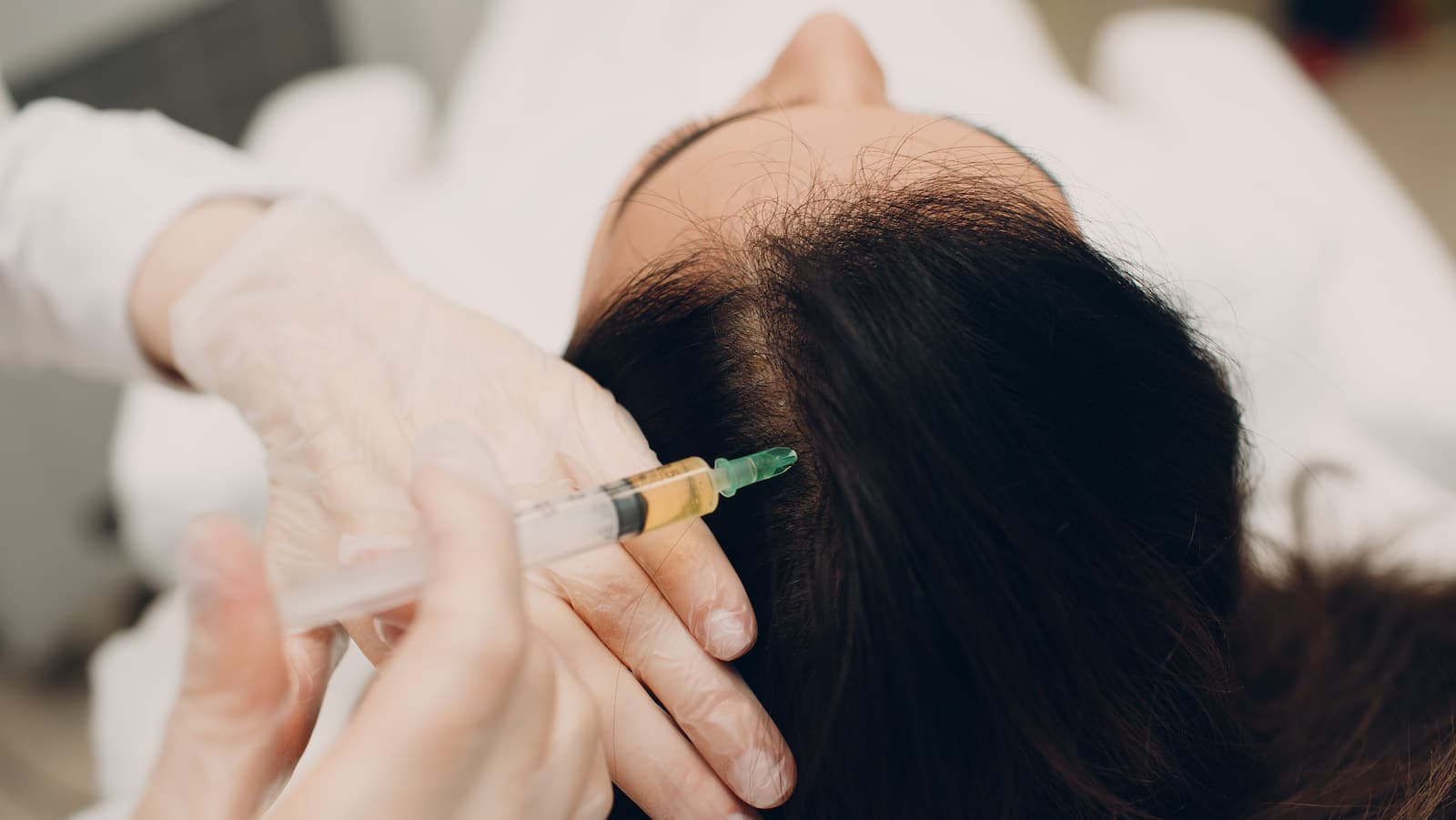
GFC and PRP are the two blood-derived scalp treatments most patients have heard of, and the difference between them comes down to processing. PRP injects the concentrated platelet fraction of your own blood; GFC — Growth Factor Concentrate — processes that sample further to isolate the growth factors the platelets release, rather than injecting the platelet fraction whole. In practice, that extra concentration is why a GFC course is usually shorter than a comparable PRP course — and why the choice between them is a clinical decision made at a consultation, not a menu decision made at the front desk.
If you have been comparing the two names across clinic websites and reels and ended up more confused than when you started, this post is the companion to our earlier PRP piece: what GFC Hair Loss Treatment actually is, who suits it, and the diagnostic step that decides which of the two a patient gets.
What exactly is GFC, and how is it made?
GFC is prepared from a small sample of your own blood — around 10ml is drawn, processed in-clinic, and returned to your scalp as a series of fine injections into the areas that are thinning. Nothing synthetic is introduced at any point: the entire preparation comes from you. The processing step is what separates it from PRP Hair Regrowth Treatment — instead of concentrating the platelets and injecting them whole, GFC isolates the growth factors those platelets release, so what reaches the follicle is the more concentrated preparation.
The session itself is short and undramatic. Anaesthetic cream goes on for 30 to 45 minutes beforehand, so most patients describe pressure rather than pain; the procedure takes about 30 minutes including preparation; and there is no recovery period — normal activity the same day, which for most of our patients means going straight back to the office. Mild soreness, redness or itching for a couple of days afterwards is normal. Every session at The Aesthetic Edge is performed by a doctor, always.
Who is a good candidate for GFC rather than PRP?
GFC acts on follicles that are weakened but still active — which makes the earlier and moderate stages of pattern hair loss, in both men and women, the strongest candidates. That single sentence carries the most important idea in this whole comparison: both treatments support struggling follicles; neither can work on follicles that are already gone. The earlier the stage of loss, the more there is to work with.
This is why the honest answer to "which is better, GFC or PRP?" is that the question is framed wrongly. The right question is which one suits your scalp, and that depends on what a doctor finds when they actually examine it: how much active follicle remains, how advanced the pattern is, and what your hair-fall history looks like. Both treatments start from your own blood; which preparation your scalp gets is decided at consultation, not picked from a price list.
It is also worth saying that not all hair fall is pattern loss in the first place. Shedding that follows a stressful season, a crash diet, or an illness behaves differently from progressive thinning at the crown or hairline — which is why the consultation begins with diagnosis rather than with a syringe. Our broader Hair Fall Treatment page covers that diagnostic side in more detail; GFC and PRP are tools within that process, not substitutes for it.
How many sessions does a GFC course take?
Four to six sessions is typical, spaced by your doctor, with maintenance roughly one session every two to three months afterwards. Because GFC is the more concentrated preparation, its course is usually shorter than a comparable PRP course — one of the practical reasons patients with packed Bangalore calendars often end up on it. A 30-minute session with no downtime fits into a working day; a shorter overall course means fewer trips through Silk Board or ORR traffic to get to them. Both our Indiranagar and Bellandur clinics run these sessions, so most patients can pick whichever branch sits closer to home or work.
Importantly, the number is not fixed at the start. Protocols are reviewed at the three-month mark and adjusted from there — which brings us to the part of this treatment we think matters most.
How will you know whether it is actually working?
Because the change is measured, not recalled. Scalp photographs are taken before the first session, and comparison photographs are taken at three months — so the review is a side-by-side look at your own scalp against its own baseline, not a memory test about whether the parting looked wider in March.
Set your expectations by the biology. Reduced shedding is usually the first change patients notice — fewer hairs on the pillow and in the shower drain, often before anything looks different in the mirror. Visible density takes months, simply because hair grows slowly. And an honest clinic will tell you plainly: regrowth cannot be promised, because it depends on how much active follicle remains. What can be promised is a doctor-led process — proper diagnosis, a preparation matched to your scalp, and a measured review that tells you truthfully whether to continue, adjust, or stop.
The consultation is the real answer
Everything above narrows to one step: a doctor looking at your scalp. That examination is what decides between GFC and PRP, how many sessions to plan, and whether an injectable course is even the right starting point for the kind of hair fall you have. It is a short appointment, and it replaces months of second-guessing between treatment names.
If your parting has been widening, your crown is thinning, or the shedding has simply gone on longer than a bad season should, book a consultation at The Aesthetic Edge — Indiranagar or Bellandur, whichever is easier to reach. Bring your questions about GFC and PRP both; the doctor will tell you which one your scalp actually calls for.