
Dermal Fillers on Indian Skin: What Changes and Why It Matters
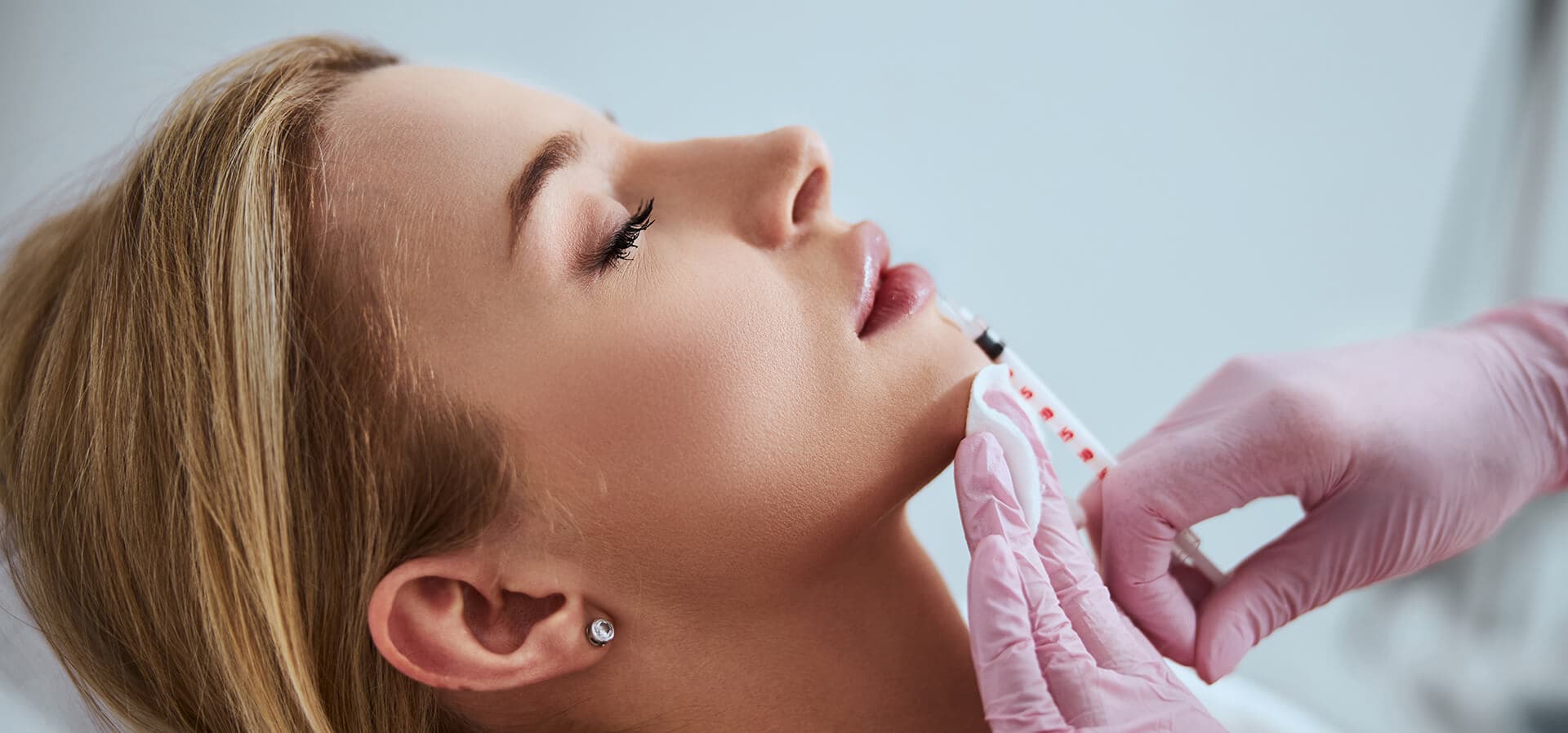
For most treatments in this clinic, skin tone changes the settings. For dermal fillers it changes the conversation instead. A filler is a gel placed under the skin; it does not rely on light or heat, so the wavelength-and-fluence planning that governs laser work on Fitzpatrick IV to VI does not carry over. What genuinely differs on deeper skin is which concerns bring people in, and how carefully one of them has to be sorted out before anyone injects.
That is a less dramatic answer than most articles on this subject give, and it is the accurate one. Here is what it means in practice.
Why does skin tone matter less for a filler than for a laser?
Because of what each treatment acts on. Energy-based devices are absorbed selectively by pigment, which is exactly why phototype drives device choice, settings and spacing in laser and peel planning — get it wrong on richly pigmented skin and the pigment itself is what responds.
Nothing in a filler appointment works that way. The gel is placed mechanically at a chosen depth to restore support the face has lost. There is no light being absorbed and no heat being delivered, so there is no equivalent wavelength decision to get right.
What replaces it as the thing most likely to determine your outcome is anatomical judgement: which product, at which plane, in what volume, at each individual injection site. That is the doctor's call, and it is the part of this treatment that most decides whether it goes well — for any skin tone.
Then what does change for Indian patients?
Chiefly which questions arrive at the door. Two come up far more often than the rest.
Under-eye darkness. This is the big one, and it is where the risk of a wasted appointment sits. Under-eye filler — tear trough filler, to use the anatomical name for the groove itself — treats hollowing and the shadow that hollowing throws across the area. Darkness produced by pigment sitting in the skin is not the same condition and does not respond to volume placed beneath it.
On deeper skin the two frequently coexist, which is precisely why they must be separated at examination rather than assumed. If some of your under-eye darkness is shadow and some is pigment, restoring the hollow addresses one component and leaves the other, and you deserve to be told that before you decide, not afterwards. Any clinic that answers "yes, filler will fix your dark circles" without looking closely has skipped the only step that mattered.
Post-acne texture. Rolling and depressed scars sit below the level of the surrounding skin, and lifting a depression can make it read as less noticeable. That is genuinely something filler can do — but it applies to certain scar types and not to others, and it is a judgement made by examining the scars themselves rather than by describing them over a phone.
Does anything about bruising or healing differ?
Bruising and tenderness at the injection site are a normal possibility with any filler, on any skin, and they typically resolve within a few days. Blood thinners and fish oil make them more likely, which is why both are on the list of things to disclose and to pause around your appointment.
How a bruise presents and how long it takes to stop being noticeable on your own skin is a fair question to put to your doctor at consultation, and a better question than any general rule an article could offer you. Ask it, particularly if you are scheduling around an event.
Swelling and redness in the first hours to days are very common, especially around lips and eyes, and generally settle within one to two days. Most people recover fully within that window. If the product feels uneven in those first days, report it rather than kneading it yourself — hyaluronic acid fillers can be adjusted, or dissolved with an enzyme injection if that is what is needed.
Are the aesthetic goals different?
Often, yes — and this belongs in the consultation rather than being assumed.
A great many patients here are not asking for fullness. They are asking for definition: a cleaner jawline, a stronger chin, a midface that does not look flat and tired in photographs. Filler placed along a jaw or at the chin can sharpen a contour in controlled, measured amounts, which is a different brief from adding volume for its own sake, and it should be stated plainly rather than left for the doctor to infer.
Say what you want in your own words, including what you do not want. If your concern is loose tissue in the lower face rather than lost volume, a thread lift is the more relevant conversation. If it is lines that appear only when your face moves, a wrinkle relaxer addresses the muscle causing them, and no amount of filler will. Sorting your concern into volume, movement or skin quality is the first step of the appointment for exactly this reason.
What should you ask before anything is injected?
Four questions, and none of them is impolite.
Ask whether what you are seeing is shadow or pigment, and expect a specific answer. Ask which product is going in — Juvederm and Restylane are the established hyaluronic acid families, with area-specific formulations such as Volbella and Kysse for lips — and ask to see the sealed box opened in front of you before anything is drawn up. Ask whether the filler in your plan is reversible, and whether the clinic keeps the reversal agent on site. Ask who is injecting.
The rare complications are the reason those questions are worth asking. Infection, allergic reaction, and blockage of a blood vessel are uncommon with fillers but they are real, and they are why this treatment sits with a doctor who can recognise and manage them rather than with whoever is cheapest.
What does it cost and how long does it hold?
Treatment starts from ₹14,999 per treatment. Fillers are supplied in pre-filled syringes, usually one millilitre, and how many your plan needs depends on the area and on how much volume has actually gone — a jawline and a lip are rarely the same figure. The plan is confirmed with you before any box is opened.
The effect lasts roughly six months to two years, varying with the product, the site and your own metabolism. Your doctor will give you a narrower expectation for your specific plan. The consultation is ₹500, waived against treatment.
There is no particular age at which this becomes appropriate. It depends entirely on what has changed in your face — and if nothing structural has, you should hear that instead of a quotation.
Read the dermal fillers page for the full picture, then book an appointment and bring the under-eye question with you if that is what brought you here. It is the one worth resolving first.