
Crooked, Crowded or Gapped Teeth: What Actually Works, and What Only Sounds Like It Does
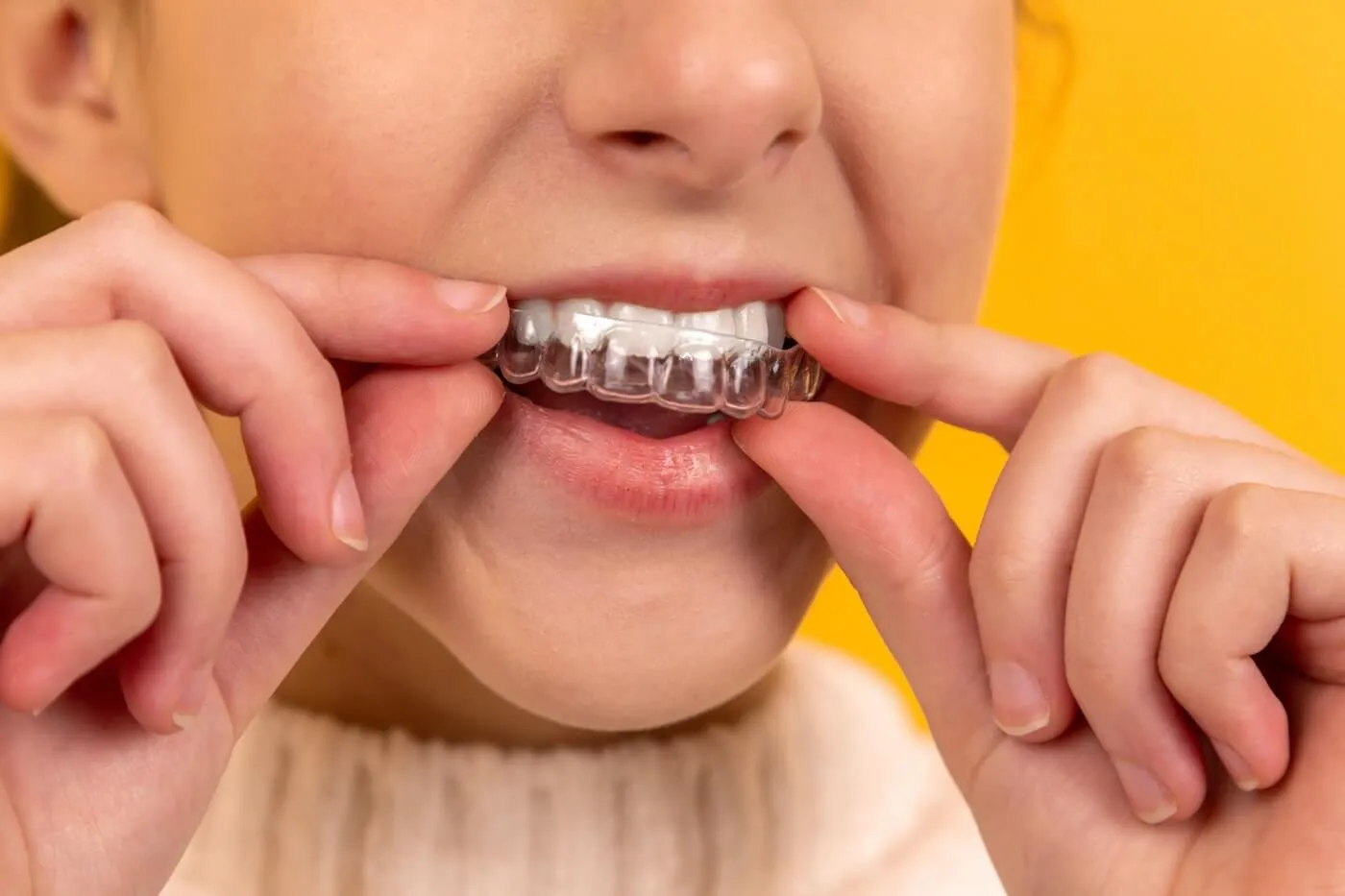
Teeth move through bone only under steady, gentle pressure applied over months, which is why the answer to crowding, a gap or a tooth sitting behind the others is orthodontic: fixed braces, or removable clear aligner trays. Which of the two suits you is decided by what needs correcting and whether your bite is involved — not by preference. Everything else changes how teeth look, not where they sit.
Nothing on this page can tell you which route is yours. It can tell you which questions decide it, and where the shortcuts quietly fail.
Does it matter why my teeth are crooked?
Less than most people expect. For planning purposes what matters is the present tense: which teeth are out of position, in which direction they need to travel, whether the bite is part of the problem, and whether the gums and supporting bone are healthy enough to start — that last one is checked before treatment begins, at any age. There is no upper age limit here; adults are treated routinely.
One history worth mentioning, because it comes up constantly: teeth that were straightened once and have drifted since. Teeth move back toward their original positions after treatment if a retainer is not worn as instructed, and that is the most common reason a finished result is lost. If that is your story, you are not starting from scratch, but you are starting from an assessment all the same.
Is this only about how it looks?
No, and this is the part that gets skipped. Most people come in for the way their teeth look, which is a perfectly legitimate reason — but three functional things ride along with alignment.
How your teeth meet. Overbite, underbite, crossbite and open bite are bite problems, not cosmetic ones. Correcting them spreads chewing force more evenly across the teeth.
Uneven wear. Teeth that meet badly wear unevenly and can chip or become sensitive over time. Aligning the bite takes that concentrated load off individual teeth.
Cleaning. Overlapping teeth trap plaque exactly where a brush and floss cannot reach, which raises the risk of decay and gum inflammation. Straight teeth are simply easier to keep clean.
So if the crowding does not bother you aesthetically, that is fine — but it is still worth having the bite looked at rather than assumed to be fine.
What actually moves teeth?
Two appliances, both working on the same principle and each with a real domain.
Fixed braces. Brackets bonded to the teeth and connected by a wire, applying continuous pressure. Typically worn for around 18 to 36 months depending on the case. Braces handle a wider range of complex movements, which is why some cases can only be treated properly this way.
Clear aligners. A series of removable custom trays, swapped every few weeks, each moving the teeth a planned increment. For suitable cases, treatment runs roughly 6 to 18 months. They are near-invisible and are taken out to eat and brush, which is why they suit adults who do not want fixed brackets at work. Invisible aligners, invisible braces and clear aligners are three names for the same thing; Invisalign is the brand of clear aligner we provide.
The single most important sentence in this section: aligners only move teeth while they are actually in your mouth. They are designed to be worn for the large majority of the day and night, and inconsistent wear extends treatment. That is not a caveat, it is the mechanism.
Which appliance is right for you depends on the type and severity of the misalignment, your bite and your routine — and a dentist should tell you honestly if aligners are not suitable for your case rather than fit them because you asked. Both routes sit under braces and aligners, and both are performed by a dentist, always.
What only sounds like it works?
Straightening yourself at a distance. Any route that issues trays without an examination, X-rays and a scan or impressions cannot know whether your bite is involved, how far each tooth has to travel, or whether your gums and bone are healthy enough to be moving teeth at all. Those are the inputs the plan is built from; skipping them does not make them optional.
Treating the shade instead of the position. Whitening changes colour. Veneers and crowns change shape and surface. Neither moves a tooth, so neither resolves crowding, a rotation or a bite that does not meet. They may well belong in your plan — a smile makeover is precisely a sequenced combination of treatments, alignment included, decided at assessment rather than in advance — but they are not substitutes for alignment.
Waiting to see whether it settles. Crowding and drift do not resolve themselves, and the cleaning problem they create compounds quietly. Waiting is a decision, not a neutral option.
Choosing the appliance before the assessment. The commonest version of this is arriving certain you want aligners. It is a reasonable preference and often a workable one — it is simply not information anyone has yet.
What does the process actually look like?
Four stages. An orthodontic assessment first: examination, X-rays and impressions or a digital scan to map where your teeth currently sit and how the bite works. Then a plan setting out which appliance suits the case, the expected duration and what the finished result should look like. Then fitting and active treatment — brackets bonded or the first trays issued, with teeth moved in stages through regular adjustments or tray changes. Then retention: a retainer, fitted to hold the teeth in their new positions long-term. The retainer is part of the treatment, not an optional extra.
Consultation is ₹500, waived off against treatment.
Expect some soreness for a few days after braces are fitted or tightened, and after each new aligner tray; it settles on its own. Brackets and wires can rub the inside of the cheek or lip early on, and orthodontic wax helps until the mouth adapts. Fixed braces also raise the cleaning demand considerably — without careful brushing and flossing there is a real risk of decay and white marks on the enamel. Contact the clinic if a bracket or wire comes loose or is digging in, if soreness carries on well beyond a few days, or if you cannot keep the appliance clean.
Start with the assessment, not the appliance
If your front tooth sits behind the others, or a gap has bothered you since school, or your teeth simply do not meet properly when you close your mouth, the useful first move is having someone look at all three of those things at once. Book a consultation at The Aesthetic Edge in Indiranagar or Bellandur, and find out what your case actually needs before deciding what you want.