
Combining PRP Vampire Treatment and Microneedling with Dermapen: Order, Spacing and Why
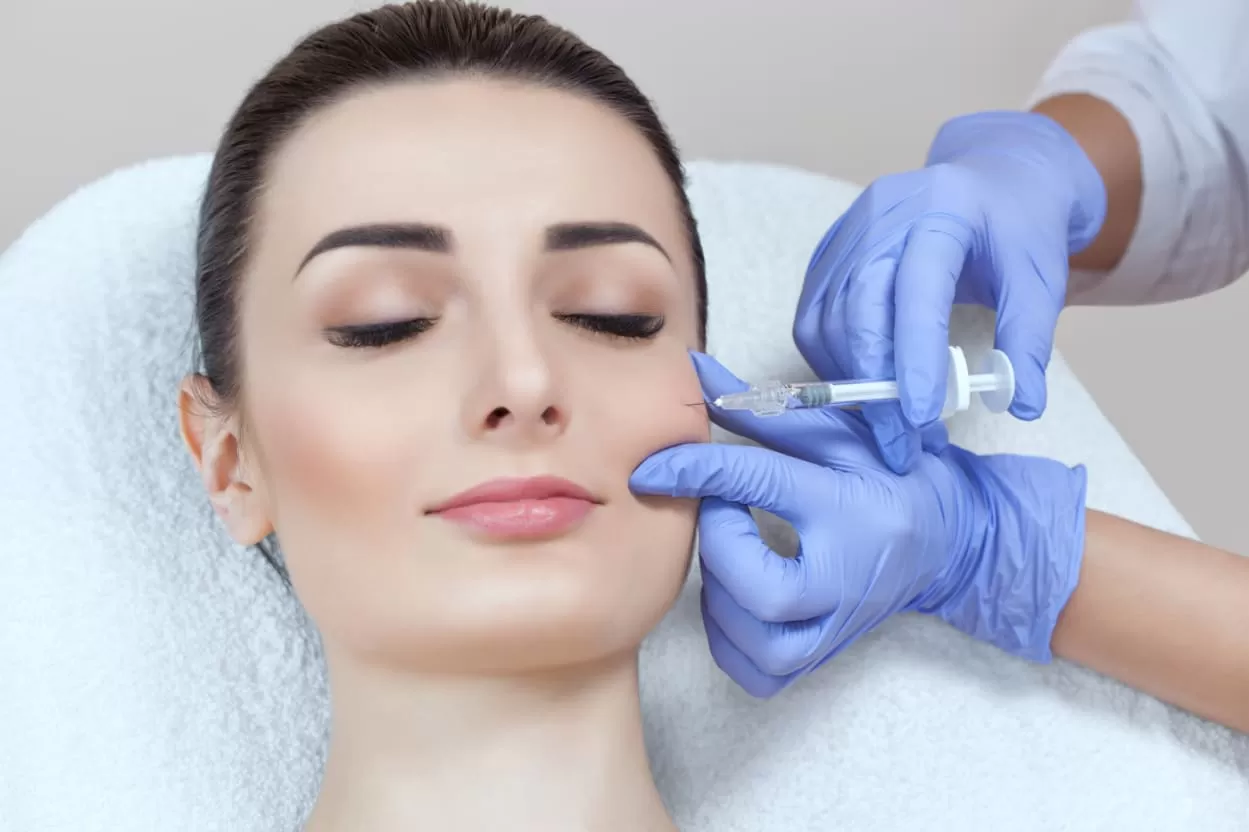
Microneedling and PRP are two separate treatments that are often run together, and the reason is mechanical: a Dermapen pass opens controlled micro-channels, and platelet-rich plasma is delivered superficially across that same skin. One supplies the repair signal, the other concentrated growth factors. Order and spacing are set at consultation, because the two courses are not the same length.
This article is written for the reader who has already decided microneedling makes sense, and is now looking at "with PRP" on a price list and wondering whether it is worth the addition.
Why are these two combined at all?
They are aimed at the same layer, by different routes.
Microneedling with a Dermapen creates controlled micro-channels so the skin repairs itself with new collagen and elastin. The needle depth is set to reach the layer where collagen and elastin are made — shallower for texture and tone, deeper for scarring. Nothing synthetic is placed in the skin; the result comes from your own repair response.
The PRP vampire treatment takes a small sample of your blood, spins it in a centrifuge to concentrate the platelets and the growth factors they carry, and returns that platelet-rich plasma to your skin to prompt collagen production. Because the material is yours, there is no foreign product and nothing to react against.
So both work through collagen remodelling in the dermis, and both are aimed at overlapping problems — acne scarring most obviously, along with firmness and texture. Combining them is not two treatments for two complaints. It is two inputs to one repair process, which is exactly why the order and interval are a clinical decision rather than a menu preference.
Which comes first, and can they be done in one sitting?
This is the part where we are going to be less definite than you might want, on purpose.
What the treatment pages document is this: a Dermapen pass leaves micro-channels that are open for a few hours, and PRP is delivered superficially across the treated area. That is the mechanical relationship most people are reasoning from when they ask about order.
What the pages do not set out is a fixed combined protocol — which comes first on the day, whether both happen in one sitting, and how the two courses are interleaved. That is set by your doctor after an assessment, and it varies with what is being treated. Deep acne scarring and general skin quality are not the same job, and they do not always call for the same sequence.
We would rather say that plainly than publish a schedule and have you plan around it.
How long does a combined appointment take?
Longer than either alone, and the numbing is why.
Microneedling uses topical anaesthetic applied for fifteen to twenty minutes before the session. PRP uses topical anaesthetic applied about forty-five minutes beforehand, and the blood draw and centrifuge step happen during that window.
Practically, that means a combined appointment is built around the longer numbing time, not the shorter one. Do not book it against a hard stop. In Bangalore that is worth saying twice — a course is several visits, and an appointment you have to leave halfway through the numbing window is a wasted trip across the city.
How many sessions is a combined course?
The two courses are not the same length, which is the second reason the plan has to be individual.
Microneedling is typically six to eight sessions, depending on the concern. PRP is around five to six sessions for a full course. Both are spaced to let collagen remodelling complete between visits, and in both cases the real change is cumulative — many patients see something after the first session, but the improvement builds across the course over months.
Your doctor sets the number after assessing what is being treated. If someone quotes you a combined course length without having looked at your skin, that number came from a price list rather than from you.
How do I prepare when both are involved?
Both pages carry preparation rules, and they overlap without being identical:
- Microneedling: stop blood thinners for a week and acids or retinol for two weeks; leave six to twelve weeks after any laser procedure; protect the area from the sun beforehand.
- PRP: stop blood thinners and anti-inflammatories for seven days beforehand, and review all your medication with your doctor.
Read those together and the sensible conclusion is not to assemble your own combined list from two web pages. Ask for one list, from the person who is treating you, and follow that. The anti-inflammatory rule in particular is the kind of thing people miss because it sounds like a painkiller instruction rather than a treatment instruction.
What is recovery like?
Plan for the longer of the two, and for the union of both aftercare lists.
Microneedling leaves redness, mild swelling and some flaking, usually settling within a day, with occasional light bruising at deeper settings. PRP leaves redness, swelling and pinpoint bleeding, typically settling within a day or two, and some patients bruise lightly at the blood-draw site as well.
The aftercare instructions stack rather than cancel:
- Do not wash the face for four hours after microneedling — the micro-channels are open during that window, and this is the single instruction that most protects against infection.
- Use the moisturiser and antiseptic cream you are given, and keep to lukewarm water for 48 hours.
- SPF 50 or higher, daily. Freshly treated skin burns and pigments more easily after either treatment, and no direct sun for at least 24 hours after PRP.
- Clean bed linen, no picking, and no makeup for the first day.
- Skip strenuous exercise for two days, and avoid other skin treatments until your doctor clears them.
That last line matters more in a combination than it looks. If you are running two treatments together, "other skin treatments" includes the peel or facial you were about to book because your skin felt flaky.
What can rule the combination out?
Either treatment's exclusions rule out the combination, so the list is the union of both.
Neither is done in pregnancy or breastfeeding. Microneedling is avoided with active acne, active herpes, and moderate-to-severe chronic conditions such as eczema or psoriasis. PRP is avoided while taking blood-thinning medication and during a course of antibiotics, and blood disorders and some medications affect whether platelets can be usefully concentrated at all.
Both treatments necessarily break the skin, which is why both are performed by a doctor under sterile conditions with single-use tips. That is not a premium feature — it is what keeps infection risk low in procedures that open the skin by design.
What should I watch for afterwards?
Redness, mild swelling, flaking and pinpoint bleeding in the first day or two are expected, and they settle.
Spreading redness or increasing pain is not part of that picture. Report it — contact the clinic rather than waiting to see whether it improves. The same goes for redness that is still there well beyond the day or two the aftercare describes. Anything that does not settle the way you were told it would is worth a phone call, and no one at either clinic will think you are overreacting.
Do I actually need both?
Not necessarily, and it is a fair question to put to your doctor in those words.
Microneedling on its own is documented as one of the more useful treatments available for acne scarring, open pores, stretch marks and uneven texture. PRP adds concentrated growth factors from your own blood, and it adds a blood draw, a longer appointment and a higher price. Whether that addition earns its place depends on what you are treating and how your skin has responded so far.
The honest way to find out is an examination, not an article.
Book a consultation — ₹500, waived off against treatment — and have the sequence decided for your skin rather than in advance.