
Combining Botox and Dermal Fillers: Order, Spacing and Why
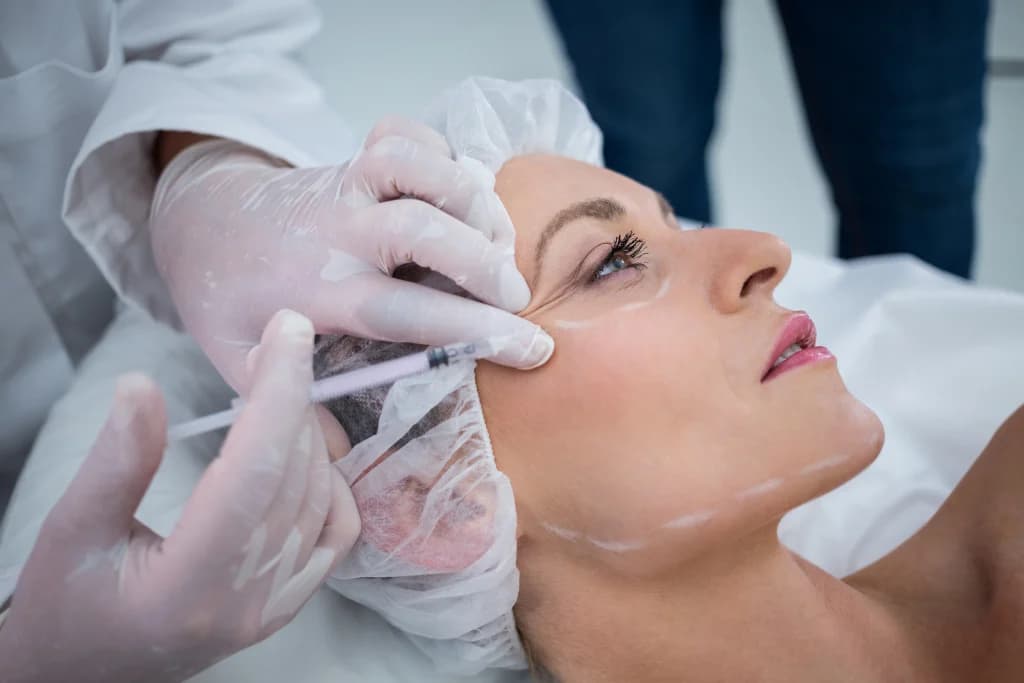
A wrinkle-relaxing injectable and a dermal filler solve two different problems and are often used together — one reduces the muscle movement that creates expression lines, the other adds volume where something is missing. Because their results appear on completely different schedules, they are frequently staged rather than done in a single sitting. Neither protocol here fixes an order or an interval; both are decided at your consultation.
If someone has quoted you a fixed sequence over the phone, they have not seen your face yet.
What is each injectable actually for?
Botox is aimed at movement. It temporarily relaxes the muscles behind expression lines, so the skin over them creases less — horizontal forehead lines, the vertical frown lines between the brows, crow's feet at the outer corners of the eyes. It reduces something.
Dermal fillers are aimed at structure. They are gel-like injectables placed beneath the skin to restore volume that has been lost, soften deep creases and refine contour. Cheeks, temples and the area under the eyes lose fat and bone support with age, and filler replaces that support directly. It adds something.
That difference is not a marketing distinction. A crease that stays on your face when it is completely still does not respond to a muscle relaxer, and a line that only appears when you frown is not a volume problem. Using the wrong tool on the right problem is what makes results look done.
Is a "liquid facelift" one procedure?
Not as a defined treatment with a fixed recipe. The phrase is shorthand for a plan that uses injectables across several areas of a face rather than treating one line. What goes into it — which areas, which product, how much — is a set of clinical decisions made after an assessment, and it is entirely reasonable for that plan to be delivered across more than one appointment.
Which one is injected first?
Neither core protocol at this clinic states an order, so the honest answer is that it depends on your face and your doctor's judgement. What is documented is how differently the two behave once injected, and that is what the sequencing question really turns on.
Filler shows almost immediately, with the final result at one to two days. Botox is slow by comparison: changes usually begin around four to seven days and settle by two weeks, with a review at that point so any uneven settling can be adjusted rather than guessed at.
So if both go in on the same day, you are looking at a face where one half of the plan is already visible and the other has not started. That is not dangerous — it is simply hard to judge, and judging is what the review exists for. Staging them is often how a doctor keeps each result assessable on its own terms.
How far apart should they be?
There is no published interval here, and that is a real gap rather than something being withheld. Ask for your dates at consultation, and expect them to depend on how many areas are being treated, which products are involved, and what you have on in the weeks ahead.
What you can plan around is the recovery each side asks for.
Filler asks more of you. You avoid alcohol for at least 24 hours beforehand and eat before you come in. Anaesthetic cream sits on the treatment areas for 30 to 45 minutes, and the injecting itself takes from about 15 minutes to an hour depending on how many areas are involved. Afterwards: ice for swelling, no touching or rubbing the treated areas for 24 to 48 hours, no steam rooms, saunas or facials for around 15 days, and no strenuous exercise for 72 hours. Most patients recover fully within one to two days.
The injectable side is lighter on restrictions. The appointment runs about 15 to 30 minutes, downtime is minimal, and most patients go back to the rest of their day. Small raised bumps and mild redness at the injection points are common and usually settle within an hour or two.
Read those together and the constraint is obvious: the filler's fortnight of no facials and no heat is the thing your calendar has to accommodate, not the injection appointments themselves.
How do the two results diverge over time?
They come and go on different clocks, which matters if you want the whole effect to hold together.
The relaxing effect typically lasts three to six months, after which the muscle gradually returns to its usual movement. Filler generally lasts from about six months to two years, depending on the type used, the area treated and your own metabolism.
In practice that means the two halves of a combined plan fall due at different times, and a maintenance appointment for one is not automatically an appointment for both. Your doctor will tell you what to expect for your specific plan.
What should send you back to the clinic rather than waiting it out?
Both treatments have common, short-lived effects and rare, serious ones, and telling them apart is not your job.
Swelling, redness, bruising and tenderness after filler are common and generally settle within a day or two. Occasionally product settles unevenly in the first days — tell your doctor rather than massaging it yourself, because hyaluronic acid fillers can be adjusted or dissolved if needed. Infection, allergic reaction and blockage of a blood vessel are rare but real risks of any filler, and they are the reason this should only ever be done by a doctor who can recognise and manage them, in a clinic that stocks the reversal agent.
Ring the clinic straight away, rather than waiting for an appointment, if pain at a treated area is severe or increasing rather than easing, if the skin over it turns white, dusky or mottled, if there is any change in your vision, or if redness and swelling are worsening after the first day. On the relaxing side, contact us if heaviness or asymmetry appears or persists beyond the first fortnight, and treat any change in swallowing or breathing as urgent. If you cannot get through to us, go to the nearest emergency department — do not spend the evening deciding whether it counts.
What do the two sides cost?
Botox is priced from ₹299 per unit. That is a per-unit rate, not a treatment price, and the number of units depends on your muscle pattern, so it only means something once a doctor has mapped your points.
Dermal fillers are priced from ₹14,999 per treatment. Filler comes in pre-filled syringes and how many your plan needs depends on the area and how much volume has been lost, so the plan is confirmed before anything is opened.
A consultation is ₹500, waived against treatment.
Where to start
Bring the complaint, not the combination. Describe what your face does that you dislike and what it looks like when it is still, and let the assessment sort it into movement, volume or both. If the answer is both, you will leave with an order and a set of dates that belong to your face rather than to a package.
Book a consultation when you are ready.