
Chemical Peel on Indian Skin: What Changes and Why It Matters
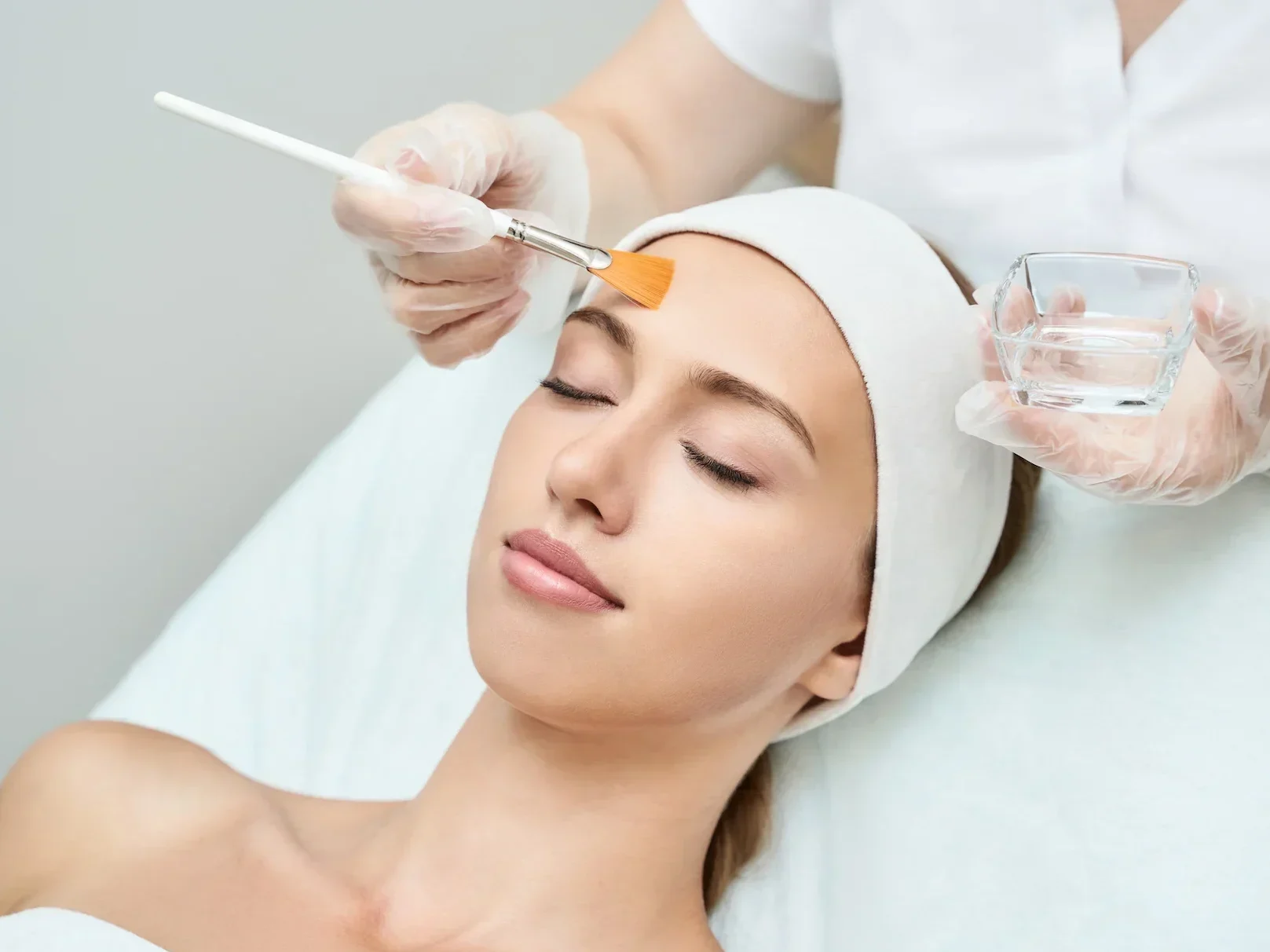
Chemical peels suit deeper skin tones when the depth and the solution are selected for your skin type by a doctor and a patch test is done first. The reason that sentence carries so many conditions is simple: skin with more melanin is more likely to answer irritation by producing pigment, so a peel pitched too aggressively can leave exactly the discolouration it was meant to improve. The mechanism does not change. The margin does.
Almost everything written about peels internationally assumes a lighter baseline. Below is what genuinely differs.
What is Fitzpatrick IV to VI, and where does Indian skin sit?
The Fitzpatrick scale sorts skin by how it behaves in sun — from type I, which burns readily and rarely tans, through to type VI, which is deeply pigmented and seldom burns. Most Indian skin sits somewhere in the IV to VI band, though a single family will often span more than one of them.
It is not a beauty classification and it is not about how dark a person looks in a photograph. It is shorthand for how the skin is likely to respond to injury, which is precisely the question a peel raises. That is why the consultation begins with your doctor examining skin type, tone and texture rather than only asking what is bothering you.
What actually changes when there is more melanin involved?
One thing, mainly, and it drives every other adjustment: the likelihood of post-inflammatory pigmentation. Deeper pigmented skin is more prone to it, which means an inflammatory event that would fade uneventfully on lighter skin can instead leave a brown patch that lingers.
Understand that and the rest of this article stops sounding like caution and starts sounding like arithmetic. Every rule that follows — gentler agents considered first, a patch test before committing, strict instructions about not picking, the insistence on daily sun protection — exists to keep inflammation inside a range the skin will settle from cleanly.
It also explains a frustration people arrive with. Someone treats marks left by acne, the peel is pitched too strong, and they leave with fresh discolouration on top of the old. The chemical peel worked as chemistry. It was simply the wrong dose for that skin.
Which peel agents come up more often for deeper tones?
Mandelic acid is noted as gentler on deeper skin tones, which is why it appears early in the conversation for many patients here. Beyond that the sorting is by concern rather than by complexion: salicylic suits oily, congested and breakout-prone skin; glycolic and lactic are used for dullness and uneven tone; TCA works at greater depth and asks for more downtime in return.
None of that is a menu you order from. Strength, and whether the peel is applied as a spot treatment or across the whole face, are decided the same way — after an assessment. Two people can describe the identical complaint and reasonably leave with different agents, and the difference between them is often skin type rather than the complaint itself.
The depths available are superficial, medium and deep. Deeper is not a faster route to the same place; it is a bigger inflammatory event with a longer recovery, and on Fitzpatrick IV to VI skin that trade is weighed more carefully than it would be elsewhere.
Why is the patch test genuinely load-bearing here?
Because skin does not always do what its category predicts, and finding that out on a small test area is enormously cheaper than finding it out across your cheek. A patch test is done before the first full treatment, without exception.
It is also where a history gets taken that is not visible on your face: any glycolic acid allergy, recent treatments, and the conditions that mean waiting — pregnancy and breastfeeding, diabetes for certain peels, recent isotretinoin or other acne treatment, and recent cosmetic surgery. A clinic that offers you a peel without testing or asking is skipping the step that exists specifically to protect skin like yours.
Does the preparation in the week before change?
The instructions are the same ones everybody gets; what changes is how much they cost you if ignored. Waxing and bleaching are avoided beforehand, and exfoliating scrubs and benzoyl peroxide are stopped for at least 48 hours.
Each of those independently irritates the surface. Arriving with skin already inflamed and then applying a controlled acid to it stacks two insults where the plan assumed one — and stacked irritation is where post-inflammatory pigmentation comes from. On skin that pigments readily, a "small" pre-peel threading session is not a small variable.
Why do the aftercare rules carry more weight?
Because the fortnight afterwards decides whether the treated area's temporary colour change resolves neatly or becomes something that needs treating in its own right.
The instructions are specific: broad-spectrum sunscreen daily, out of direct sun and heat while the skin settles, no waxing, threading or bleaching for a week, no Retin-A or other sensitising products for 72 hours, keep the skin moisturised, and let the flaking shed on its own. Swimming and strenuous exercise wait 24 hours; direct sunlight is avoided for around a week.
The instruction that gets broken most is the one about picking. Interfering with flaking skin converts an ordinary recovery into a mark — and on a pigment-prone skin type, that mark can outlast the entire course you were running.
How should I read a friend's experience of the same peel?
As information about their skin, not yours. "My cousin had this and it was fine" and "someone I know got pigmentation from a peel" are the same claim with different signs on it, and neither tells you what your skin will do.
Sun exposure between sessions differs, agents differ, depths differ, and Fitzpatrick type differs within a single household. This is also why a peel that behaved impeccably in a cooler, lower-UV country can behave differently here, where exposure runs year-round rather than clustering into a summer.
What does not change?
More than you might expect, and it is worth ending here rather than on a list of cautions.
The concerns a peel addresses are the same: post-acne marks and shallow discolouration, rough texture, congestion in oil-prone skin, and — with medium-depth peels across a course — fine lines, as new collagen forms during repair. The schedule is the same shape: superficial peels repeated across a few months, fewer sessions for deeper ones. And the boundary is the same. Flat marks are pigment and respond to peels; true acne scars are a change in the skin's texture, and for those, something like microneedling is the relevant tool. If the goal is a more even-looking complexion rather than resurfacing, BB Glow approaches it from another direction entirely.
Sessions start from ₹2,999 per session, with the course length settled after someone has examined your skin. The consultation is ₹500, waived against treatment — book a consultation and ask directly which agent and depth are being proposed for your skin type, and why. It is a fair question and you should get a specific answer.