
Chemical Peel Aftercare: The First Week, Day by Day
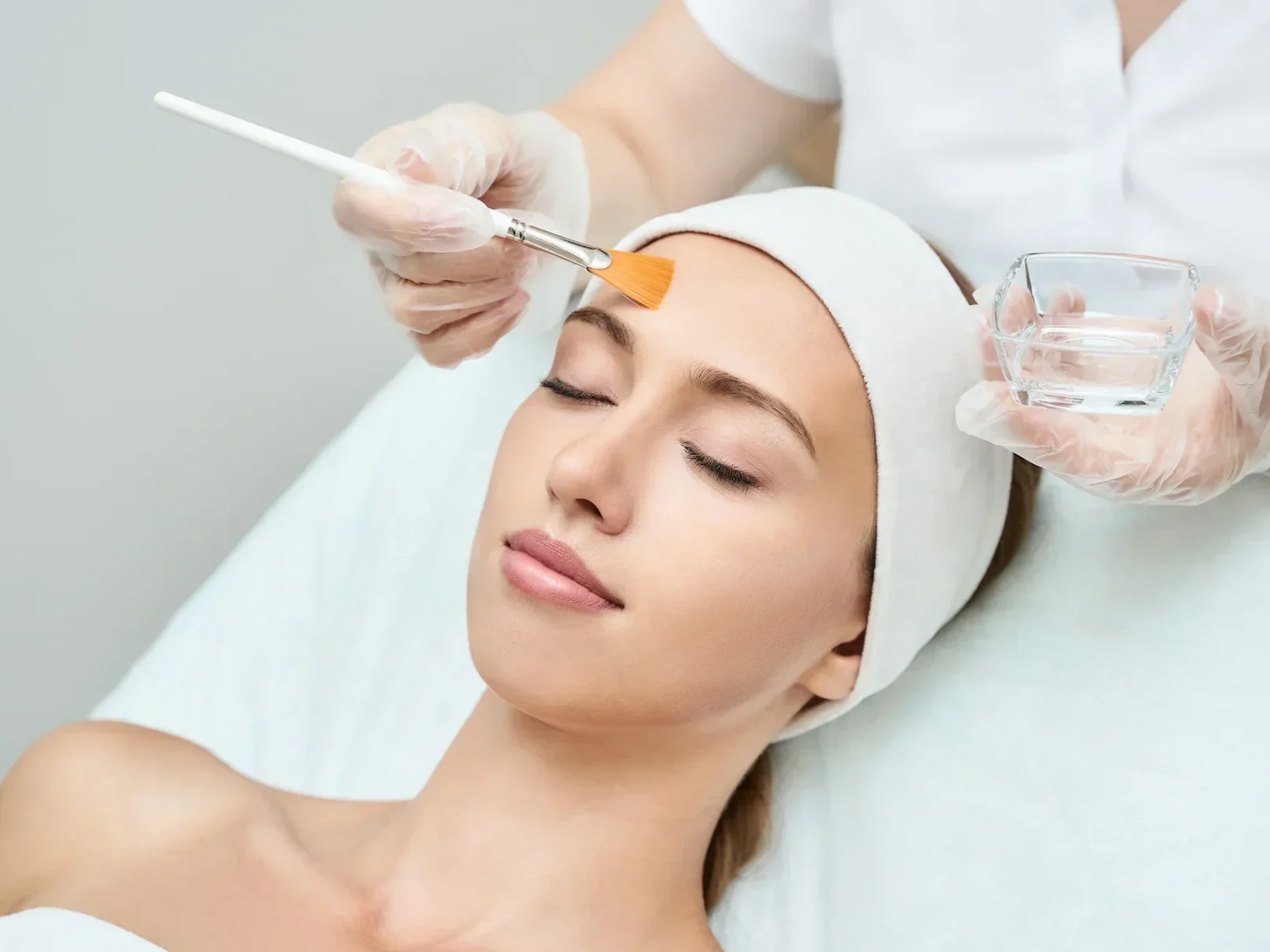
For the first week after a chemical peel: skip swimming and strenuous exercise for the first twenty-four hours, stay out of direct sunlight for about a week, wear broad-spectrum sunscreen every single day, leave any flaking alone to come away by itself, and keep scrubs and exfoliants out of your routine until your doctor says otherwise. That is the whole list.
The reason it earns a whole article is that the instructions are easy to agree to and surprisingly easy to break by accident. Here is the week in order, with the reasoning attached, because rules with reasons attached get followed.
Day one: what happens in the first twenty-four hours?
Two hard limits and one habit. No swimming and no strenuous exercise for the first day, and sunscreen goes on regardless of whether you are planning to leave the house.
Your appointment will already have finished with a cool compress, a hydrating cream and sunscreen, so the skin leaves the clinic protected. The job for the rest of the day is not undoing that. Expect a warm, slightly tight sensation and a mild flush — a face that looks like it caught an hour of afternoon light rather than anything alarming.
The exercise restriction catches people out most. It is not about the movement so much as heat, sweat and the reflex to wipe your face with a gym towel, all of which land on skin that has just had its outer layer deliberately loosened.
Keep the routine minimal. Lukewarm water, the cream you were given, sunscreen. Nothing acidic, nothing gritty, nothing new.
Days two and three: is it meant to feel dry and tight?
Yes. Dryness and a papery tightness are the normal middle of the process, alongside residual redness, and they are the sign the treated surface is preparing to leave.
Moisturise generously and often — this is the point in the week where a bland, rich cream earns its place. Skin that is kept comfortable flakes more evenly and looks less obviously mid-treatment while it does.
Makeup is a question worth asking at your appointment rather than assuming, because the answer depends on the depth you had and what your skin is doing. If you do wear it, take it off gently; the mechanical scrubbing at the end of the day is the risk, not the product.
Days three to five: what do I do when it starts flaking?
Nothing. That is the instruction, and it is the most important one in this article.
Flaking after a peel is the loosened layer detaching on its own schedule, and it does not need help. Picking, peeling a hanging edge or buffing it away with a flannel takes skin that was not ready to go, and that is how a routine recovery turns into a discoloured patch which can persist for months — long outlasting the treatment that was supposed to improve things.
How much flaking you see depends entirely on depth. After a superficial chemical peel it may be modest and mostly around the nose and chin. Deeper peels shed more, and for longer. If you had a retinoid-based yellow peel, the visible shedding usually arrives around the second to fourth day and is more obvious than a superficial peel's.
Practical version: cleanse with your fingertips, pat dry rather than rub, and resist the mirror.
Days five to seven: when can I go back to normal?
Gradually, and the sun rule outlasts the others. Direct sunlight is off the list for about a week; swimming and hard training came back after the first day.
Do not reintroduce acids, retinol, scrubs or any at-home exfoliation on your own timetable. Your skin is mid-turnover, and stacking another exfoliating step on top of a peel is how people end up with irritation they then attribute to the peel itself. Wait until your doctor clears them.
The area may look temporarily lighter or darker than the skin around it during this stretch. That is expected while things settle, and the daily sunscreen is the single factor with most influence over whether it resolves evenly.
How careful do I really need to be about the sun this week?
More careful than feels proportionate, and in Bangalore that means treating an overcast day exactly like a bright one. The UV that drives pigmentation is not blocked by cloud, and freshly turned-over skin is more reactive to it than usual.
Sunscreen every morning is the instruction we ask nobody to skip. Reapply it if you are out through the day. A cap or an umbrella is not fussiness for the week after a peel; it is the cheapest way to protect the result you have just paid for.
This matters most for anyone whose commute, run or lunch break puts them outdoors as a matter of routine. If that is your week, say so at the appointment — it can influence when the peel is scheduled.
What is worth calling the clinic about?
Two categories. Anything that is getting worse rather than better after the first few days, and anything painful.
Redness, dryness and flaking are expected and short-lived. Swelling that persists, spreading discomfort, or signs of infection are not, and while complications like these are uncommon they are the reason aftercare instructions are given as instructions rather than tips. Ring rather than wait it out.
The other legitimate reason to call is uncertainty. If you cannot tell whether what your skin is doing is normal for the depth you had, that is a question with a quick answer, and it is not an imposition to ask it.
When is the next session, and what does week two look like?
Week two is usually the first honest look at what the peel did, and it is also around when the schedule for the rest of the course gets confirmed. Superficial peels are typically repeated across a few months; medium and deep peels need fewer rounds. Your doctor sets the interval based on how your skin actually responded to this one, which is why it is decided after rather than sold in advance.
If your course sits alongside other treatments, the sequencing is part of that conversation too — microneedling with Dermapen, for example, has its own pre-treatment requirements about acids that interact with a peel schedule, and BB Glow has its own aftercare window. None of that is something to work out from a website.
Sessions start from ₹2,999 per session, and the consultation is ₹500, waived against treatment. If you have had a peel elsewhere and were sent home without a sheet of instructions, that is worth mentioning when you book a consultation — it changes what your skin has already been through.