
Botox Aftercare: The First Week, Day by Day
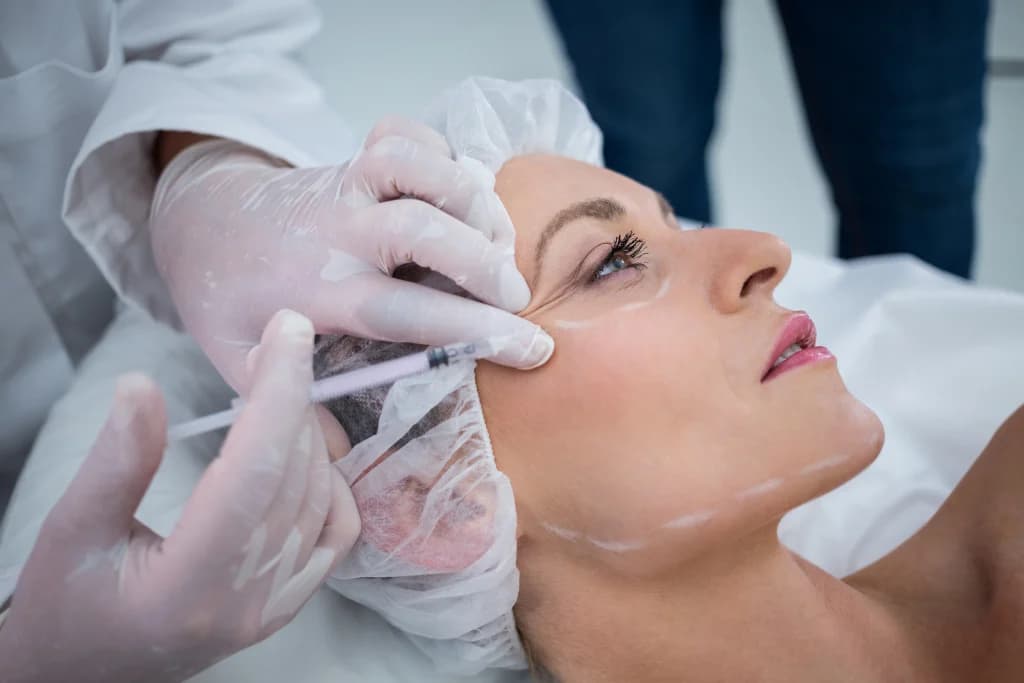
Botox aftercare is short and front-loaded. Stay upright for about four hours, leave the treated area alone and skip exercise for twenty-four, and expect small red bumps to settle within an hour or two. After that the week is mostly waiting: changes begin around four to seven days and settle by about two weeks, which is when the doctor reviews the result.
Downtime is minimal and most patients go straight back to the rest of their day. What follows is what each stage actually looks like, so you can tell an expected week from one worth a phone call.
What do I need to do in the first four hours?
Stay upright. Avoid lying flat, leaning forward and bending down for roughly four hours after the injections — that includes the yoga mat, the bottom shelf of the fridge and a nap on the sofa.
You will leave with tiny raised bumps and mild redness where the needle went in. That is expected, and it usually settles within an hour or two. Do not press, rub or massage them to make them go faster.
Beyond staying upright, there is nothing to apply and nothing to take. Most people drive themselves home and carry on with their afternoon.
What can I do, and not do, on the evening of the appointment?
Nothing to the treated area for a full twenty-four hours: no rubbing, no massaging, no facials, no sleeping face-down against a pillow if you can help it. Skip exercise for the same twenty-four hours — that means the gym, a run and anything that has you upside down or straining.
Makeup over the injection points should wait until the first twenty-four hours have passed. If a bruise appears, it can be covered after that.
The appointment itself was fifteen to thirty minutes and the needles are very fine, so most patients describe a brief sting at each point rather than pain. If you had numbing cream, any residual dullness wears off through the evening.
Days one and two: why the headache, and when can I train again?
Some patients report a mild headache in the first day or two after treatment of the upper face. It is usually brief and settles on its own.
Exercise is back on the table once the first twenty-four hours are done. So is your normal skincare and makeup routine, and so is sleeping however you like. There is no ongoing restriction after day one — this is not a treatment with a week of rules.
What there is not yet, at day one or two, is a result. Nothing you see in the mirror on Tuesday tells you anything about how Friday will look.
Days two to four: what if a bruise comes up?
Bruising is occasional rather than usual, and it tends to show a day or two after the appointment rather than immediately. It is more likely if you take blood-thinning medication or fish oil, which is one of the reasons your medical history and medication list are reviewed before anything is injected.
A bruise generally clears within a few days and can be covered with makeup once the first twenty-four hours have passed. There is nothing you need to do to it, and rubbing arnica into a treated area in the first day works against the instruction not to massage it.
Days four to seven: when does anything actually start moving?
This is the window in which the effect begins. Changes usually start at around four to seven days — so for most people the first genuine "oh, that is different" moment lands somewhere in this stretch, not on the day of treatment.
It arrives gradually and it arrives unevenly. One side often reads before the other. A forehead may soften before the frown line does. None of that is a verdict; it is the middle of a process that has another week to run.
The end of week one: should I worry that it looks uneven?
Not yet, and this is the single most common week-one worry. The effect is still settling for another seven days or so, and the whole reason the review sits at two weeks rather than one is that a result judged at day seven is judged too early.
Temporary heaviness or asymmetry is uncommon, and where it happens it is usually a matter of the effect settling unevenly across the first fortnight. It is exactly what the two-week review exists to catch and correct. Note down what you are seeing, photograph it in the same light each day if it helps, and bring it to that appointment.
That said, "wait and see" is advice about mild unevenness, not a rule that overrides your own judgement. If something is bothering you rather than merely puzzling you, ring the clinic rather than sitting with it.
What should make me contact the clinic rather than wait?
Please do not try to work out what any of these mean on your own. The point of the list is when to pick up the phone, not what to conclude. Ring the clinic on the number you booked through, describe what you are seeing, and let the doctor decide whether you need to be seen.
- Redness, swelling or tenderness at an injection point that increases after the first day, or an area that becomes hot. Expected redness settles within an hour or two, so redness that is going the other way is worth reporting.
- A bruise that is still spreading, or getting more painful, after several days. Ordinary bruising fades within a few days.
- A heavy eyelid or brow, or a change in your vision. Heaviness is uncommon and usually settles, but you should not be the one deciding that.
- A headache that is not settling after the first couple of days, or one that is worse than mild.
- Anything you did not expect at all, including a rash, or feeling unwell in the days after treatment.
One more, and it is on this list because botulinum toxin is a prescription medicine rather than because it is likely: difficulty swallowing, speaking or breathing, or muscle weakness somewhere away from the area that was treated, needs urgent medical attention. Do not wait for the clinic to open — get seen, and tell the clinic afterwards.
What happens at the two-week review?
You come back once the effect has fully settled, and the doctor looks at the result properly. If a point needs a small adjustment, that is done at this visit rather than guessed at on the day of treatment, when nobody could yet see how your muscles had responded.
It is also the appointment at which you say what you actually think — too much movement, too little, one side reading differently. That feedback is what shapes the dose next time, which is why it is worth attending even when you are perfectly happy.
After that, the result typically holds for three to six months before the muscle gradually returns to its usual movement.
Where to read more
What the treatment addresses, and how the appointment is planned, is on the Botox page. The same injection used for jaw clenching or excessive underarm sweating is described under wrinkle relaxer, and the far more diluted, superficial version aimed at pores and oiliness is Skin Botox — its aftercare is not the same as this.
To have your own plan and review dates set out, book a consultation. It is ₹500, waived off against treatment.