
Baby Botox: The Worldwide Trend, Assessed for Indian Skin
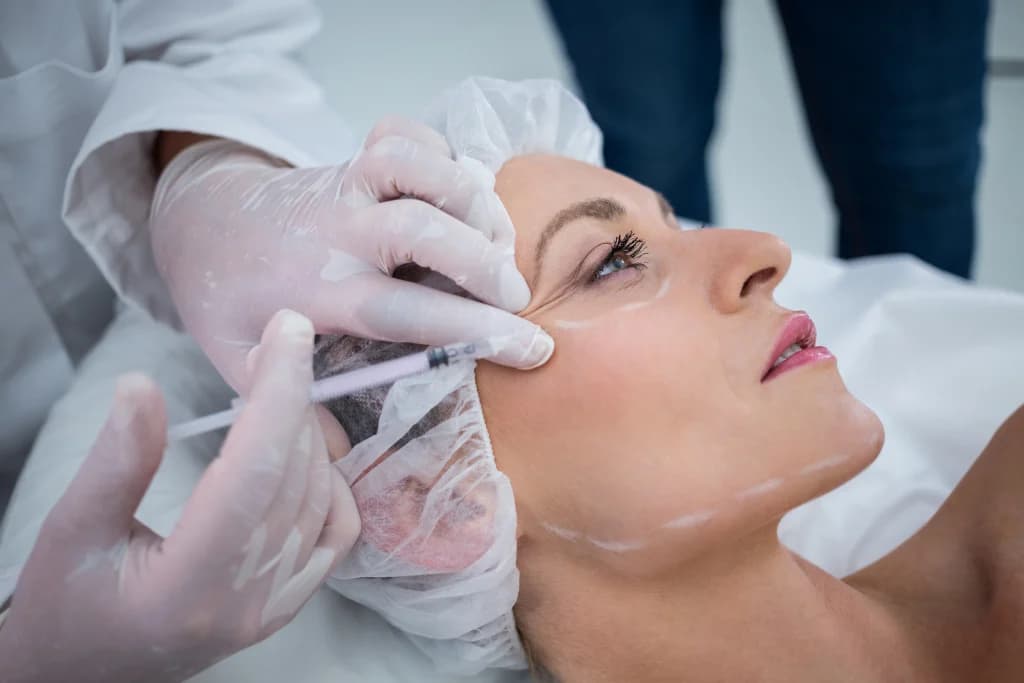
"Baby Botox" is not a separate product or a different drug. It describes using a smaller quantity of the same botulinum toxin, spread across the usual injection points, so expression lines soften while more of your natural movement stays. There is no baby-specific vial. What the phrase really names is conservative dosing, which at this clinic is already the default rather than an upgrade.
The term travelled here from American and Korean social media, and it arrives with assumptions attached that are worth unpicking before you ask for it by name.
What is the phrase actually describing?
A dose decision, made by whoever is holding the syringe.
Botox works by temporarily reducing the contraction of specific facial muscles. Less contraction, less creasing in the skin above. How much you reduce that contraction is a dial, not a switch — and where the dial sits is what separates a face that still frowns a little from one that cannot.
At this clinic the doctor maps your injection points and decides the dose after watching how your face actually moves, rather than working from a fixed template. Conservative dosing is the default, on the reasoning that the lines should soften while you keep enough movement to smile, frown and look like yourself. If that is what you were hoping "baby Botox" would buy you, you were going to be offered it anyway.
So is it a different injection from regular Botox?
No. Same substance, same technique, same fine needle at marked points, same appointment of roughly 15 to 30 minutes. The variable is quantity.
That matters when you are comparing prices, because a smaller dose is not a different service with a different rate — the treatment here is priced from ₹299 per unit, and a lighter plan simply uses fewer of them. Nobody buys a single unit, so that figure only means something once a doctor has counted the points your face needs.
Does the "less is more" idea hold up?
Partly, and the honest version is less exciting than the trend.
The case for a lighter dose is real: the frozen look people fear is a dosing outcome, not something inherent to the treatment, so dosing down is a legitimate way to avoid it. The two-week review is the safety net that makes it workable — you come back once the effect has fully settled, and if a point needs a small adjustment it is done then rather than guessed at on the day. A light first pass with a review is a genuinely sensible way to meet a new face.
Where the trend overreaches is in implying that less is universally better. It is not. If your forehead lines are visible even when your face is completely relaxed, a very light dose may simply under-treat them, and you will have paid for a result you cannot see. Assessment is what tells the two situations apart.
Does a lighter dose wear off sooner?
We do not claim so. What is documented here is the ordinary timeline: changes usually begin around four to seven days and settle by two weeks, and the effect typically lasts three to six months before the muscle gradually returns to its usual movement. There is no separate published duration for a lighter plan at this clinic, so if you want an expectation for your own dose, ask for it at consultation rather than taking a number from a video.
Is this the same thing as micro-Botox or mesobotox?
No, and this is the confusion worth clearing up, because the two get used interchangeably online and they are not the same treatment.
Baby Botox still goes into the muscle — just less of it. Skin Botox, also called micro-Botox or mesobotox, places heavily diluted botulinum toxin into the most superficial layer of the skin rather than into the muscle beneath. Its aim is texture, pore size and mid-day oiliness, not expression lines. Because the product sits above the muscle layer and is heavily diluted, it is not aiming at the softening of movement at all.
If your complaint is that your pores look large across your cheeks and nose, or that your skin goes shiny within a couple of hours of getting ready, then the trend you have been reading about is probably the wrong one for you.
There is also a third thing sitting nearby: the same injection has recognised medical uses, and a wrinkle relaxer plan can address jaw clenching, tension headaches and excessive underarm sweating. Those are dosed for the muscle in question, not for a look.
What does any of this change for Indian skin?
Less than the internet implies about the mechanism, and more than it implies about the visible aftermath.
Melanin sits in the skin. The target of this injection is the muscle underneath it. Skin tone therefore does not change how a muscle responds to botulinum toxin, which is why this treatment is unlike a light-based device where tone is central to the settings.
What tone can change is what you see afterwards. Tiny raised bumps and mild redness at the injection points are common and usually settle within an hour or two. Bruising is occasional, more likely if you take blood-thinning medication or fish oil, and generally clears within a few days — it can be covered with makeup after the first 24 hours. Whether a mark on your particular skin fades as quickly is a fair question to put to the doctor while your history is being taken, and it is not something a trend video can answer for you.
One thing that is unambiguously in your favour: dosing here is built around your own muscle pattern rather than a chart, and facial musculature varies from person to person regardless of where a dosing convention was written.
Who tends to be disappointed by it?
Three groups, in our experience of the conversation.
People whose main concern is a crease that stays put when the face is completely still — that is a static line, and only dynamic lines respond well to a wrinkle-relaxing injectable. People expecting the change to show up the next morning; it does not. And people who wanted a dramatic difference but asked for the lightest possible dose, then judged it at day three.
It is also worth saying plainly that this is a prescription medicine. It is not advised during pregnancy or breastfeeding, or where there is an active infection at the injection site, and certain neuromuscular conditions rule it out. Tell your doctor about all your medication, including blood thinners. Safety here depends heavily on who is injecting, which is why every treatment at this clinic is performed by a doctor after your medical history has been reviewed.
If anything changes in how you swallow or breathe in the days afterwards, contact the clinic straight away rather than waiting to see whether it passes — and if you cannot reach us, go to the nearest emergency department. You are not expected to interpret it yourself.
How to ask for it sensibly
Do not open with the phrase. Describe the outcome instead: which lines bother you, how much movement you want to keep, and what you are afraid of looking like. That gives the doctor something to dose against.
A consultation is ₹500, waived against treatment, and includes the assessment that decides whether a light plan is right for your face or simply a light plan. Book a consultation when you are ready.