
Are You a Good Candidate for Teeth Whitening? An Honest Checklist
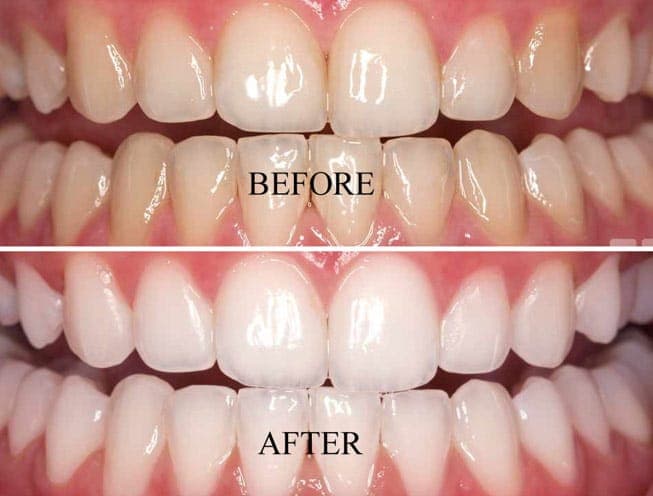
Most healthy adults with dulled or yellowed natural teeth are suitable for professional whitening. It suits staining from age, tea, coffee and tobacco. It is postponed if you are pregnant or breastfeeding, and it is not the right answer if you have untreated decay, exposed roots, or restorations sitting across your smile line. An examination settles it.
That last sentence is the one that matters, and this article cannot replace it. What it can do is tell you, before you book anything, which category you are probably in — and spare you the disappointment of arriving with a date in mind and being told the plan needs to change.
Who is professional whitening actually for?
It is for people whose teeth are healthy and simply look darker than they used to. The clearest candidates are the ones described on the teeth whitening page itself: years of filter coffee and chai have left the enamel dull, a whitening toothpaste has been tried for months with nothing to show for it, or there is an occasion coming up and you would rather not think about your teeth in the photographs.
Wanting brighter teeth for a wedding, a shoot or a new job is a reasonable thing to want, and whitening is a low-risk way to get it. Nothing is drilled and no enamel is removed — the gel lightens the tooth structure that is already there, which makes it one of the few cosmetic dental options that is entirely additive. If you dislike the result, nothing has been taken away that has to be replaced.
Why does a dentist examine before whitening anything?
Because the examination is where the reasons not to proceed turn up, and every one of them causes real pain if it is missed. The pre-treatment check looks for decay, cracks and exposed root surfaces. Peroxide gel reaching any of those hurts, and the underlying problem is still sitting there afterwards. That is why this step is not a formality and not something to hurry past because you are short of time.
The assessment also settles the target shade with you in advance, so what you are aiming at is agreed rather than assumed. A shade that suits your face reads as a healthy version of your own teeth. A shade chosen from a photograph of somebody else usually does not.
What if I already have crowns, veneers or tooth-coloured fillings?
Then the sequence matters more than the treatment does. Whitening acts on natural enamel and on nothing else — crowns, veneers and composite fillings do not bleach. Their colour was matched to your teeth on the day they were made, and it stays exactly where it is. Lighten everything around them and they can end up looking noticeably darker than their neighbours.
This does not rule you out. It changes the order of work and it changes the budget, because visible restorations may need replacing afterwards to match the new shade. If several of them are involved, what you are really discussing is a smile makeover — a planned sequence rather than a single appointment. Your dentist should say which category you fall into at the assessment, not once the gel is off.
My teeth are already sensitive. Does that rule me out?
Usually not, but it has to be raised before treatment rather than after. Sensitivity is the most common effect of whitening even in people who have never had it: teeth may react to cold for a day or two afterwards, and it typically settles on its own with a desensitising toothpaste helping it along.
If you are sensitive to begin with, the plan adapts. A desensitising regimen before and after the appointment, or a gentler protocol carried out over more than one session, are both ordinary ways of handling it. What is not sensible is saying nothing, having a standard appointment, and spending the next two days regretting it. Tell the dentist at the assessment. It changes how the session is run rather than whether you can have one.
Can I have whitening while pregnant or breastfeeding?
No — elective cosmetic whitening is generally postponed during pregnancy and breastfeeding. This is not a comment on how the treatment behaves; it is the ordinary caution applied to elective cosmetic procedures at that stage of life, and it is a delay rather than a refusal.
Say so when you book, and the appointment is simply planned for later. A scale and polish is a different question and one to raise with your dentist on its own terms, since routine dental care during pregnancy is not the same conversation as an elective bleaching appointment.
Which kinds of discolouration respond poorly?
Staining that lives inside the tooth rather than on it. Discolouration from tetracycline, from fluorosis, from an old injury to a single tooth, or from a nerve that has died responds poorly or unevenly to external bleaching. The result can be patchy, and on a single dark tooth, lightening the ones around it can make the odd one out more conspicuous rather than less.
None of this is a reason to avoid an assessment — it is a reason to have one. Your dentist can tell you at that appointment that external whitening is not the right tool for what you have, which is a far better place to hear it than halfway through a course of treatment. There are other approaches to a single discoloured tooth, and they belong in a planning conversation rather than in a whitening appointment.
Does a clean come first, and could it be enough on its own?
Yes to the first, and sometimes yes to the second. A scaling and polishing appointment comes before whitening so that the gel meets clean enamel rather than a layer of deposit — that is documented as part of the treatment, not an upsell attached to it. Scaling and polishing is ₹1,499 per treatment.
Every so often the clean removes enough surface discolouration that the patient decides they do not need whitening this year. That is a legitimate outcome, and you should feel free to ask the question at that appointment rather than treating the whitening as already booked.
So who decides whether I am a candidate?
A dentist does, in person, after looking at your teeth and gums and asking what you are hoping for. Nothing you read here — or anywhere else — can examine your mouth. What this checklist can tell you is which questions to bring: what you have had done before, whether anything is already sensitive, whether there are fillings or crowns in the smile line, and whether there is a date you are working towards.
Whitening is performed by a dentist, always, and usually takes one in-clinic session, occasionally two. The consultation is ₹500 and is waived off against treatment, so an honest answer costs very little to obtain.
If any of the above sounds like your mouth, book an appointment at Indiranagar or Bellandur and have it looked at properly. The examination is the checklist. Everything else is preparation for it.