
Are You a Good Candidate for Korean HydraFacial? An Honest Checklist
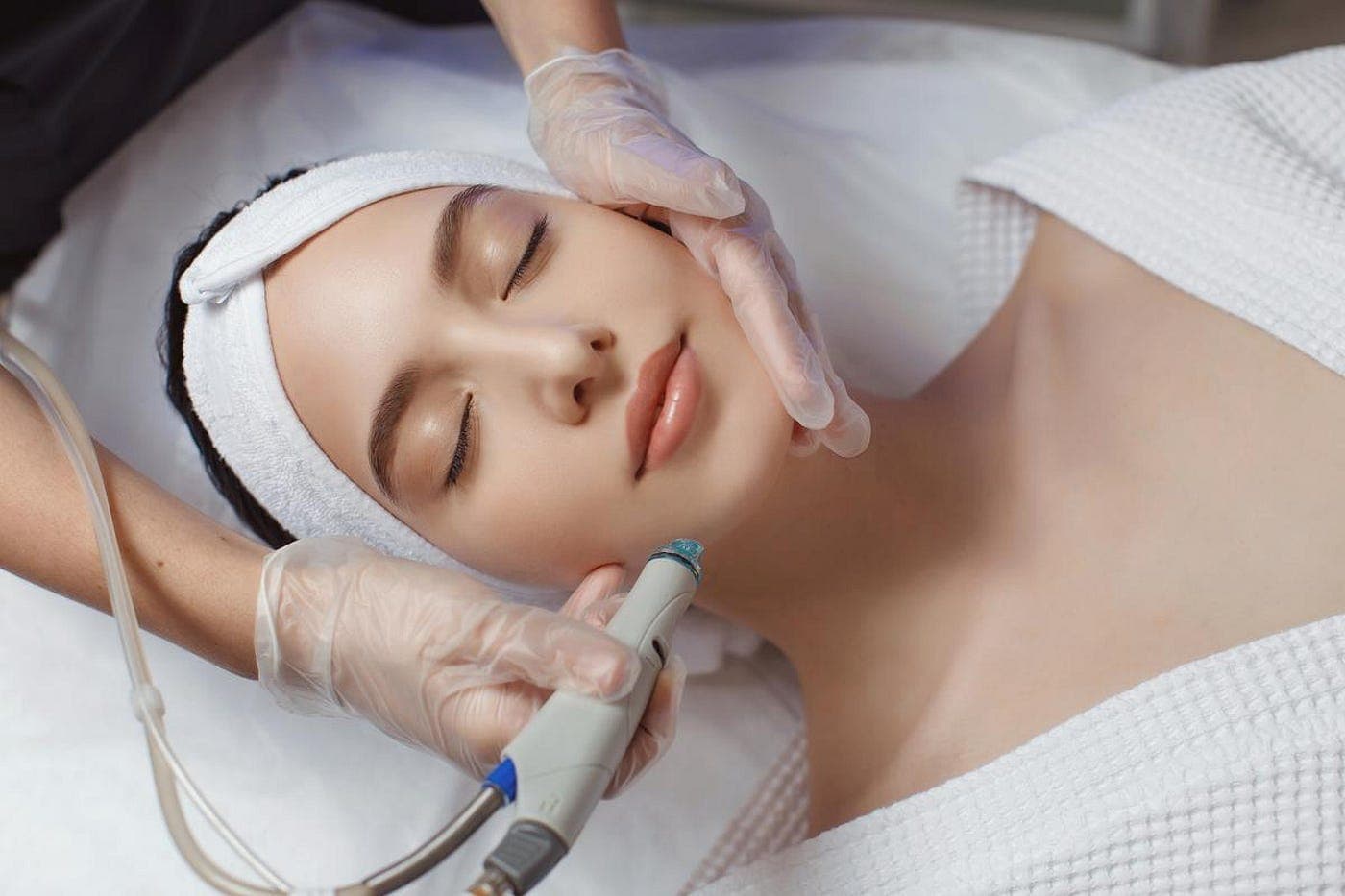
Korean HydraFacial suits most people who want smoother, brighter, better hydrated skin with no recovery time, and that includes sensitive skin. It is not for you if your skin is currently inflamed: active rosacea, sunburn, infected breakouts or broken skin are all reasons to reschedule. Recent isotretinoin, strong retinoids or a recent peel need declaring. Candidacy is decided in person, not online.
Most pages about this treatment only cover the first half of that answer. The half that matters more — when you should wait, and what you must mention before anyone touches your face — tends to be left out, because it does not sell as well. This checklist covers both.
Who is this facial actually for?
It is for people who want maintenance rather than correction. The Korean HydraFacial is our standard HydraFacial run as a longer, fourteen-step glass-skin protocol, and the whole design of it is barrier-first: thin serums applied in sequence, gentle exfoliation, a cooling mask, LED and a short lymphatic massage. Nothing is injected. There is no downtime at all.
You are likely to be a sensible fit if any of these sound familiar:
- You want the dewy, lit-from-within look you keep seeing in Korean skincare.
- Your skin is dull and rough, and makeup never sits the way you want it to.
- You have an event coming up and want your skin looking as good as it reasonably can, with no recovery time to plan around.
- Stronger treatments leave your skin red and reactive, so you want something gentler that still does real work.
That last one is worth dwelling on, because it is the reason the protocol runs fourteen steps instead of three. The exfoliation is deliberately mild and the session finishes with barrier support, so reactive skin generally copes with it better than with one strong single-step treatment.
Who should not have a Korean HydraFacial?
Anyone whose skin is actively inflamed, broken or burnt should reschedule rather than push through. Specifically, these are reasons to move your appointment:
- Active rosacea. A flare can be made worse by exfoliation and suction.
- Sunburn. Skin that is already damaged does not need more exfoliation on top, and it burns more easily afterwards.
- Infected inflammatory breakouts. Working over infected lesions risks spreading them.
- Broken skin anywhere in the treatment area — cuts, grazes, cold sores, raw patches.
None of these means you can never have the treatment. They mean not today. A rescheduled session costs you a fortnight; a session run over inflamed skin can cost you considerably more than that.
What do I need to declare before booking?
Anything strong you have used on your skin recently, and anything you are taking by mouth for it. Three things in particular change how the exfoliation step is set, and sometimes mean deferring the session altogether:
- Recent isotretinoin. Say so even if you finished the course some time ago, and give the dates.
- Strong retinoids in your home routine.
- A recent peel or any other resurfacing treatment.
Do not decide for yourself whether these matter. Bring them up and let the doctor decide — that is what the assessment at the start of the session is there for, and it is why the first of the fourteen steps is a skin review rather than a cleanse.
Does it work on sensitive or acne-prone skin?
Usually, yes, and the gentle exfoliation and barrier-support steps are the reason. The device lifts blackheads and surface build-up by suction rather than manual extraction, so there is far less trauma than with squeezing, which matters a great deal on skin that marks easily.
The caveat is the one above: an active rosacea flare, sunburn or infected inflammatory breakouts are reasons to reschedule rather than press on. Settled, stable, congestion-prone skin is a different proposition from skin that is inflamed this week.
One thing worth expecting rather than being alarmed by: occasionally congestion that was already forming surfaces as small breakouts in the first week after a session. That settles on its own and is not a reaction to the serums. If it is not settling, tell the clinic rather than working on it at home.
Will it fix pigmentation, acne scarring or open pores?
No — and this is where honest expectation-setting matters most. This is a maintenance facial built for light reflection and smooth texture, not a corrective procedure. The brightening step targets dullness and uneven tone rather than pigmentation sitting at depth. Pores do not close; cleared, evenly hydrated skin simply reflects light more evenly, which is what the glass-skin effect actually is.
If your goal is deeper pigmentation, textural scarring or a structural change, this is the wrong tool and you should say so at the consultation, so you are pointed at the right one instead of paying for a facial that was never going to do that job.
How does this compare with a standard HydraFacial?
A standard Hydra Medi Facial is cleanse, exfoliate and oxygenate in one sitting, at around 45 minutes and from ₹2,999 per treatment. The Korean protocol runs 75 to 90 minutes and adds the three layered serum infusions, the cooling mask, LED and lymphatic massage on top.
For straightforward monthly maintenance, the standard session is enough for plenty of people. The longer protocol earns its extra time when you have an event, or when your skin needs the additional barrier work. Every Korean HydraFacial session also includes a complimentary chemical peel, which is a ₹1,999 session in its own right. We do not publish a headline figure for the Korean protocol itself; you will be quoted it directly.
How is candidacy actually decided?
In the room, by a doctor, at the start of your session — not from a checklist on a website, including this one. The first step of the protocol is a review of your skin type, your barrier condition and anything active that would mean rescheduling rather than proceeding that day.
A consultation is ₹500, waived against your treatment. If the answer that day is "not yet", that is a legitimate outcome and a useful one: you will leave knowing what needs to settle first and roughly when to come back.
Use this article to arrive with the right questions and the right disclosures. Let the assessment do the deciding.
Ready to find out whether it suits your skin?
If you recognised yourself in the first list and none of the reasons to reschedule apply, the sensible next step is to have your skin looked at properly. If you did recognise one of them, book anyway and say so when you call — we would far rather move your date than treat over a flare.
Book an appointment at Indiranagar or Bellandur, and bring the details of anything strong you have used on your skin in the last few months.