
Are You a Good Candidate for Hair Botox? An Honest Checklist
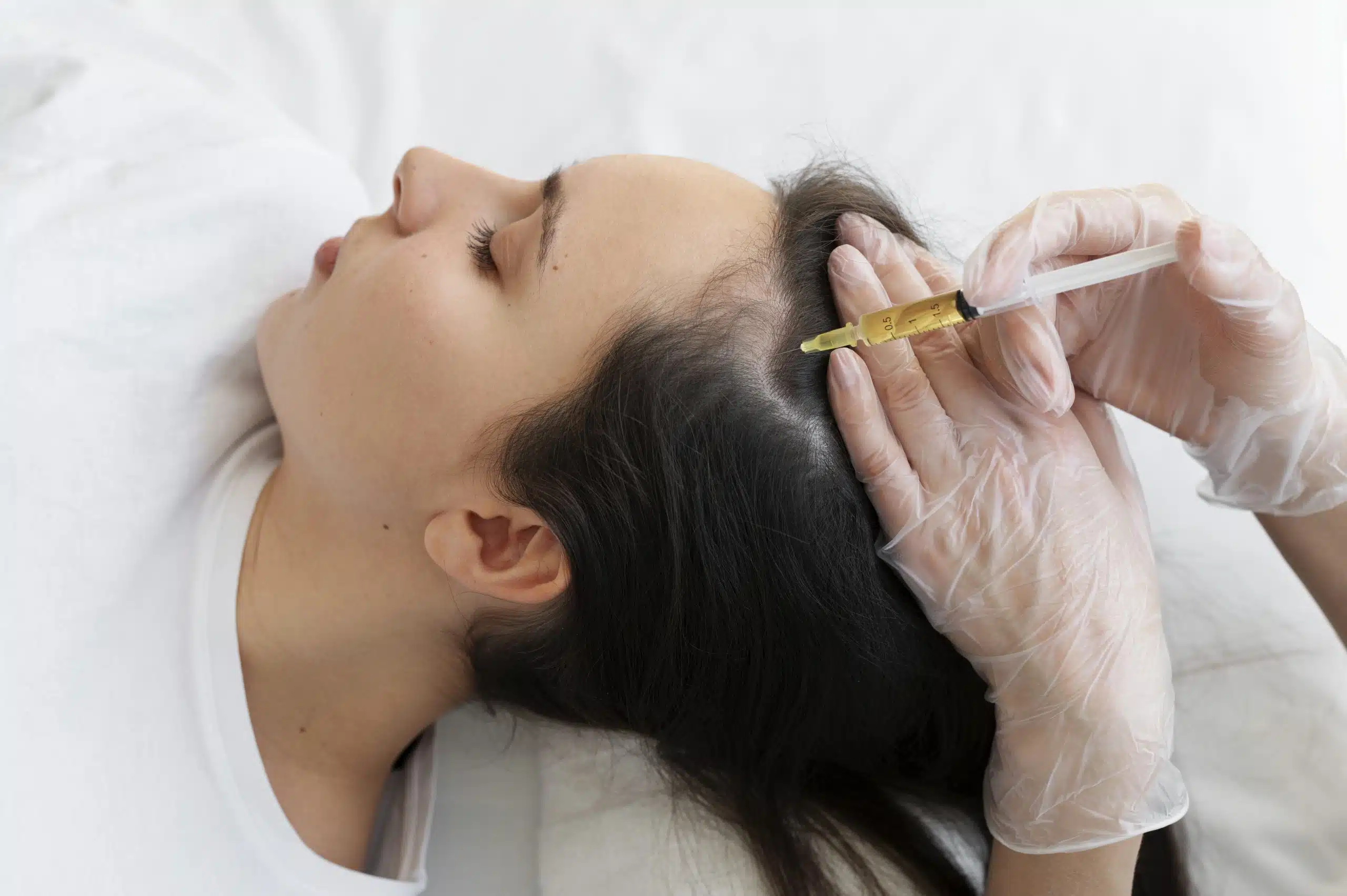
You are a plausible candidate for hair botox if your complaint is a scalp that sweats or oils excessively, and you have no neuromuscular disorder and are not pregnant or breastfeeding. You are not a candidate if what you actually want is regrowth or smoother-feeling hair. Candidacy itself is confirmed by a doctor examining your scalp, never by a checklist on a screen.
This piece is the checklist anyway — not to replace that examination, but so you can arrive knowing roughly where you stand and which questions to raise.
What does a strong candidate look like?
Three patterns come up again and again, and they are narrower than the treatment's name implies.
The first is the person whose styling never survives the day. A scalp that sweats heavily through commutes, helmets, gym sessions or simply through Bangalore's warmer months, and a blow-dry that is flat before lunch. The complaint is not vanity — it is spending money and time on hair that is undone by the middle of every morning.
The second is oil. Roots that turn greasy and lie flat by the end of every single day, and the daily washing that habit forces. The washing then becomes its own problem, because hair that is stripped daily rarely looks its healthiest.
The third is the patient already partway through hair treatment who suspects the scalp is working against the plan — that sweat and buildup are quietly undoing what is being invested in. That instinct is well-founded enough that this clinic treats a drier, calmer scalp as legitimate groundwork for other protocols.
If you recognise yourself in one of those three, Hair Botox is at least the right conversation to be having.
Who should not have this treatment at all?
Two groups, and these are exclusions rather than cautions to negotiate.
Anyone with a neuromuscular disorder. The medicine acts on the signalling between nerves and the structures they control, which is territory a neuromuscular condition already occupies, so this is a firm no rather than a matter of a smaller dose.
Anyone who is pregnant or breastfeeding. Again, documented and not conditional. If either applies to you now but will not in a few months, that is worth saying out loud at the consultation, because the answer for you is about timing rather than about the treatment being wrong.
Neither of those is something the clinic works out by looking at you. They come from your medical history, which is exactly why the history review sits before the mapping in the treatment's own sequence.
What if I take other medication?
Bring it up — all of it, including things you would not think of as medicine.
The clinic's published criteria name the two exclusions above; other medicines are not ruled in or out on a page, they are reviewed. The doctor goes through your medical history at the consultation before confirming you are a candidate, and that is the correct place for a supplement, an ongoing prescription or a recent course of anything to be weighed. Guessing on your own behalf, in either direction, is the one approach that does not help.
What if my real problem is hair fall?
Then this is not the treatment you are looking for, and it is worth saying so before you spend anything.
Hair botox is not a regrowth treatment by itself. It calms scalp sweating and oiliness, which supports scalp health — that is its documented claim, and it stops there. Shedding, a widening parting or thinning density are questions about why the hair is going, and that is a diagnosis-first problem rather than a treatment-first one.
Where the two meet is in sequencing. Once a doctor has reviewed your scalp, scalp botox may be paired with PRP or GFC, on the reasoning that the environment your follicles sit in matters to how a regrowth plan performs. That is a pairing decided by an examination, not a bundle you should ask for by name.
What if my scalp flakes or itches?
Say so, and do not assume it is the same problem.
Flaking, itching and visible irritation are their own set of conditions with their own management, and they are assessed separately from how much a scalp sweats. One genuine advantage of being seen by a doctor is that these get told apart on sight rather than being folded into whichever treatment you happened to ask about. If an irritated scalp is part of your picture, it belongs in the assessment; what it means is the doctor's call, not yours or this page's.
Does it matter how much I sweat?
It does, because the treatment addresses excessive sweating rather than ordinary sweating.
A scalp that dampens during a hard workout in June is behaving normally. A scalp that soaks through on an air-conditioned Tuesday, or that reliably defeats styling within a couple of hours, is the pattern this treatment was built around. If you are unsure which side of that line you sit on, that uncertainty is not a reason to stay away — it is one of the more useful things an assessment resolves.
Is age a factor?
The clinic's stated criteria turn on medical history rather than on a birth year. If you are asking because you feel young for an injectable, or because you are older and wondering whether it still applies, raise it directly and let the review settle it.
Can I be turned down on the day?
Yes, and it is worth treating that as a feature rather than a risk. The assessment exists to produce a real answer, including the answer no, and a clinic willing to give it is one worth listening to when it says yes.
You should also expect a frank conversation about what can follow the treatment — injection-site soreness for a day or two, an occasional short-lived headache, and rarely a temporary feeling of weakness in nearby muscle. That list is part of the candidacy discussion, not an afterthought. It is also the list to measure against later: if soreness lingers well past those first couple of days, if a headache does not lift, or if you notice weakness near the treated area, ring the clinic and ask to be seen rather than deciding for yourself whether it matters.
What a checklist cannot settle
Everything above narrows the question; none of it closes it. A page cannot see how your scalp behaves, cannot read your history, and cannot map a dose.
What it can do is get you to the right appointment with the right questions. Book a consultation at Indiranagar or Bellandur — ₹500, set against the cost of treatment if you go ahead — and bring the honest version of your complaint, including the parts that might disqualify you. Those are the parts that make the answer worth having.