
Are You a Good Candidate for Botox? An Honest Checklist
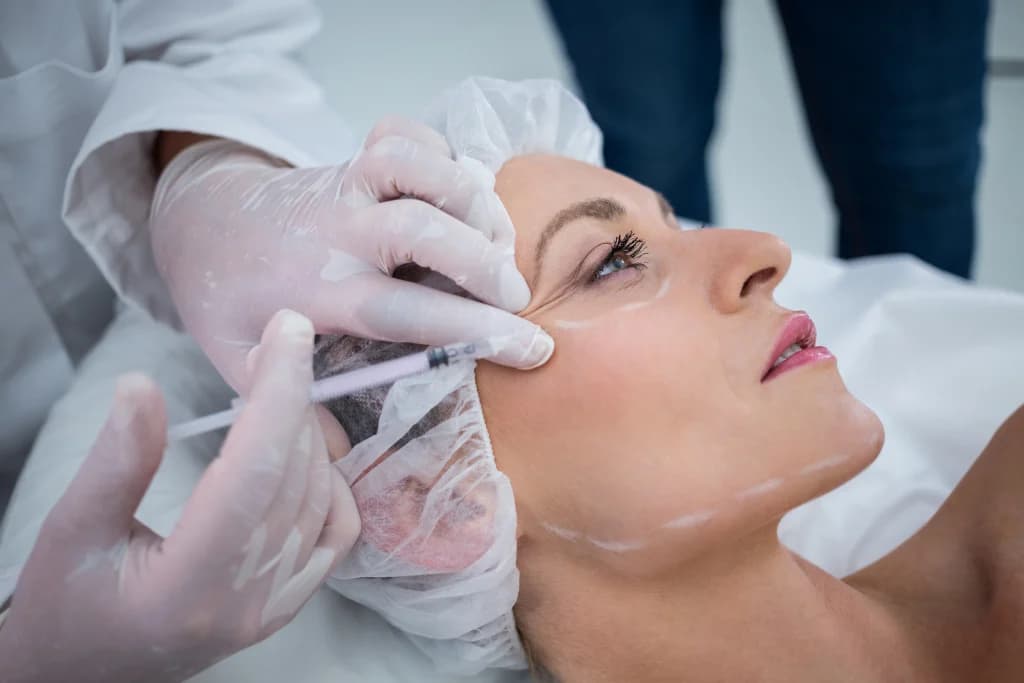
You are likely to be a reasonable candidate if the lines bothering you are made by movement — forehead lines, the vertical pair between your brows, crow's feet — and you want them softened rather than erased. It is not advised during pregnancy or breastfeeding, where there is an active infection at the injection site, or with certain neuromuscular conditions. The answer itself is settled in person, not on a page.
That last sentence is not a hedge. Nothing written here can watch your face move, and that is the specific thing candidacy depends on.
What does a straightforward candidate look like?
Three descriptions come up again and again in the room, and any of them is a sensible reason to ask the question.
The first is a forehead whose lines are visible even when the face is completely relaxed, in someone who wants them eased before they settle in further. The second is being told repeatedly that you look tired or stern in photographs when you feel neither, and finding on inspection that the culprit is the line between your brows. The third is simply wanting lines softened while staying recognisably yourself — no interest in a face that cannot move.
None of those is a diagnosis, and recognising yourself in one does not make you suitable. They are the starting points that tend to survive an assessment.
What rules it out entirely?
This half deserves saying first rather than last.
Botox is not advised during pregnancy or breastfeeding. It is not given where there is an active infection at the injection site — that one is usually a matter of postponing rather than being ruled out permanently. And it is not advised with certain neuromuscular conditions, which is one of the reasons the medical history is taken properly rather than as a formality.
There is no way to work out from a website whether a condition you have falls into that last category. Bring it to the consultation and say it plainly, even if you are fairly sure it is unrelated.
What about medication and supplements?
Tell your doctor about all of it, including blood thinners. That instruction is deliberately broad, and it is worth honouring literally rather than filtering what you think is relevant.
Two reasons. Blood-thinning medication makes bruising at the injection points more likely, and so does fish oil — which many people would never think to mention because it came from a supermarket shelf rather than a pharmacy. And the history is what lets the doctor decide whether the treatment is appropriate at all. Do not stop anything you have been prescribed in order to qualify; that is a decision for the doctor who prescribed it.
What if the line is already there when my face is still?
Then part of your concern is outside what this treatment reaches, and it is better to know that before you pay for it.
At assessment the doctor separates dynamic lines from static ones. Only the dynamic group responds well to a wrinkle-relaxing injectable, because the mechanism is a reduction in muscle contraction rather than anything applied to the crease itself. Plenty of faces carry both kinds at once — a forehead with movement lines and one deeper etched line running through them is entirely ordinary.
That does not automatically rule you out. It changes what a realistic result looks like, and it may mean a plan involving more than one treatment. What that plan is, and whether it is worth doing, is a conversation at the consultation rather than something to settle in advance.
Am I too young to start, or too late?
Age is not the deciding variable — what your muscles are doing is. Two people of the same age can have completely different amounts of movement and completely different amounts of etching, and the treatment responds to the second pair of facts rather than the first.
What age does change is the honest expectation. Where lines are largely dynamic, softening is the likely outcome. Where they have been setting for longer, the dynamic component still responds and the etched part does not, so the result is a partial one. Nobody can tell you which of those you are without looking at your face at rest and in movement.
I do not want to look frozen. Does that count against me?
The opposite — say it out loud and it becomes an instruction.
A frozen look is a dosing outcome, not something inherent to the treatment. Dosing here is conservative by default, planned after the doctor has watched how your face actually moves rather than taken from a template, with the explicit aim of softening lines while you keep enough movement to smile, frown and look like yourself. Then the result is reviewed at two weeks, when a point that has taken unevenly can be adjusted.
If you have had botulinum toxin elsewhere and disliked the result, that is worth describing in detail: what you were left unable to do, and for how long. It is useful information for planning, not an awkward confession.
What if I am not sure I want to commit to something ongoing?
The treatment is temporary by design, which makes this less of a commitment than it feels.
One sitting produces an effect that begins at around four to seven days and settles by two weeks, then typically lasts three to six months before the muscle gradually returns to its usual movement. If you never come back, nothing sudden happens — the effect fades and the lines return to how they were, not worse than they were.
So a first treatment is a way of finding out whether you like the result, rather than a door closing behind you. What it is not is something to decide on the day you walk in for an event; the settling period means the calendar has to be planned around it.
Is there another version of this that suits me better?
Possibly, and it is worth knowing the options exist before you assume this page is the answer.
If your concern is texture, pore size or oiliness rather than lines made by movement, Skin Botox uses the same medicine heavily diluted and placed superficially, which is a different treatment aimed at a different problem. If your concern is jaw clenching and grinding, the tension headaches that follow it, or excessive underarm sweating, those are covered on the wrinkle relaxer page — the same injectable, used for its recognised medical purposes.
Why can none of this be settled online?
Because the two facts that decide it are physical. How your muscles move, and which of your lines are still being made by that movement, are things a doctor establishes by watching and examining rather than by reading a description.
A consultation is ₹500, waived off against treatment. It is a genuine assessment, and being told the treatment is not right for you is a legitimate outcome of it. If treatment does go ahead and something afterwards concerns you — a bruise deepening rather than fading, redness at a point increasing rather than settling, or any weakness that seems to spread beyond the area treated — contact the clinic rather than deciding for yourself whether it matters.
Book a consultation and bring your medication list.