
Wrinkle Relaxer vs Botox: Is There Actually a Difference?
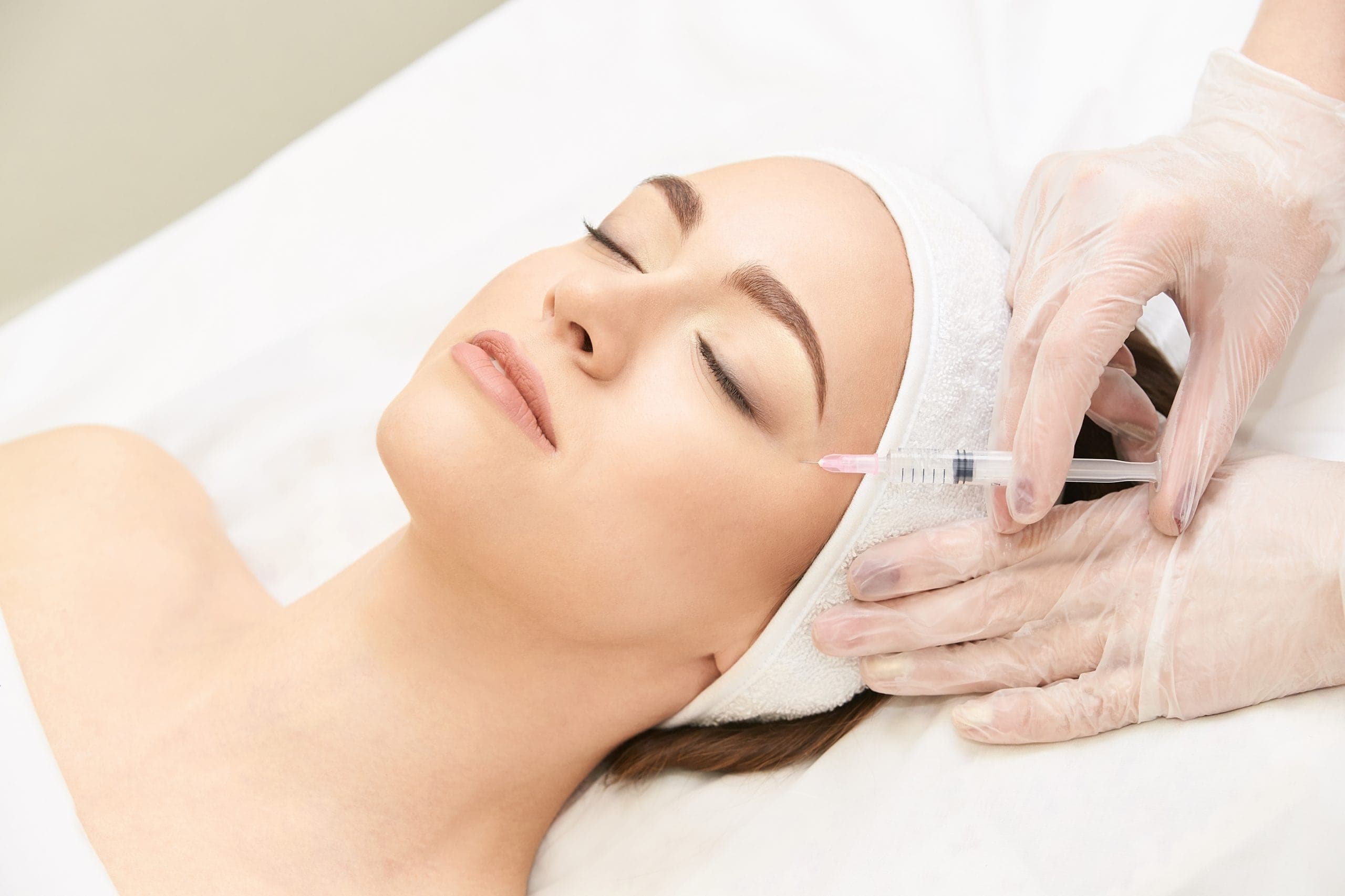
There is no difference in what the treatment does. "Wrinkle relaxer" is the general, brand-neutral name for a botulinum toxin injection that eases the muscle contractions behind expression lines. "Botox" is one particular branded version of that injection, and because it arrived first and became a household word, people now use it the way they use "Xerox" for photocopying. Same category, different level of naming.
That sounds like a small point of vocabulary, and in one sense it is. But it causes real confusion at the front desk of both our branches, because patients arrive assuming the two words describe two different procedures with two different price tags, two different recovery times, or two different levels of safety. They do not. Understanding what the terms actually refer to makes it much easier to have a useful conversation with whoever is examining your face.
So what exactly is a wrinkle relaxer?
A wrinkle relaxer is a botulinum toxin injection that eases the muscle contractions behind forehead lines, frown lines between the brows and crow's feet. Those particular lines are caused by repeated movement. Every time you raise your brows in surprise, squint against the afternoon glare on Outer Ring Road, or frown at a screen, the muscle underneath pulls the skin above it into the same fold. Do that several thousand times a month for years and the fold starts to stay put even when the muscle is at rest. Relaxing that contraction lets the skin above it crease less.
The word "relaxer" is doing useful work there. It tells you the mechanism. The treatment does not fill anything in, tighten anything, or resurface anything. It reduces how hard a specific muscle pulls. That is the whole of it, and it is why the treatment suits some lines beautifully and does nothing at all for others.
The same injection also has recognised medical uses that have nothing to do with appearance. Jaw clenching, tension headaches and excessive underarm sweating are among them. We will come back to those, because they are a large part of why people book this treatment at all.
Is Botox a different treatment, or a different word?
A different word, for a specific product. Botox is a brand name for a botulinum toxin preparation. Several manufacturers make comparable products, and a clinic will typically work with one or two that it knows well. When someone says "I want Botox", what they almost always mean is "I want the treatment that softens my expression lines", and that treatment is the wrinkle relaxer described above.
What genuinely varies between products is narrow and technical: the exact formulation, how the units are measured, and how quickly the effect tends to appear and fade. Units are not interchangeable between brands, which is why a number that means one thing with one product means something different with another. This is a reason to discuss dosing with your own doctor rather than to arrive with a number you read somewhere.
What does not vary in any way that should influence your decision is the basic mechanism. Whichever product is used, the injection eases muscle contraction, and the areas, points and dose matter far more to your result than the label on the vial.
What actually decides the result, then?
The assessment. This is a treatment plan, not a fixed dose. The doctor decides the areas, the injection points and the dose after examining how your face and jaw actually move, and after taking a full medical history. Two people with similar-looking forehead lines can need quite different plans, because one has a strong frontalis muscle doing most of the work and the other is mostly compensating with her brows.
That is also the answer to the fear almost everyone raises. A frozen look comes from over-dosing, not from the treatment itself. Dosing here is deliberately conservative and reviewed at follow-up, so the aim is softer lines with your expression intact. You should still look surprised when you are surprised.
What about the jaw, and the sweating?
Injected into the masseter muscle, the same treatment can reduce the force of clenching and grinding. Many patients find this eases jaw soreness and tension headaches, and as the muscle relaxes, the lower face softens too. That is what Masseter Botox (Jaw Slimming) refers to — the same injection, a different muscle, and often a medical complaint rather than a cosmetic one. Plenty of our patients come in for the headaches and are pleasantly surprised by the change in their jawline.
For excessive underarm sweating, injections into the underarm can meaningfully reduce sweat production for several months at a time. In a city where the pre-monsoon weeks are humid and a bike commute leaves you damp before you reach the office, this is a more practical treatment than it sounds.
How long does any of it take, and when will I see it?
The appointment is measured in minutes. Expect about 20 to 30 minutes of treatment time plus numbing time. There is no surgery and no general anaesthetic, and most patients go straight back to work afterwards.
Results begin to show from about four to seven days, and settle by around two weeks. It is a single-sitting treatment followed by a review once the effect has settled — that review is where dosing gets refined for next time, so it is worth attending even if you are happy. For cosmetic areas, most patients repeat every three to six months.
Downtime is none for most patients, with normal activity the same day. The usual advice is to avoid exercise and lying flat for the first few hours.
One thing it is not
A wrinkle relaxer is not a dermal filler, and the two get confused as often as the naming does. A relaxer reduces muscle movement, so it suits lines caused by expression. A filler adds volume, so it suits hollowing and static creases that are still there when your face is completely still. Some patients need one, some need both, and an honest assessment will tell you which — including when the answer is neither.
For Indian skin tones specifically, the relevant point is that this treatment works on muscle, not on pigment or on the skin surface. It does not lighten, resurface or peel, so the post-inflammatory pigmentation risk that matters so much with resurfacing treatments is not the central concern here. Pigmentation and texture are real issues for many of our patients, but they are a different conversation with different tools.
Ask, and then decide
If you take one thing from all of this: do not choose between "wrinkle relaxer" and "Botox", because that is not a choice. Choose a doctor who examines how your face moves, explains which lines this will help and which it will not, starts conservatively, and brings you back to review the result.
You can book an appointment at either our Indiranagar or Bellandur branch. Bring your questions, including the awkward ones about looking overdone — those are the questions a careful assessment is designed to answer.