
Combining Masseter Botox and Botox: What Decides the Order and the Spacing
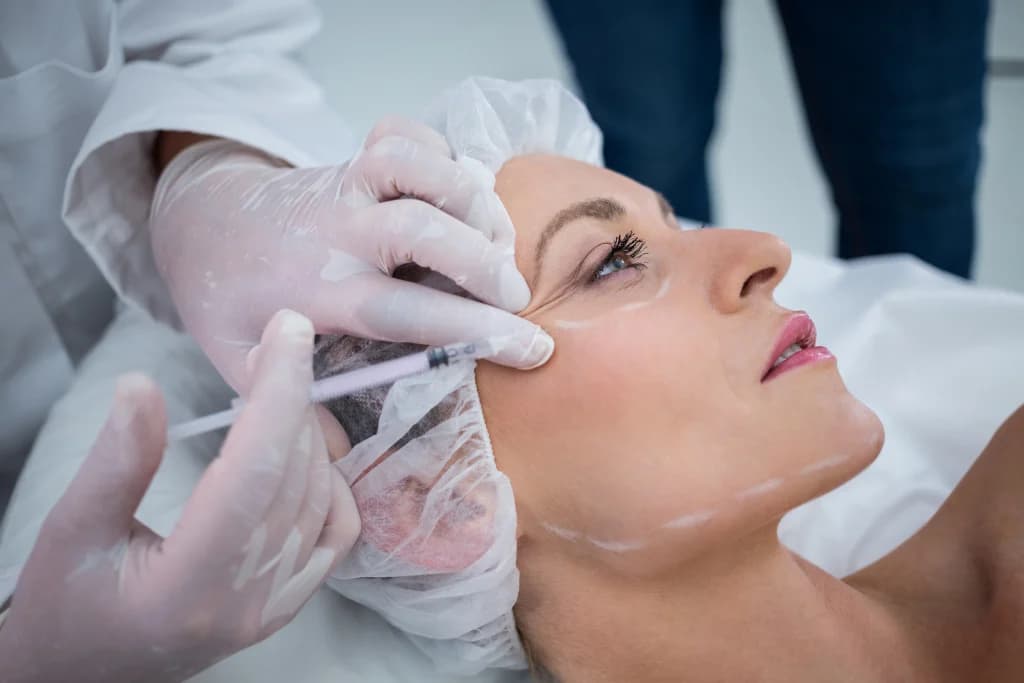
People who come in about a square jawline often turn out to want something done about the frown line as well, and the question that follows is never "which one" — it is "can both happen today, and in what order". The honest answer is that the order and the spacing are set at the consultation, because neither treatment page sets out a combined protocol. What is documented is enough to tell you what the conversation will be about.
Masseter Botox places botulinum toxin into the masseter, the thick chewing muscle at the angle of the jaw, so that an overactive muscle reduces and both the squareness and the clenching ease. Botox places the same substance into the muscles behind expression lines — horizontal forehead lines, the vertical frown lines between the brows, crow's feet at the outer corners of the eyes. Same material, two different jobs, two different muscles.
Can both be treated in the same appointment?
That is a clinical decision rather than a scheduling one, and it is made once the doctor has seen your face. What the two treatment pages do establish is the scale of each: roughly fifteen to thirty minutes of injecting for the masseter, and roughly fifteen to thirty minutes for the upper face. Neither is an afternoon.
They also share a requirement that makes a single consultation sensible. Both are dosed from your own anatomy rather than a template — the masseter is palpated at rest and clenched, and the upper-face map is planned after watching how your face actually moves. Both are assessed, dosed and injected by a doctor. A total dose across two regions is exactly the sort of thing that needs one person holding the whole plan, which is the argument for having the assessment together even if the injections end up separated.
Where the treatment pages are silent — on whether both regions are treated in one sitting, and how much is given at once — the plan is set at consultation. Nobody should be giving you that number from an article.
Does the order within the visit matter?
Both areas are marked before anything is injected, and in both cases the marking depends on seeing the muscle work. The masseter is marked while you clench, so the muscle's true bulk and borders are visible. The upper face is mapped after the doctor has watched your face at rest and in movement, and the points are drawn on the skin first.
So the order that matters is not jaw-then-forehead or the reverse. It is assessment, then marking, then injecting — and a combined plan simply means that sequence runs twice before any needle is used.
Why do the two results appear on different timelines?
This is the part that surprises people most, and it is worth knowing before you start watching the mirror.
Upper-face results begin to show at around four to seven days and settle by about two weeks. The masseter works to a slower clock: the muscle starts relaxing within about two weeks, and the visible slimming builds over four to six weeks, because the muscle reduces gradually once it stops overworking. Grinding relief usually arrives before any of the slimming does — many patients notice the morning jaw tightness easing first.
Treated together, that means your forehead will have finished changing while your jawline is still a fortnight from its result. Nothing has gone wrong. The two tissues are responding at the rates their own treatment pages describe.
What is the two-week review for when both areas are treated?
For the upper face, two weeks is when the effect has fully settled — which is why the review exists at that point. If a point needs a small adjustment, it is done at that visit rather than guessed at on the day. Temporary heaviness or slight asymmetry in the first fortnight is uncommon but is precisely what that appointment is there to catch.
For the jaw, two weeks is early. The masseter is checked at review too, but the slimming is still building then. So the same appointment is doing two different things: finishing one treatment and checking in on the other. Worth knowing, so you do not arrive expecting a verdict on your jawline.
Will the two stay in step as they wear off?
No, and this is the practical reason a combination is a plan rather than a one-off. Upper-face results typically last three to six months. Masseter results typically last four to six months, and with repeated treatment the muscle often stays reduced for longer between sessions.
Two different durations mean the two areas drift out of alignment over a year. Whether they are then brought back into step, or simply maintained separately as each fades, is a conversation for your review appointment rather than something to decide now.
Is the aftercare different if both areas were treated?
The instructions are the same for each, which makes a combined day simpler than people expect. You can leave straight away. Avoid rubbing or massaging the treated areas for twenty-four hours, skip exercise for the rest of the day, and for upper-face treatment stay upright for the first few hours. Downtime is minimal on both counts and most patients return to work the same day.
The one addition from the jaw is chewing. Chewing can feel slightly tired for the first days as the masseter relaxes, and it settles as other muscles share the work. If both regions were treated, that is the only sensation specific to the combination, and it is not a reason to plan a quiet week.
What is worth bringing to the consultation?
The complaint, not the treatment list. My jaw aches when I wake up and I look stern in every photograph are two problems, and whether they are solved in one visit or two is a judgement made after your face has been examined at rest, in movement and while clenching.
Two things to mention without being asked: any blood-thinning medication, and any fish-oil supplement, since both make bruising at the injection points more likely. You will also be asked to avoid alcohol for twenty-four hours beforehand and to eat before you come in — advice that applies to each treatment separately and therefore certainly to both.
There is one genuinely practical Bangalore argument for asking about a combination at all: anyone who has crossed the city on a weekday evening for a twenty-minute appointment knows the value of making one trip instead of two. That is a reasonable thing to raise. It is just not the thing that decides it.
Where this leaves you
With a question for a doctor rather than an answer from a page. Both treatments are reversible by design — the effect wears off over months rather than being permanent — so a first session is a low-commitment way to find out whether either change suits you, let alone both.
If the jaw and the upper face are both on your mind, book an appointment and have them assessed in the same conversation. The consultation fee is waived against treatment if you go ahead.