
Skin Botox vs Botox: How to Choose
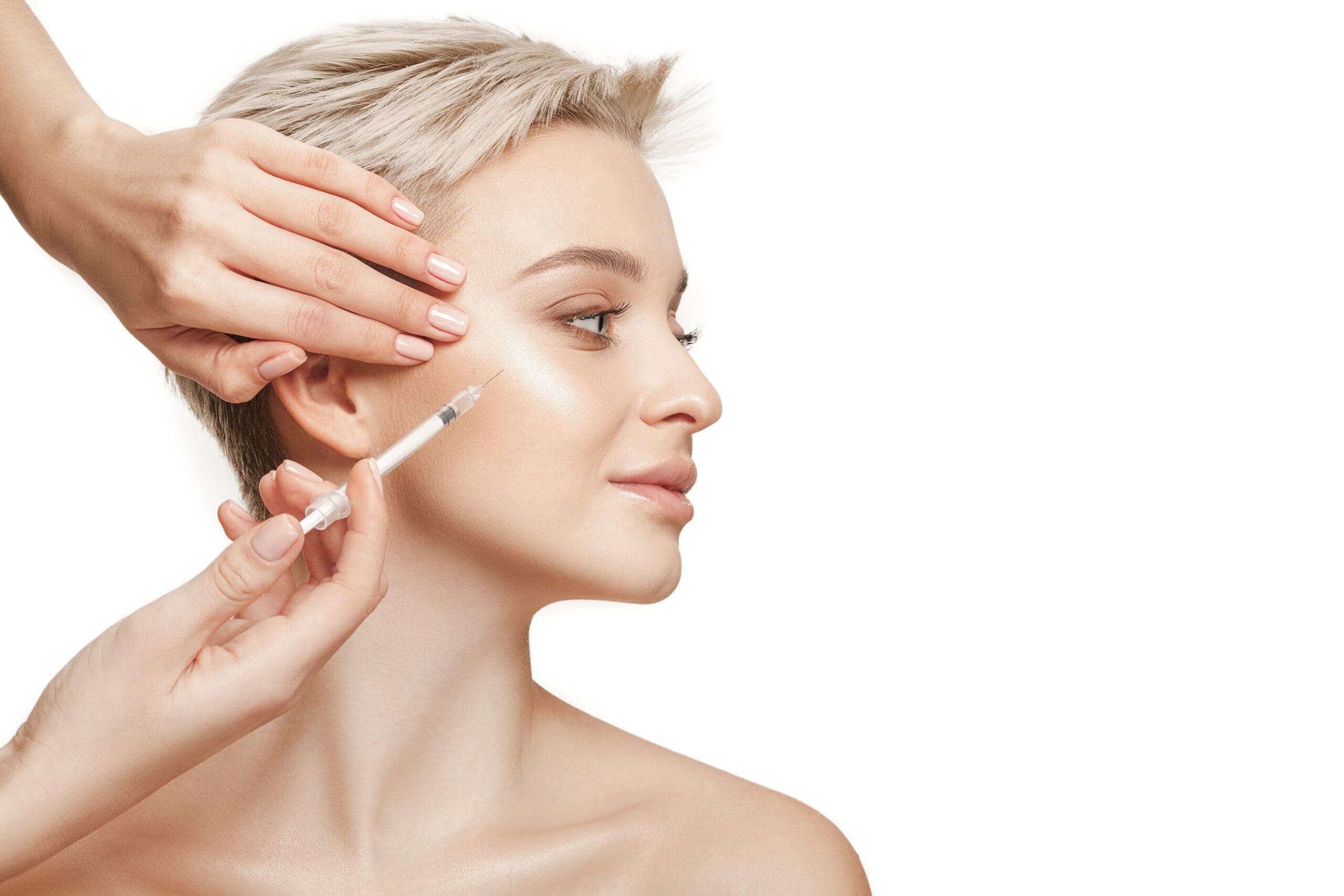
Choose between them by depth, not by name. Standard Botox goes into the muscle to soften forehead lines, frown lines and crow's feet. Skin Botox is heavily diluted and placed in the superficial skin, so it works on texture, pore appearance and oiliness. They answer different complaints, and most people only need one.
The shared word in the two names causes more confusion than any other single thing in this part of aesthetic medicine. Here is the comparison in full.
What am I actually choosing between?
Two techniques using the same class of prescription medicine, separated by two variables: how deep it goes, and how strong it is when it gets there.
Botox is placed into the muscles that create expression lines, at full working strength, at points a doctor has mapped after watching how your face moves. Quieten those muscles and the skin over them creases less.
Skin Botox — also called micro-Botox or mesobotox — is heavily diluted and placed in the most superficial layer of the skin, in many tiny amounts across an area. It acts on the small muscles and glands sitting close to the surface, which is a different population of structures with a different effect.
They are not two grades of the same product. They are two answers to two questions.
The two side by side
| Skin Botox | Botox | |
|---|---|---|
| Where it goes | Superficial layer of the skin | Into the mapped facial muscles |
| Strength | Heavily diluted | Full working strength, dosed to your muscle pattern |
| What it targets | Texture, pore appearance, oiliness | Forehead lines, frown lines, crow's feet |
| Effect on expression | Not aiming at it; expression left alone | Lines softened with movement deliberately retained |
| Appointment | A short in-clinic appointment | About 15 to 30 minutes |
| Sessions | Varies with your skin; plan confirmed at consultation | A single sitting, reviewed at two weeks |
| Result appears | Over the days following, improving gradually | Around four to seven days, settling by two weeks |
| How long it lasts | Not published for this technique | Typically three to six months |
| Downtime | Minimal — mild redness that usually settles quickly | Minimal — most return to work the same day |
| Consultation | ₹500, waived off against treatment | ₹500, waived off against treatment |
When does Skin Botox genuinely win?
When your complaint is the surface of your skin rather than the lines in it.
If your pores look large across the cheeks and nose however carefully you cleanse, if your skin goes shiny within a couple of hours of getting ready, or if you want a smoother-looking surface — standard Botox has nothing to offer you. It is placed in muscle, and none of those three complaints is caused by muscle. Dosing it more conservatively would not help; it is in the wrong place.
Skin Botox also wins outright for the patient whose priority is that nothing about their expression changes. Standard Botox is dosed conservatively here so that lines soften while movement is retained, which is a good outcome and still a deliberate change to how your face moves. Skin Botox is not aiming at your expression at all. If "I want my face to move exactly as it does now" is non-negotiable for you, that is a meaningful difference.
When does standard Botox genuinely win?
When the thing you mind is a line, and particularly a line that deepens when you move.
Horizontal forehead lines, the vertical frown lines between the brows, and crow's feet at the outer corners of the eyes are what a wrinkle-relaxing injection into muscle exists for. Skin Botox will not address them. Diluted product in the superficial skin does not reach the muscle creating the fold, and no amount of technique makes it.
There is a further distinction worth knowing before you book either. Part of the Botox assessment is separating lines that are dynamic — created by movement — from those that are static, because only the first group responds well to a wrinkle-relaxing injectable. If your line is visible when your face is completely at rest and does not change when you move, be prepared for that conversation.
What can standard Botox tell you that Skin Botox cannot?
This is the row people skip, and it is a real advantage.
Standard Botox comes with published numbers. You are told the appointment runs about 15 to 30 minutes, that changes usually begin around four to seven days and settle by two weeks, that the effect typically lasts three to six months, that it is a single sitting with a two-week review built in, and that the products used are FDA-approved with a long record of clinical use. You can plan a calendar and a budget around all of that.
Skin Botox offers less of that certainty by its nature. The number of sessions varies with your skin and is confirmed at consultation rather than in advance; the result develops gradually rather than on a published timetable; and this clinic does not publish how long a single session's effect lasts for the technique. If you are someone who wants to know exactly what you are committing to before you commit, standard Botox is the more predictable of the two, and that is a legitimate reason to prefer it for a concern it actually addresses.
Botox is also framed as reversible by design — the effect wears off over months rather than being permanent, so a first treatment is a low-commitment way to see whether you like the result. If you stop, the effect simply wears off and lines return to how they were, not worse.
Do the side effects differ?
They overlap, and the differences follow from the depth.
Both can bruise at the injection points, and both are more likely to for patients on blood-thinning medication — for Botox, fish oil is flagged too. In both cases bruising generally clears within a few days.
After Skin Botox, redness and mild swelling are common and generally settle within a day, and some patients notice temporary dryness or flaking that typically subsides within about a day. After Botox, tiny raised bumps and mild redness at the injection points are common and usually settle within an hour or two, and bruising can be covered with makeup after the first 24 hours.
The one meaningful asymmetry is that Botox carries an uncommon possibility of temporary heaviness or asymmetry as the effect settles unevenly in the first fortnight — which is precisely what the two-week review exists to catch and correct. Skin Botox does not document that, which is consistent with a product that is not placed in muscle in the first place.
Who should not have each of them?
Neither is advised during pregnancy or breastfeeding.
Beyond that they diverge. Skin Botox is additionally not advised over active acne, active herpes, severe eczema or psoriasis, for those prone to keloid scarring, or during chemotherapy. Botox is not advised where there is an active infection at the injection site, or with certain neuromuscular conditions.
For either, tell your doctor about all medication, including blood thinners. Botulinum toxin is a prescription medicine in both techniques, and the medical history review is not a formality.
What about cost?
Botox is priced per unit — from ₹299 per unit — and that qualifier is the whole point of the sentence. Nobody has one unit. A per-unit rate is not the price of a treatment, and how many units you need depends on your muscle pattern and the areas being treated, which is why the figure that matters comes out of the consultation rather than a webpage.
This clinic does not publish a price for Skin Botox. What it costs follows the plan the doctor arrives at, and the plan follows the assessment.
Can I have both?
That is a question for the doctor rather than for an article. Neither treatment's documentation here sets out a combined protocol, so it is not something to assume in either direction — but it is a perfectly sensible thing to raise, particularly if you arrived with two complaints and have realised while reading this that they belong to two different treatments.
How the choice actually gets made
By examination, not by article. The assessment for either treatment involves a doctor looking at your skin — pore size, oiliness and texture for one; your face at rest and in movement for the other — and confirming which tool matches what you want changed.
You are allowed to arrive uncertain. Patients frequently book one and are recommended the other, and that is the consultation doing its job rather than a wasted appointment. The fee is ₹500 either way, waived off against treatment.
If you now know which complaint you have but not which treatment answers it, book an appointment and let the examination settle it.