
Radio Frequency Cautery vs Beauty Spot: How to Choose
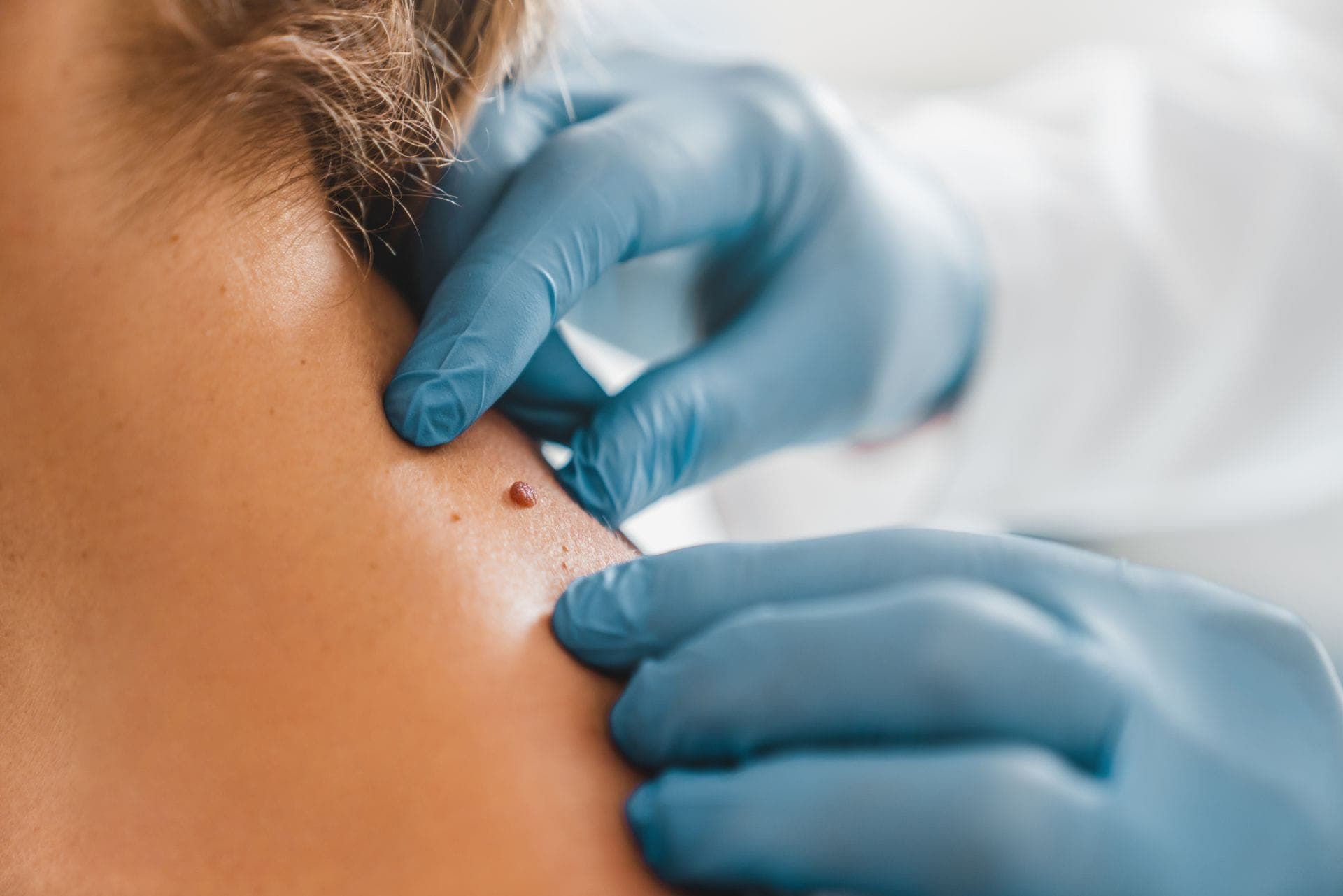
These two are opposites rather than alternatives. Radiofrequency cautery removes a small growth from your skin — a tag, a wart, a raised mole — under local anaesthetic. A beauty spot places a mark that was never there, using medical-grade pigment. If you find yourself weighing them against each other, the question that settles it is whether you want something gone or something added.
That sounds obvious written down, and it is not obvious in a search box. The terms sit next to each other online because both involve a small dark mark on a face, and patients arrive at radiofrequency cautery and beauty spot consultations genuinely unsure which one they came for. This is what each actually involves.
What does each procedure do?
Radiofrequency cautery is a medical removal. A fine electrode delivers high-frequency energy directly to the lesion, taking it off in layers down to the level of the surrounding skin. It suits small, superficial growths — skin tags, warts, raised moles, milia and similar lesions. The area is numbed with local anaesthetic, applied or injected depending on the lesion, and each one takes only minutes, so several can be treated in a single visit.
A beauty spot is a cosmetic placement. A single dot of medical-grade pigment is implanted at an agreed point on the face with a single-use sterile needle, after numbing cream. Pigment is chosen against your own undertone so the mark reads as a feature rather than as an applied dot, and the position is drawn on and checked with you in a mirror from several angles before anything is implanted.
Both are clinical procedures. Cautery is performed by a doctor; the beauty spot is placed under a doctor's supervision, because implanting pigment into skin is a medical act rather than a cosmetic one.
How do they compare side by side?
| Radiofrequency cautery | Beauty spot | |
|---|---|---|
| What it does | Removes a small skin growth | Places a cosmetic pigment mark |
| Suited to | Skin tags, warts, raised moles, milia and similar lesions | A single dot on the face, positioned and shade-matched |
| Numbing | Local anaesthetic, applied or injected at the site | Numbing cream before placement |
| Appointment | Minutes per lesion; several can be treated in one visit | Short — the placement itself takes minutes |
| Sessions | Usually one visit per lesion; some need a second | One session, with a review once the colour settles |
| Healing | A small scab that settles over one to two weeks | Colour darkens, then lightens over one to two weeks |
| Permanence | Tags and moles usually do not return at that site; warts can recur | Semi permanent — it softens gradually over time |
| Consultation | ₹500, waived against treatment | ₹500, waived against treatment |
I have a mole already. Which one applies to me?
Cautery — but with an important step first. Any growth being removed should be examined by a doctor before it is treated. A mole with irregular features should be investigated rather than simply removed, because cautery does not leave an intact sample to send for testing. If yours needs that, you will be told so and referred, and that is the right answer rather than a delay.
This is the single most useful thing to know before you book either procedure, and it applies to the beauty spot too. If there is already a mole or lesion at the position where you want a spot placed, it is assessed before any pigment goes near it. A cosmetic mark should never be placed over something nobody has looked at properly.
I have always drawn one on. Which one applies to me?
The beauty spot, and the reason patients give is consistent: it does not smudge, transfer or come off with cleanser. The value of the procedure sits almost entirely in two decisions made before any needle is used — where it goes, and what shade it is. Position is checked with you in a mirror because it is the part that cannot easily be undone, and shade is matched to your undertone because too dark or too cool a colour is exactly what makes a cosmetic beauty spot look drawn on.
Expect the colour to look darker and sharper for the first few days and then lighten as the skin heals. That is not the final result. The doctor deliberately starts on the lighter side, because deepening a mark at review is straightforward and lightening one is not.
Which is easier to change my mind about?
This is where most people's instinct runs backwards.
Removal is the more permanent of the two. Skin tags and moles removed properly usually do not return at that site, though new ones can appear elsewhere; warts recur more often and sometimes need a second session. Once a lesion is gone, it is gone.
The beauty spot is semi permanent. The pigment softens gradually over time at a rate that depends on your skin type, sun exposure and skincare, and many patients have it refreshed periodically. Removal options exist but are not straightforward, so the honest advice is to be certain about the position at the marking stage rather than to rely on reversing it later.
So: removal is intended to be final and usually is. Placement fades on its own but is awkward to actively undo. Neither is a decision to make casually in a chair.
What should I expect afterwards, and what should I report?
After cautery, redness, scabbing and mild swelling at each treated point are expected, and the scab usually separates over one to two weeks. The healed skin can look pink, or darker than the surrounding skin, for some weeks — more commonly on deeper skin tones, which is why sun protection during healing matters. A small mark is possible, particularly if a scab is picked or if you scar heavily. Contact the clinic rather than waiting if you notice increasing pain, spreading redness or discharge.
After a beauty spot, expect redness and slight swelling for a day or so, then darkening and a small flake as it heals. Picking that flake lifts pigment out and leaves the mark patchy. Keep the area clean and dry, use the ointment provided, and protect it from direct sun. Report spreading redness, increasing pain or discharge promptly here too.
Some things rule each one out for now. For cautery, tell your doctor if you have a pacemaker or other implanted electronic device, take blood-thinning medication, are pregnant, have an active infection at the site, or scar heavily. A beauty spot is not advised during pregnancy or breastfeeding, over an active skin infection or inflamed skin at the site, or for those prone to keloid scarring. A history of keloid or hypertrophic scarring is worth volunteering before either procedure rather than after.
How does a consultation settle it?
By looking. A doctor examines what is actually on your skin — which is how a mole that needs investigating gets caught, and how you find out whether what you have is one of the lesions cautery suits. If what you want is a mark added rather than removed, the same appointment covers your skin tone and undertone, any allergies, any tendency to keloid scarring, and where exactly you want it, with the position drawn on and agreed in a mirror before anything is implanted.
The consultation is ₹500, waived against treatment. Come with the question phrased as plainly as you can — "I want this gone" or "I want one here" — and bring photographs of anything else you would like assessed while you are there.
Book an appointment and a doctor will tell you which of the two you are actually asking for, and whether it is suitable for your skin.