
QR678 Hair Growth Treatment vs GFC Hair Loss Treatment: How to Choose
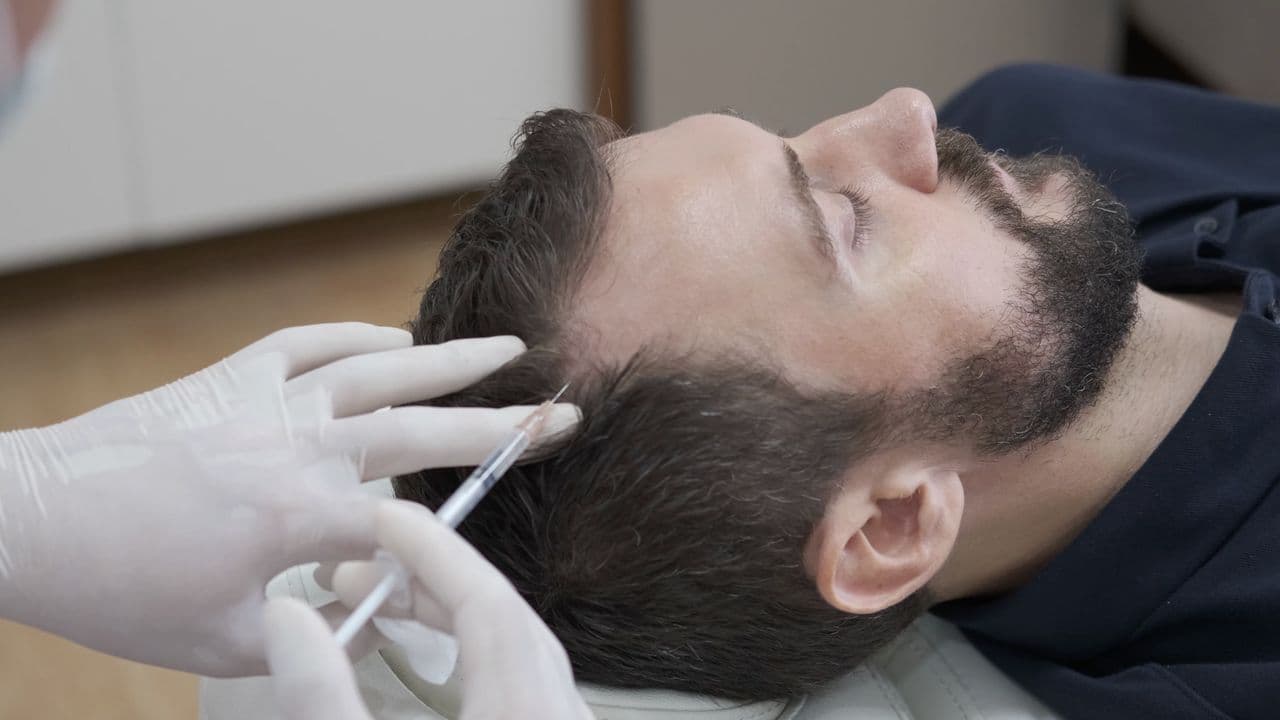
QR678 and GFC both deliver growth factors into a thinning scalp, and the difference that decides between them is where those growth factors come from. QR678 is a ready-made, plant-derived formulation, so no blood is drawn at any visit. GFC is prepared from about 10ml of your own blood at every session. Your scalp and your preferences settle which one fits.
That is the whole comparison in one line, and almost every other difference between QR678 and GFC follows from it — how long you sit in the chair, what you do before you arrive, and what varies from patient to patient. Below is what each treatment involves at The Aesthetic Edge, taken from the way we actually run them, so you can arrive at consultation with the right question rather than a brand name.
What is the actual difference between QR678 and GFC?
QR678 is a manufactured formulation. The growth factors in it are sourced from plant-based origins, arrive at the clinic already prepared, and are injected superficially into the thinning areas of the scalp with very fine needles. Nothing is taken from you first.
GFC — Growth Factor Concentrate — works the other way round. Around 10ml of your blood is drawn at the start of the appointment and processed in a centrifuge, which activates the platelets and separates out the growth factor fraction they release. Roughly 4 to 5ml of that concentrate is then injected across your scalp. It is a more concentrated preparation than standard PRP, because it isolates what the platelets release rather than injecting the platelet fraction whole.
So one is a product with a fixed composition, made off-site. The other is a preparation made in the room, from you, on the day. Both are injected by a doctor; neither involves surgery, incisions or stitches.
Does QR678 involve a blood draw?
No. That is the practical headline for most patients who ask about it. There is no venepuncture and no wait for a centrifuge at any QR678 session, which is why a session runs to about 15 minutes.
GFC requires a draw every single time — not once at the start of the course, but at each session, because the concentrate is prepared fresh. If needles in the arm are the part you dread, or if you would rather not build a course around repeated blood draws, that is a legitimate reason to raise QR678 at consultation. It is one of the reasons patients tell us they choose it.
How do the appointments compare?
| QR678 | GFC | |
|---|---|---|
| Source of growth factors | Plant-derived formulation | Prepared from your own blood |
| Blood draw | Not required | About 10ml, at every session |
| Session time | About 15 minutes | About 30 minutes |
| Typical course | Around five sessions, roughly three weeks apart | Four to six sessions, spaced by your doctor |
| Maintenance | Reviewed at the three-month mark | Roughly one session every two to three months |
| Numbing | Most patients tolerate the injections without anaesthesia | Anaesthetic cream applied 30 to 45 minutes beforehand |
| Downtime | None | None — normal activity the same day |
| Performed by | A doctor, always | A doctor, always |
| Consultation | ₹500, waived against treatment | ₹500, waived against treatment |
The time difference is not padding — it is the blood draw and the processing. A GFC appointment also starts earlier than the injection does, because anaesthetic cream sits on the scalp for 30 to 45 minutes first. QR678 has no such build-up, which is what makes it the one patients describe as fitting into a lunch break.
What do I have to do before and after each one?
For GFC, there is real preparation. Aspirin, anti-inflammatories and blood thinners are usually paused for 48 to 72 hours beforehand, on your doctor's instruction — so if you take any of these regularly, say so at consultation rather than on the day. Afterwards, apply ice if there is swelling, avoid aspirin and anti-inflammatory medication for three days, and keep away from strenuous exercise, swimming and direct sun for two days. Hair products wait six hours, and a pH-balanced shampoo is used for the first three days. Bruising, redness, itching or mild pain can last two to five days.
QR678 is lighter on both ends. The scalp is cleaned with an alcohol swab immediately before the session, and slight soreness afterwards usually settles within a few hours. Neither treatment has a recovery period in the sense of time off.
Which one suits me?
Neither is the general answer; both act on follicles that are still present and active. QR678 is used for male pattern baldness, female pattern hair loss and certain forms of alopecia. GFC is used in both men and women, and the earlier stages of pattern loss are where it has the most to work with. If an area of your scalp has been bare for years, neither will do much there — that is a limitation of the mechanism, not a shortfall of one product, and a doctor will tell you plainly at consultation rather than sell you a course.
There are also things that rule each one out for now. QR678 is not advised during pregnancy or breastfeeding, and is generally not started for hair loss of less than six months' duration. GFC is not carried out during pregnancy or breastfeeding, while you are on antibiotics or blood-thinning medication, or where there is an active scalp infection. Disclose your full medical history and every medication you take — including the ones you consider too ordinary to mention.
How will I know whether it is working?
The same way for both, which makes them genuinely comparable. Scalp photographs are taken before your first session, and progress is judged against those photographs at around the three-month mark rather than from memory. Reduced shedding tends to be the first change patients notice; density takes months, because hair grows slowly. Results vary between patients and no one can promise regrowth — how much active follicle you still have is the limiting factor, and that is assessed at consultation.
Neither course is fixed at the outset. Both are reviewed at three months against your baseline and adjusted from there. If something in your scalp changes between sessions — spreading redness, a tender or infected-looking patch, or a sudden increase in shedding — contact the clinic rather than waiting for the next appointment.
So how do I actually choose?
Honestly, most patients do not choose between them on paper. They come in with hair that is thinning, a doctor examines the scalp, reviews how long it has been going on and what else might be driving it, and the pattern of loss narrows the options. What you can decide in advance is what you are willing to do repeatedly: if a blood draw at every visit is a genuine obstacle, or if you need appointments that finish in a quarter of an hour, say so — it is useful information, not a fussy preference.
Bring your history, your medication list and, if you have them, older photographs of your hair. The consultation is ₹500, waived against treatment, and the per-session figure for whichever route suits you is confirmed once a doctor has seen your scalp and knows how many sessions the plan involves.
Ready to find out which one your scalp is a candidate for? Book an appointment and a doctor will examine it and tell you honestly what non-surgical treatment can and cannot do in your case.