
Lip Micropigmentation: The Myths Worth Clearing Up Before You Book
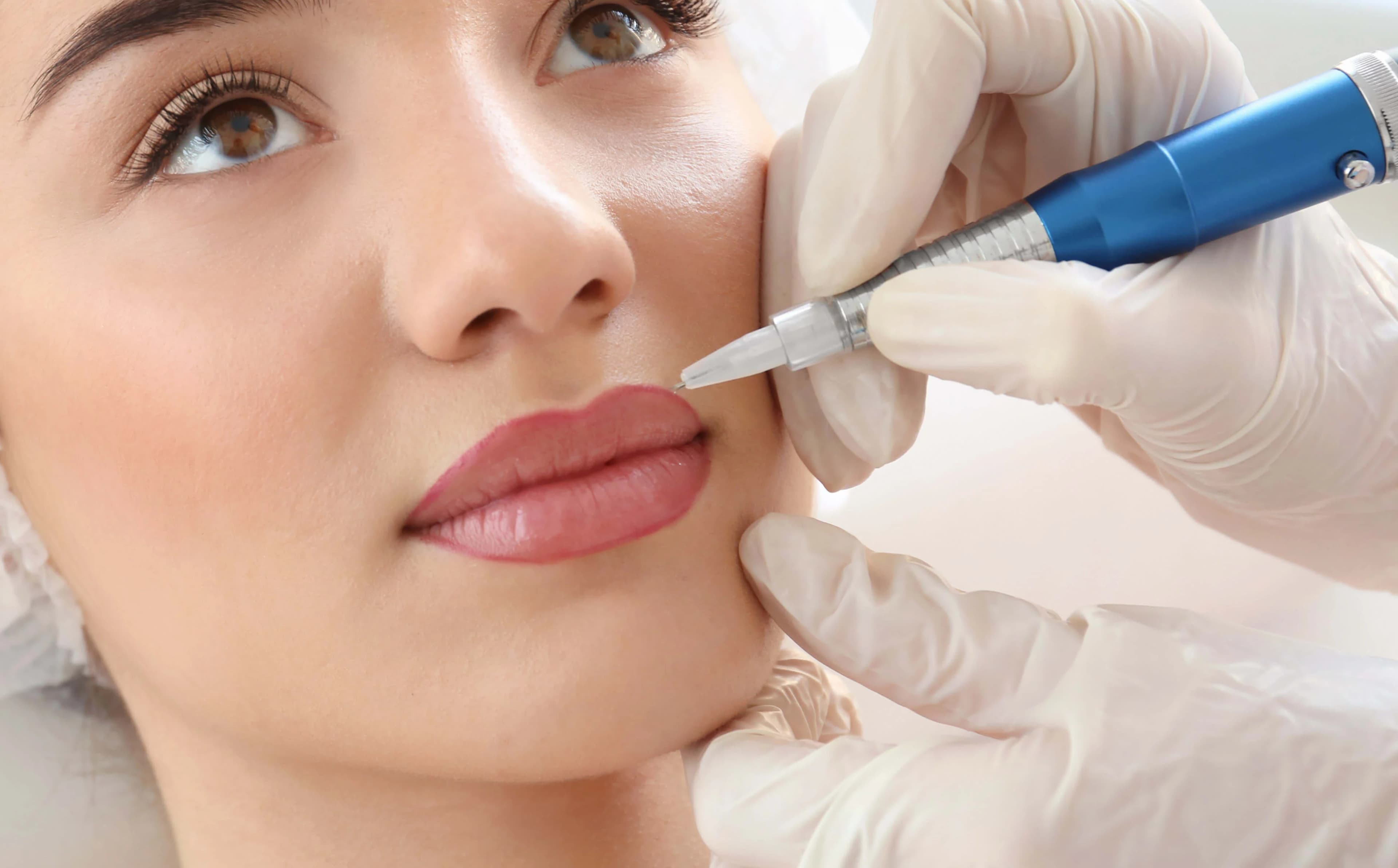
Most misunderstandings about lip micropigmentation come down to one thing: people expect a cosmetic product and get a semi-permanent tattoo. It does not lighten skin, it does not add volume, the colour on day one is not your result, and it fades over years rather than lasting forever. Knowing that before you book changes what you ask for.
Here are the nine that come up most often at consultation, and what is actually true of each.
"It is permanent, so I only ever do it once"
The accurate word is semi-permanent, and the difference is the whole point.
Pigment sits in the upper layer of the skin, and that skin renews itself. The tint softens gradually over the years at a rate that depends on your skin, your sun exposure and your aftercare. There is a touch-up at six weeks to perfect the finish, and most people plan an occasional refresh rather than expecting one visit to last indefinitely.
The related myth is that one appointment finishes it. It does not. The course is one primary session plus that six-week touch-up, and the touch-up is where the final colour is decided rather than an optional extra.
"It is the same thing as a lip tattoo"
Same family, different materials and a different depth.
Traditional lip tattooing uses generic ink placed at a depth that can turn blue or grey over time. Lip micropigmentation uses medical-grade pigments colour-matched to Indian skin and applied at a controlled depth, aiming at a natural finish rather than a drawn-on outline. It is still pigment in skin — that is why the disclosure and aftercare matter — but the formulation and the placement are not the same decision.
"It will lighten my dark lips"
It will not, and any clinic promising that is describing something else.
Skin lightening is not what this treatment does. A doctor first identifies why the lips are dark: hyperpigmentation, smoking, sun, iron deficiency or a reaction to a product. Where colour correction is appropriate, pigment is used to even out discolouration towards a natural pink lip tone. That is a different outcome from bleaching, and it is worth being precise about, because some causes of dark lips need medical review before any pigment work begins at all.
If persistent discolouration is your actual complaint, the assessment is the part that matters. Covering a cause you have not identified is rarely a good trade.
"It will make my lips look fuller"
Colour and volume are two separate treatments.
Lip micropigmentation changes colour and definition. Dermal filler changes volume. Some people have both, for different reasons, but one will not do the other's job. If your complaint is thin lips, pigment is not the answer; if your complaint is pale, patchy or undefined lips, filler is not the answer.
"The colour I see on day one is what I am keeping"
This is the myth that causes the most day-four panic.
Colour looks strong, saturated and darker than agreed for the first couple of days. Then it flakes and lightens substantially, often looking far too pale around days five to ten. The true colour returns as the skin matures over the following weeks — which is exactly why the touch-up is scheduled at six weeks and not sooner. Judging your result before then is judging an unfinished process.
"If I do not like it, they can just laser it off"
Removal is possible. It is neither quick nor simple, and this is the myth worth taking most seriously before you commit.
Lip blush does fade on its own over roughly one to three years. If you want it gone sooner, laser removal over several sessions spaced weeks apart is the usual route — and lips are delicate, so removal there is slower and more conservative than on a brow or an arm. Some pigments resist: certain shades, particularly those containing white or iron oxides, can darken on first laser contact rather than lighten, which is why a patch test matters. Complete removal cannot be promised. Significant fading is the realistic goal, over months rather than one appointment.
Where the colour healed to the wrong shade rather than being simply unwanted, colour correction can neutralise the cast without removing pigment — but whether that is possible depends on how saturated and how deep the existing work is, which is assessed in person.
Treat this as a decision you are making for a year or more. That framing leads to better questions at the consultation.
"It does not work well on deeper skin tones"
It is customised for them, and pretending otherwise is how results go wrong.
Pigment choice and technique here are adapted for every skin tone and undertone, including deep and melanin-rich Indian skin. That is not a courtesy line. Lips that already carry melanin, often unevenly, mix their existing tone with whatever goes in, so a shade chosen as though the lip were blank can heal ashy or grey. Colour selection for Indian undertones is the specific skill involved.
Ask any clinic to show you healed work — not day-one photographs — on skin like yours. That single question sorts most of the market.
"You will not feel a thing"
The procedure is designed to be comfortable and precise, and a numbing cream is applied beforehand. That is what we say, and it is deliberately weaker than the absolute you will see elsewhere — a needle is involved, and any clinic promising you will feel nothing at all is overstating it. The session runs under two hours under a doctor's supervision, and downtime afterwards is minimal, with most people returning to normal activity the same day.
"It is a beauty service, so any studio can do it"
Here it is performed by a doctor, always, and that is a deliberate difference rather than a marketing position.
The procedure breaks skin on the lip border, next to a common cold-sore site, and places pigment that stays for a year or more. Sterile single-use needles, medical supervision, a proper history and a practitioner who will postpone if you have anything active are what manage that. Every session is documented and tracked against a before-and-after baseline.
If you are combining this with other skin work, the same logic applies to sequencing. A chemical peel has its own flaking recovery, and BB Glow leaves treated skin more reactive to UV for a couple of weeks. Neither belongs stacked against a healing lip by accident.
The honest summary
Lip micropigmentation is a well-defined procedure with a clear course, a real healing period and a genuine commitment attached. It evens colour, it does not lighten skin, it does not add volume, and it is easier to place well than to remove. Everything it can and cannot do for your lips specifically is settled at an in-person assessment, not from a photograph.
Sessions start at ₹10,999 each, across a course of a primary session and the six-week touch-up. To have your lips assessed and your questions answered properly, book an appointment. Consultation ₹500, waived against treatment.