
How Lip Micropigmentation Actually Works
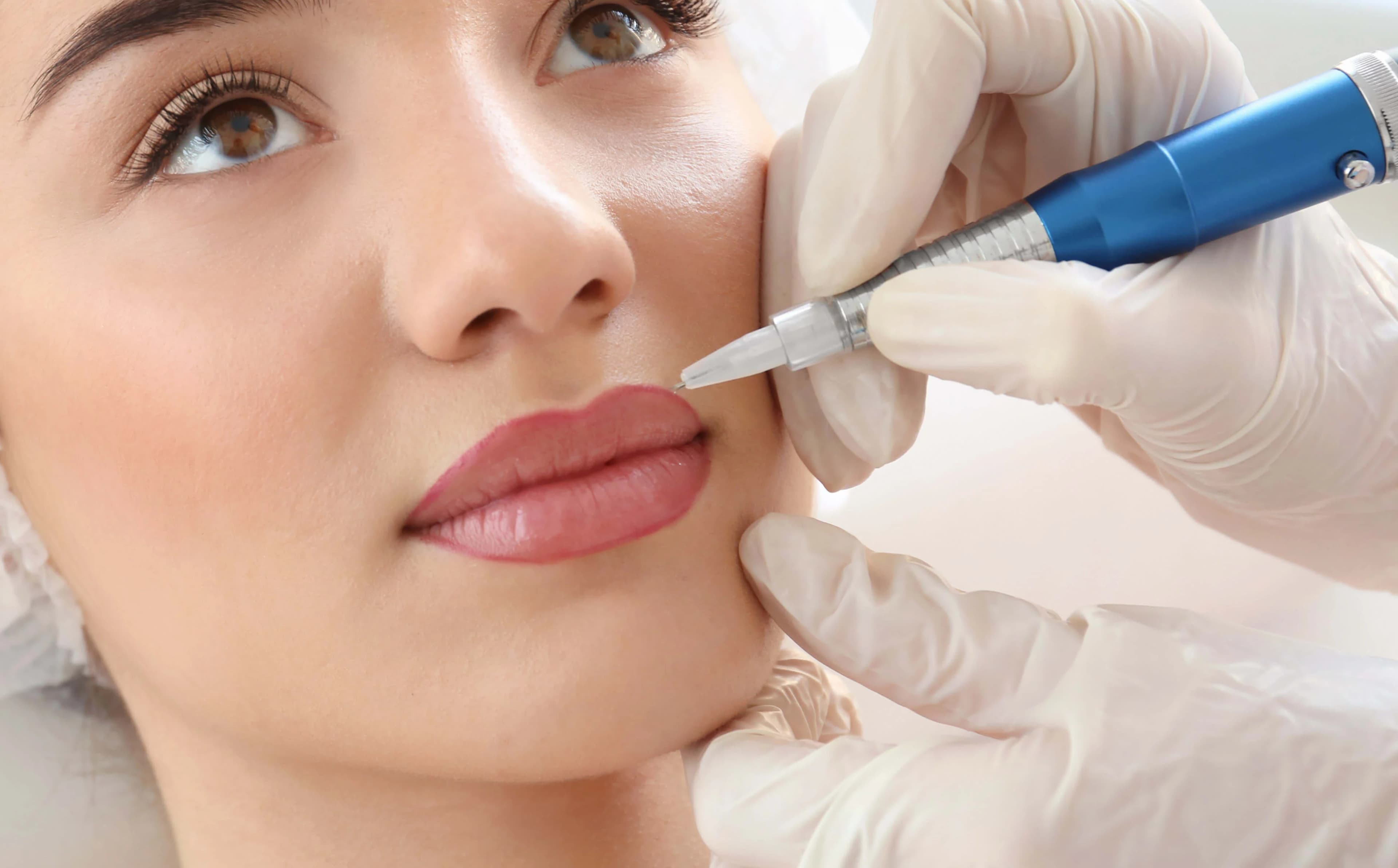
Lip micropigmentation places medical-grade pigment into the upper layer of the lip with a fine needle, at a controlled depth set by a doctor. The colour is mixed for your undertone rather than picked off a palette. One session of under two hours does the work, and a touch-up at six weeks settles the final finish.
That is the whole mechanism in four sentences. Everything below is the detail behind it, written for the reader who wants to understand a procedure before consenting to it rather than after.
What is actually being put into my lips?
Medical-grade pigment, which is not the same material as tattoo ink.
This distinction is not marketing. Generic tattoo ink is formulated to sit deep and stay put for decades, and its carrier and particle chemistry are built for that job. Pigment made for lip micropigmentation is formulated for a shallower placement in facial tissue, which is why it softens gradually rather than persisting unchanged and unmoved for thirty years.
The trade-off is honest and worth stating plainly: the material that behaves better in the lip is also the material that fades. That is why the accurate word for this procedure is semi-permanent, and why anyone describing it as one-and-done for life is describing something other than what is happening.
How deep does the needle go, and why does depth decide everything?
Into the upper layer of the lip, at a depth held constant by hand and by training.
Depth is the single variable that separates a result you are happy with from one you spend years regretting. Placed too shallow and the pigment lifts off almost as fast as it went in. Placed too deep, generic ink can turn blue or grey over time as the surrounding tissue disperses and reinterprets it — the familiar look of an old lip tattoo that has drifted away from any colour anyone chose.
Working at a controlled depth in the upper layer is what keeps the finish reading as lip colour. It is also what makes the fade graceful: because the pigment is sitting in tissue that renews itself, the colour softens over the years instead of shifting hue.
Why is the shade mixed for my undertone rather than chosen from a chart?
Because a shade that looks correct in a jar is not a shade that looks correct in your lip.
Pigment placed in the lip is not opaque. It sits over your own lip tone and the two combine, so the visible result is always the mixture rather than the swatch. Two people can be given identical pigment and finish with visibly different lips, purely because of what was underneath.
That is the reasoning behind the mapping step. Pigment here is chosen specifically for your skin undertone, because Indian skin needs Indian-specific colour science, and the shade is tested on your skin tone before the full procedure begins. You also choose the depth of colour with your doctor at consultation, anywhere from a soft natural tint to a fuller colour.
What happens across the two hours I am in the chair?
Four stages, in a fixed order.
Lip assessment. Your natural lip tone, texture, skin type, facial proportions and any pigmentation concerns are studied first. This is the stage that decides whether pigment is the right answer at all.
Custom colour mapping. The shade is built for your undertone and agreed with you before anything begins.
The procedure itself. Numbing cream goes on beforehand. Pigment is then placed precisely, under a doctor's supervision, and the whole thing is finished in under two hours. Most people describe it as manageable rather than painful.
Healing and touch-up. You leave with a written before-and-aftercare sheet and an appointment six weeks out.
Downtime is minimal, and most people go back to their normal day straight afterwards.
Why is there a second appointment six weeks later?
Because the finish can only be judged once healing has finished, not before.
The six-week visit is designed into the treatment. It is not a repair for something that went wrong; it is the point at which your doctor looks at settled colour in settled tissue and perfects it. Planning for two appointments from the outset is the honest way to think about the timeline.
What happens between those appointments is set out on the aftercare sheet you are given, and that sheet is the authority for your treatment. Follow it rather than a day-by-day account you found online, because the person who wrote yours has seen your lips.
How is this different from a lip tattoo?
Different ink, different depth, different person holding the needle.
A lip tattoo uses generic ink at a depth that can turn blue or grey over time. Micropigmentation here uses medical-grade pigment colour-matched to Indian skin and applied at a controlled depth for a natural finish, with a doctor performing every session rather than supervising one from across the room.
Lip blush, lip blushing and lip shading all describe this same procedure under different names. Clinics differ on the label, not the technique.
Will this treat the reason my lips are dark in the first place?
No, and this is where an honest answer matters more than a sale.
We do not lighten skin. A doctor first works out why the lips are dark — hyperpigmentation, smoking, sun, iron deficiency or a reaction to a product are all common causes. Where colour correction is appropriate, pigment is used to even out discolouration towards a natural lip tone. Some of those causes need medical review before any pigment work begins, and if yours looks medical rather than cosmetic you will be told so before a needle is opened.
If your interest is in facial tone rather than lips, that is a different conversation: a BB Glow treatment tints the upper layers of facial skin temporarily, and a chemical peel works by renewing the surface rather than adding anything to it.
What should make me ring the clinic rather than wait it out?
Ring, rather than deciding for yourself what it means.
Your aftercare sheet covers what is expected during healing. Outside of that, contact the clinic promptly if swelling worsens instead of settling, if redness or heat spreads rather than fading, if there is weeping or crusting, if a cold sore develops on or near the lip, or if you run a fever. None of these are common. All of them are easier to deal with early, and none of them is something you should be grading at home from a photograph.
You will have a number to call and a doctor who already knows your case. Use it.
What it costs, and how the plan gets set
Lip pigmentation is from ₹10,999 per session. The usual plan is one primary session plus the six-week touch-up, and your doctor confirms that at consultation based on your lip tone and what you want the result to look like.
The consultation itself is ₹500, waived off against treatment. It is where the cause of any darkening gets assessed, where the shade is discussed, and where you are told if pigment is not the right route for you.
If you would like that assessment, you can book an appointment at either the Indiranagar or Bellandur clinic.