
Lip Micropigmentation Aftercare: The First Week, Day by Day
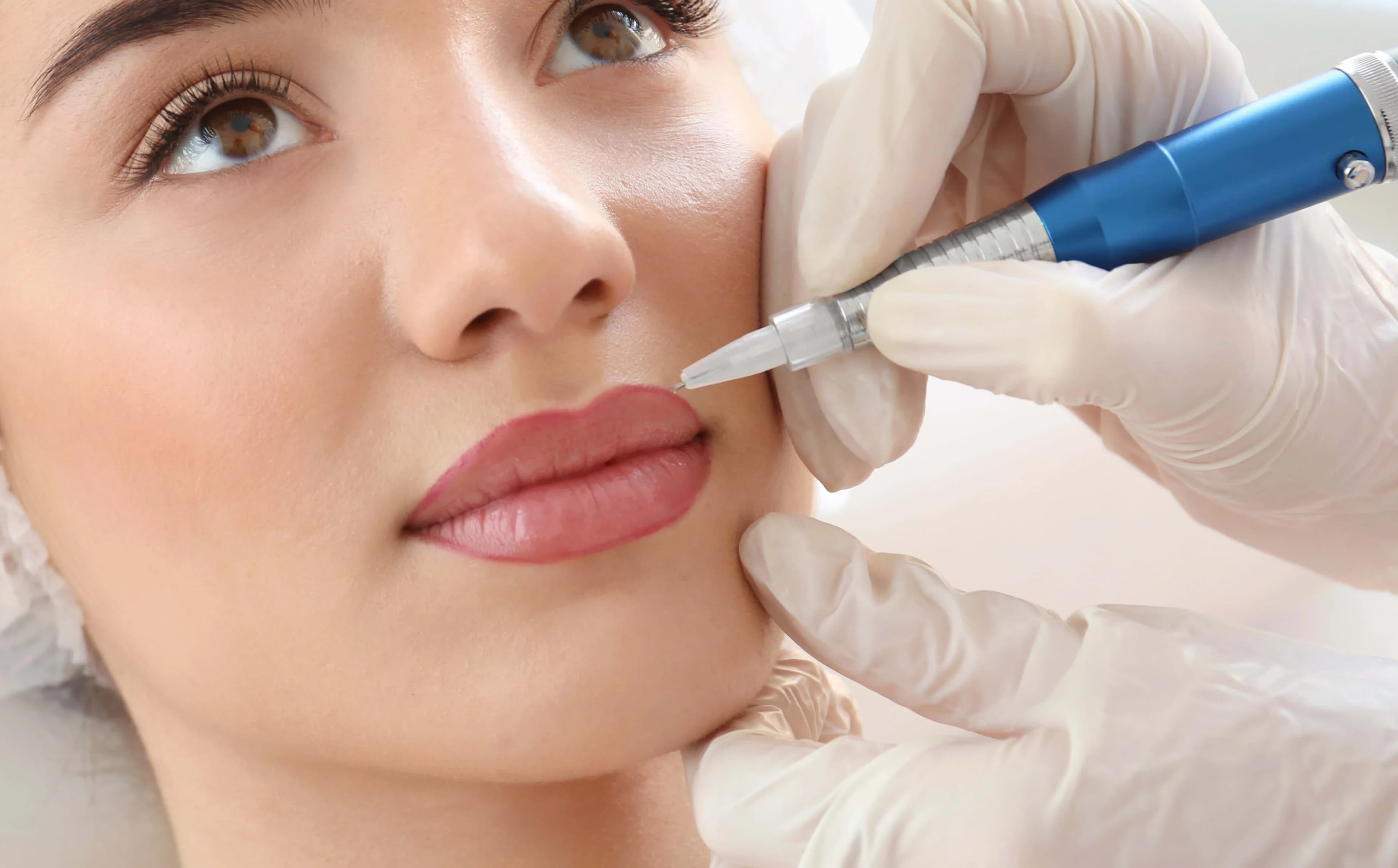
The first week after lip micropigmentation runs in three phases: swollen and far too dark for a couple of days, dry and flaking from day two to four, then worryingly pale from day five to ten. All of that is normal healing. What is not normal is worsening swelling, spreading redness, heat, discharge or fever — and those mean contacting the clinic, not waiting.
Your clinic gives you a written before-and-aftercare sheet, and that sheet is the instruction that governs your healing. This article is the map of what the week feels like, so you are not guessing at three in the morning on day four.
Day one: why do my lips look so much darker than we agreed?
Because they are swollen, and because pigment always looks strongest before it heals.
Expect tender, swollen lips and a colour noticeably deeper and more saturated than the shade you chose. This is not your result and it is not a mistake. The skin is holding surface pigment that will not stay, over a lip that is temporarily larger than usual. Most people are back to normal activity the same day — the downtime here is genuinely minimal — but plan a quiet evening rather than a big one.
Keep your hands off. Follow the sheet on cleaning and on any balm you have been given, and use what the clinic gave you rather than substituting something from the bathroom cabinet.
Days two to four: it is flaking and it looks patchy
This is the phase that makes people panic, and it is the one to sit through.
The lips go dry and tight, and flake lightly. Mid-flake the colour looks uneven, because some areas have shed and some have not. Do not pick. Let the flakes come away on their own. Picking pulls pigment out with the skin, and patchy retention is exactly the outcome you are trying to avoid. It is also how a clean, closed heal becomes an open one.
Practical things that help in this window: keep the lips from being dragged about — no scrubbing, no exfoliating, and nothing abrasive. Avoid heat and steam. Keep the area clean. If you are unsure whether something you normally do counts, the sheet or a phone call answers it faster than a search engine will.
Days five to ten: the colour has almost disappeared
This is the phase people quietly grieve, and it is temporary.
As new skin covers the pigment, the colour looks far too light — sometimes almost gone. Nothing has failed. The pigment is still there, under a fresh layer that has not yet settled. Colour returns as the skin matures over the following weeks, and the true result appears from around week three onwards.
This is precisely why the touch-up sits at six weeks rather than sooner. Judging your lips at day seven is judging an unfinished process, and no reputable clinic will adjust colour on a lip that has not finished healing.
What should I keep doing after the first week?
Two habits carry the result.
Sun protection. How quickly the tint softens depends on your skin, your sun exposure and your aftercare, and sun exposure is the variable you control most easily. Lip protection is worth making a routine rather than a holiday behaviour.
Leaving other treatments off the lip while it settles. A chemical peel has its own flaking recovery and its own temporary colour change, and BB Glow leaves treated skin more reactive to UV for a couple of weeks. Neither belongs on or beside a healing lip by accident. If you have a wider skin plan, let one doctor sequence all of it.
Then keep the six-week appointment. The touch-up is not an upsell; it is where the final colour is decided, and uneven retention — common enough that the touch-up partly exists for it — is addressed there.
Which signs mean I should contact the clinic?
Ring the clinic, on any of the following. You do not need to be certain, and you should not try to work out which one it is yourself.
- Swelling that worsens after day three rather than settling, or swelling that starts increasing again having already improved.
- Redness that spreads beyond the lip border into the surrounding skin.
- Heat. The area feeling hot to the touch, rather than simply tender.
- Pain that increases across the days instead of easing.
- Discharge, pus, or anything weeping from the treated area.
- Blistering or weeping, which may be a cold sore — particularly if you have ever had one before, and especially if it appears in the first few days.
- Fever, or feeling generally unwell, with any of the above.
- A rash, itching or swelling that spreads, which can suggest a reaction to the pigment. Reactions are uncommon, but they are a reason to be seen rather than to wait and watch.
- Anything you simply did not expect, including colour or texture changes that alarm you.
None of these tells you what is happening — that is the point. Describing a symptom to a doctor who has your notes is a two-minute call. Deciding for yourself that it is probably fine is how a small problem gets a head start.
Go straight to emergency care, without waiting for the clinic, if you have difficulty breathing or swallowing, swelling of the tongue, throat or face beyond the lips, or you feel faint or very unwell. That is not a call to make an appointment about. Ring emergency services or get to the nearest hospital immediately.
What if the clinic is closed?
Both branches are closed on Wednesdays, and anything can happen at nine in the evening.
Do not save an urgent symptom for opening hours. If you have spreading redness, worsening swelling, heat, discharge or a fever, seek medical care that day — your regular doctor, an urgent care service, or a hospital emergency department if it is out of hours. Take your aftercare sheet or a note of the procedure with you so whoever sees you knows exactly what was done and when. Then tell the clinic as soon as it opens, so it goes on your record and your touch-up plan can be adjusted.
For anything involving breathing, swallowing or swelling past the lips, the answer is emergency care immediately, regardless of the day or the hour.
The short version
Dark, then flaky, then pale, then right. That is the normal first week, and almost everything that alarms people in it is healing rather than harm. The exceptions are specific and listed above, and every one of them is a phone call rather than a judgement you make alone.
The full course is a primary session plus the six-week touch-up, from ₹10,999 per session. The process, and the written aftercare sheet that goes with it, are set out on the lip micropigmentation page. To have your lips assessed before any of this begins, book an appointment. Consultation ₹500, waived against treatment.