
Lip Micropigmentation on Indian Skin: What Changes and Why It Matters
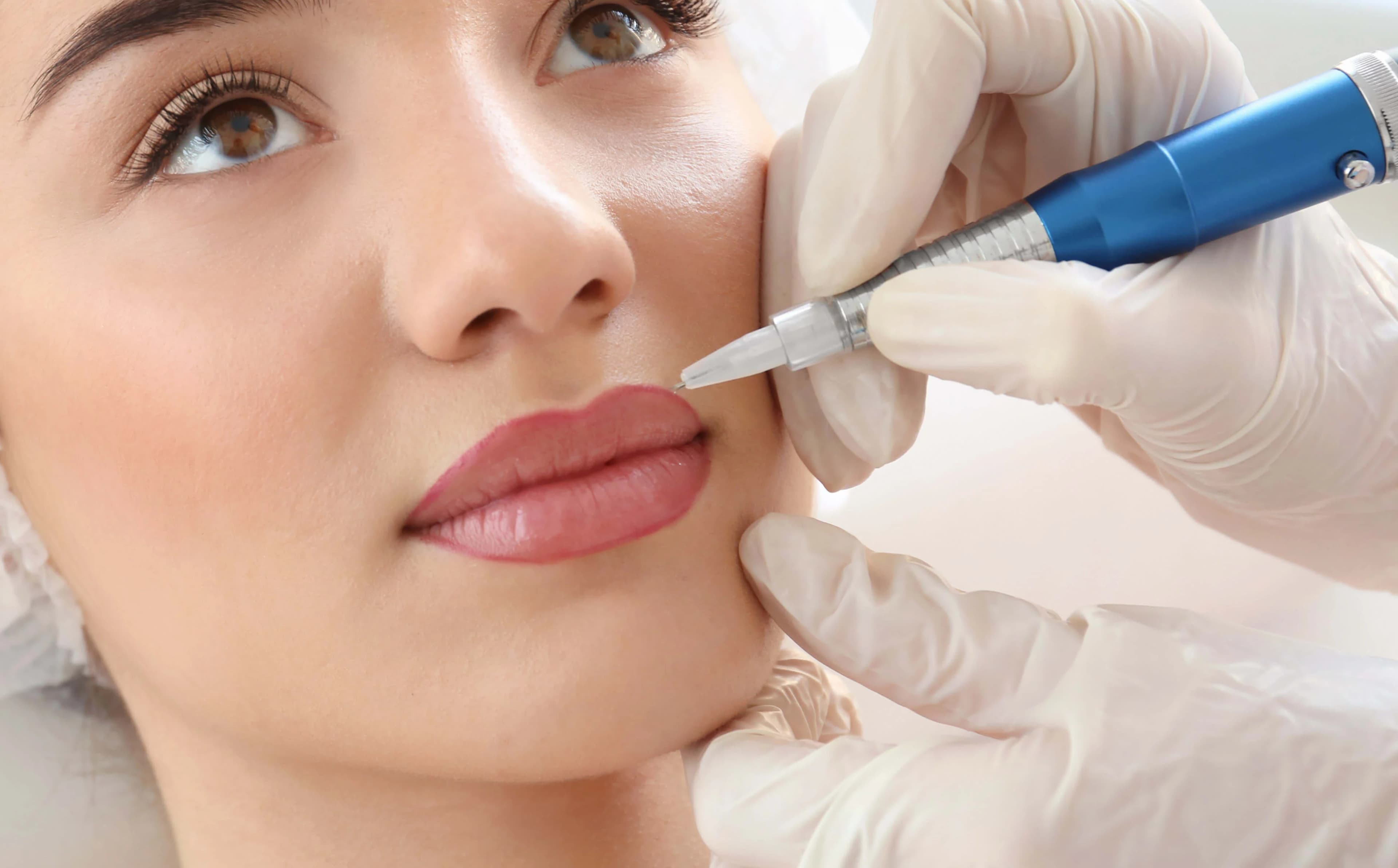
On deeper Indian skin tones, lip micropigmentation is not a different procedure — but it is a different problem. Melanin-rich lips already carry pigment, often unevenly, and that existing tone sits underneath whatever is placed into the skin. The shade you end up with is the new pigment seen through your own, which makes colour selection the entire skill rather than a preference.
That single fact reorganises everything else: how the shade is chosen, how the result is judged, how long you wait before judging it, and how carefully the healing period has to be handled. Here is each of those, honestly.
Why does the same pigment look different on deeper lips?
Because pigment is placed in the lip, not painted on it, so your own lip colour behaves like a filter sitting over it.
Think of it as one translucent layer laid over another. On pale, cool-toned lips the underlying tone contributes very little, so the healed shade lands close to the shade on the card. On lips that already carry brown, plum or grey-brown pigmentation, the underlying tone contributes a great deal — and it mixes rather than covers. A soft warm rose that heals as soft warm rose on pale lips can heal muted, dull or unexpectedly cool over a deeper base.
This is why choosing pigment as though the lip were a blank canvas produces the outcome people most often arrive here wanting corrected: colour that healed ashy or grey. It is a colour-selection failure, not a reaction to the pigment and not something that went wrong during healing.
At The Aesthetic Edge, pigment is selected for your skin undertone rather than picked from a fixed palette, and the shade is tested on your skin tone before the full procedure begins. That test is not a formality. It is the only way to see what a pigment does over your base rather than over an idealised one.
Why does the assessment start with "why are your lips dark?"
Because the answer changes whether pigment is the right treatment at all.
Uneven or dark lips are far more often the presenting complaint on Indian skin than "my lips are too pale" — and the causes are genuinely different from one another. Hyperpigmentation, sun exposure, smoking, iron deficiency and a reaction to a lip product all look broadly similar in the mirror and are not the same starting point. A doctor here identifies the cause before any colour is chosen, and some causes need medical review before pigment work begins.
The reason this matters practically: pigment placed over an active, still-progressing cause is covering something rather than treating it. If a deficiency or a product reaction is driving the darkening, that carries on underneath. You will be told plainly if the cause looks medical rather than cosmetic, before anything is placed.
It also matters because a common request — "can you lighten my lips?" — is not what this treatment does. Skin is not lightened here. Where colour correction is appropriate, pigment is used to even out discolouration towards a natural lip tone. That is a different outcome, and worth being clear-eyed about before you book.
Does deeper skin carry more risk during healing?
The risk that is genuinely more relevant on deeper skin is what happens after inflammation, not during the procedure.
Melanin-rich skin, as a general property, tends to respond to irritation and injury by producing more pigment in the area — which is why dermatological advice on deeper skin tones so consistently emphasises calming inflammation quickly and protecting the site while it settles. Applied here, the practical implication is straightforward: anything that prolongs or worsens irritation while the lip is healing — picking flakes, friction, sun, an infection left unreported — has more to answer for on deeper skin than on pale skin.
This is not a reason to avoid the treatment. Pigment choice and technique are customised for every skin tone and undertone here, including deep and melanin-rich skin. It is a reason to take the written aftercare sheet more seriously rather than less, and to raise anything unexpected with the clinic early instead of waiting to see. Do not assess a healing lip yourself — that is what the follow-up and a phone call are for.
Whether any of this applies specifically to you, and what your own history adds to it, is settled at the consultation. This page cannot tell you; nobody can without looking at your lips.
Why does the six-week wait matter more here?
Because on a deeper base you genuinely cannot read the result early.
Every lip goes through the same sequence — strong colour, then flaking, then a phase where the colour looks far too light, then a return as the skin matures. On lips with more pigment underneath, that middle phase is more misleading, because the new colour is emerging through a base that is itself uneven. Judging at day five tells you very little. Judging at week two tells you less than you think.
The touch-up at six weeks is scheduled for exactly this reason: it is the first point at which the healed shade over your tone is visible to both of you, and therefore the first point at which it can be adjusted intelligently. Patches that took pigment less well are addressed then. Depth of colour is adjusted then.
Treat those two appointments as one treatment, and treat the price the same way — from ₹10,999 per session, with the course being the primary session plus the touch-up.
What to ask before you book anywhere
Three questions, and they are more useful than a price comparison.
"Can I see healed results on skin like mine?" Not day-one photographs — fresh work looks dramatic everywhere and tells you nothing about how a pigment behaves through melanin. Healed, on a comparable tone, is the only image worth looking at.
"What is my undertone, and what does that change about the shade?" A practitioner who cannot answer this is choosing from a card.
"Why are my lips this colour?" If nobody asks it before quoting you, the assessment did not happen.
Where to start
A consultation is ₹500, waived against treatment, and covers exactly the questions above: your lip tone, the cause of any pigmentation, and a shade tested on your own skin before anything is committed to. Full process detail is on the lip micropigmentation page.
If the assessment concludes the surface tone and texture need addressing before colour does, that is a real answer too — chemical peels and BB Glow sit in that conversation, and a doctor will tell you which order makes sense for your skin rather than defaulting to pigment.
Book an appointment at Indiranagar or Bellandur.