
How to Prepare for Eyebrow Microblading (and What to Avoid Beforehand)
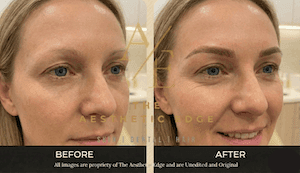
Preparing for microblading is mostly diary work. Book the ₹500 consultation first so your brows can be assessed, disclose your medication, allergies and any previous brow pigment, leave your natural hair alone in the weeks beforehand, and keep the following fortnight free of anything you would not want to attend with darker brows than usual.
None of that is dramatic, which is precisely why it gets skipped. The items below are the ones that actually change what can be done on the day, in the order they matter.
Why does preparation begin at the assessment rather than the week before?
Because the shape is decided before any pigment is involved, and the shape is the part you live with. The first stage of eyebrow microblading is a study of your face shape, skin type and natural hair growth, followed by a mapped brow that you look at and agree to in a mirror before the procedure starts.
Two things follow. Your own preparation instructions are produced by that appointment, so there is very little to guess at on your own beforehand. And it is worth arriving with opinions rather than a decision — bring photographs of brows you like and, more usefully, brows you actively dislike. The second set tells a practitioner more than the first.
What should I stop before the appointment, and how far ahead?
Ask, rather than assume, and never stop a prescribed medicine on your own judgement. The short version of what usually comes up: anything that makes skin bleed or bruise more readily on the day, strong actives applied to the brow area, and a fresh tan or sunburn across the forehead.
Blood-thinning medication belongs in the disclosure conversation, not on a self-managed list. You tell us what you take; the decision about whether anything needs adjusting sits with a doctor, and that is the whole point of the work being supervised.
Actives are simpler. Retinoids, exfoliating acids and gritty scrubs used on or around the brows leave the surface irritated and unpredictable, and your practitioner will tell you how long to leave them off. The same applies to peels, lasers or any other treatment in the area — say when you last had one and let the timing be set for you.
Alcohol the night before and a large coffee on the morning are the two most common self-inflicted problems. Both are worth avoiding.
Should I keep threading, waxing or tinting my brows?
Stop shaping them, and give them a few weeks to grow out. This is the single piece of preparation most people get wrong, and it is the one that visibly changes the result.
Your brow is mapped around the hair you actually have. Every stroke placed has to sit convincingly among your own growth, so the more of it there is to work with, the more the mapping has to go on. Brows that were tidied up the night before hand your practitioner a shape someone else already decided.
Tint is a separate problem. It borrows a colour that washes out over a couple of weeks, and pigment choice is made against your undertone rather than against a temporary dye. Arrive with your brows as they genuinely are.
What do I need to disclose, even if it feels unrelated?
Everything on this list, at the consultation, before a plan is written:
Any medication you take, including things you take occasionally or would not think of as medication. Any allergy at all, and specifically any reaction you have ever had to hair dye, pigments, plasters, latex or a numbing cream at a dentist. Whether you are pregnant or breastfeeding. Any skin condition, any tendency to raised or thickened scars, and anything at all currently going on in the brow area — a spot, a healing scratch, a flare of dryness.
Raising something does not automatically rule you out. Some of it changes the plan, some of it changes only the timing, and a small amount of it means the answer is no. Which of those applies is a decision made in person, on your skin, by someone looking at it.
Does previous brow pigment change how I prepare?
Yes, more than anything else on this page. Old work sits underneath whatever is placed on top of it, so it constrains both the shape that is achievable and the colour that can be used.
Tell us it exists even if it is years old and barely visible to you, and bring photographs from when it was fresh if you have them. Mention who did it, what was used if you know, and whether any lightening or removal was ever attempted. Arrive with no brow makeup so the healed pigment can be seen as it is.
How much old pigment has to be worked around is also one of the things that decides how many sessions your brows need, so this conversation is a practical one rather than a formality.
What should I bring, and how should I turn up?
Eat properly beforehand and skip the extra coffee. Come with a bare brow — no pencil, no powder, no tint — and bring your usual brow makeup in your bag so you can show what you have been drawing on every morning.
Set aside longer than the procedure itself. The stroke work runs to under two hours, and the assessment and mapping happen before that clock starts. A numbing cream is applied first, and most people describe light scratching rather than pain, but it is a long sit either way and there is no rushing the mapping.
Sunglasses or a cap for the walk back out are a small kindness to yourself.
Do I have to choose between microblading and ombré before I arrive?
No, and it is better if you have not. Ombré brows build a soft shaded gradient, lighter at the front and more defined towards the tail, rather than individual hair strokes, and plenty of people end up with a combination of the two.
Which suits you depends on your skin type and the look you are after, and that is settled at the consultation. Arriving having already committed to a technique you read about is the one bit of preparation that works against you.
How much time should I keep clear afterwards?
A fortnight of ordinary days. Brows look slightly darker for the first few days and settle within a week or two, and the aftercare through that first week is light but genuinely meant to be followed.
So do not book this into the week of a wedding, a shoot, a holiday built around swimming, or the day before a presentation you are already nervous about. Work backwards from the event, not forwards from your free Saturday. If you are planning lip micropigmentation as well, ask about sequencing rather than assuming both can be done in one visit.
Plan for the second appointment at the same time. Microblading is a two-session course — the first sitting, then a touch-up once the skin has healed — and the touch-up is part of the protocol rather than an extra you can decline without consequence.
Where to start
Microblading is ₹10,999 per session, the same at Indiranagar and Bellandur, and the consultation is ₹500, waived against treatment. Your own plan, including how many sessions your brows need, is confirmed in person.
Bring your photographs, your medication list and your honest opinion of your current brows to a consultation, and the rest of the preparation will be written for you.