
How Eyebrow Microblading Actually Works
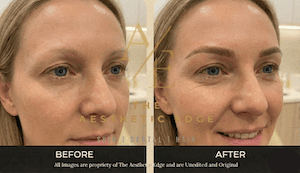
Microblading works by drawing pigment into the upper layer of the skin with a fine blade, one hair-like stroke at a time. Because the pigment sits shallow rather than deep, the strokes soften gradually instead of staying fixed. How long they hold depends on your skin type, how oily your skin is and how much sun the brows get.
If you want to understand the procedure before you consent to it — which is a reasonable thing to want when someone is about to work a few millimetres from your eye — this piece is about the mechanics rather than the marketing.
What does the blade actually leave behind?
A stroke, not a dot and not a wash. That is the whole distinction between microblading and every other way of getting colour into skin. The blade opens a fine, short channel that follows the direction a real brow hair would grow in, and pigment is deposited along it. Repeat that several dozen times in a pattern mapped to your own growth and the eye reads the collection of strokes as hair.
Contrast that with what ombre brows do. There, the aim is a soft shaded gradient — lighter at the front, more defined towards the tail — rather than discrete strokes. Same goal of fuller-looking brows, entirely different way of putting colour into skin. Some people are better served by one, some by a combination, and skin type is part of what decides it.
Why does depth decide almost everything?
Because depth is what separates a semi-permanent brow from a tattooed one. Tattoo ink goes deeper into the skin. Deeper deposits are why tattooed brows blur at their edges over the years and why their colour shifts. Microblading deliberately stays surface-level, in the upper skin layer, which buys two things: strokes that keep a defined edge for longer, and a result that fades gracefully and can be refreshed rather than needing to be lived with or lasered off.
The trade is that shallow pigment does not stay put forever. Nobody can promise you a fixed line. What you are choosing is a brow that softens on a timescale you can plan around — typically holding for 24 months or more — rather than one that ages unpredictably.
Why is the colour you leave with not the colour you keep?
This is the single thing that surprises people most, and it is worth knowing before day two rather than after it. Brows look slightly darker for the first few days and settle over a week or two.
The reason is straightforward once you picture it. Immediately after the appointment you are looking at pigment at its most exposed, in skin that has just been worked on. As the surface recovers, you are no longer looking straight at the pigment — you are looking at it through healed skin, which softens what reaches your eye. The finished brow is the one you have after that settling, not the one in the photograph you took in the car.
Which is why the aftercare sheet is written day by day, and why judging a brow on day three is judging the wrong brow.
Why is the pigment mixed for your undertone rather than picked off a chart?
Because the pigment does not sit on a white background. It sits in your skin, and your skin's own undertone is part of every colour you subsequently see. A shade that looks correct in a bottle can read ashy or reddish in skin it was never chosen for, and that mismatch does not announce itself on day one — it turns up months later, as the pigment softens.
Pigments here are selected for Indian skin and for your undertone specifically, which is a slower conversation at the start and a considerably better outcome at month eighteen. Generic palettes are the reason so many people's second appointment anywhere is a correction rather than a refresh.
Why does oily skin hold hair strokes differently?
Skin type is not a footnote in this treatment, it is part of the mechanism. How long strokes hold depends on your skin type, its oiliness and its sun exposure — all three. Crisp, individual hair strokes are the hardest thing to hold on skin that runs oily; the fine detail tends to lose definition sooner than it does on drier skin.
The practical consequence is not that oily skin rules you out. It is that a shaded or combination approach may suit you better than pure hair strokes, and a practitioner who assesses your skin properly will tell you so before you book rather than after your strokes have blurred. Which technique fits your skin is decided at your consultation, by someone looking at it — not from a self-assessment in a bathroom mirror.
Why is the touch-up part of the method, not a repair?
Because skin does not accept pigment evenly, and no honest practitioner pretends otherwise. Across a healing brow, some strokes take beautifully and others do not hold as strongly. The follow-up session is where the strokes that did not hold are replaced and the finish is perfected, once healing has actually settled.
That is why the touch-up is planned into the course from the beginning rather than offered as a remedy when something looks wrong. A brow assessed before its touch-up is an unfinished brow, and treating the first session as the whole treatment is how people end up disappointed by work that was going perfectly well.
Why does so much happen before the blade comes out?
Because the mapping is the part you cannot undo. Your face shape, skin type and natural hair growth are studied first, then the brow is mapped for Indian facial structures and the shape is agreed with you before any work starts.
Everything after that is execution. If the drawn shape on your face is not the shape you want, the moment to say so is then — while it is still a pencil line. The whole session runs to under two hours and is carried out by certified professionals under doctor supervision.
What should stop you watching and make you ring the clinic?
Do not sit at home working out what something means. Your aftercare sheet covers what is expected in the first week; anything outside it is a phone call, not a judgement call.
Ring the clinic promptly if swelling or redness increases after the first few days rather than easing, if redness or warmth spreads past the brow area, if there is discharge or unusual crusting, if discomfort grows instead of fading, if you develop a fever, or if you notice anything the sheet did not mention. None of these are common. All of them are easier to deal with early, and none of them is yours to assess alone. The clinic already knows your case.
What it costs, and what the consultation settles
Microblading starts at ₹10,999 per session, the same at Indiranagar and Bellandur, and a finished result normally means two sessions — the first appointment plus the touch-up once the brows have healed. What changes the figure is how much work is involved: the shape, how much natural brow hair you have, whether older pigment has to be worked around, and whether you want hair strokes alone or combined with ombre. Your plan and its price are confirmed in person. The consultation is ₹500, waived against treatment.
Related pigment work sits on its own pages — lip micropigmentation for lip tone, and BB glow for overall complexion — and they are separate decisions rather than an upsell on this one.
When you want your own skin assessed rather than a general rule applied to it, book a consultation at either clinic and have the brow mapped before you commit to any technique.