
How Skin Botox Actually Works
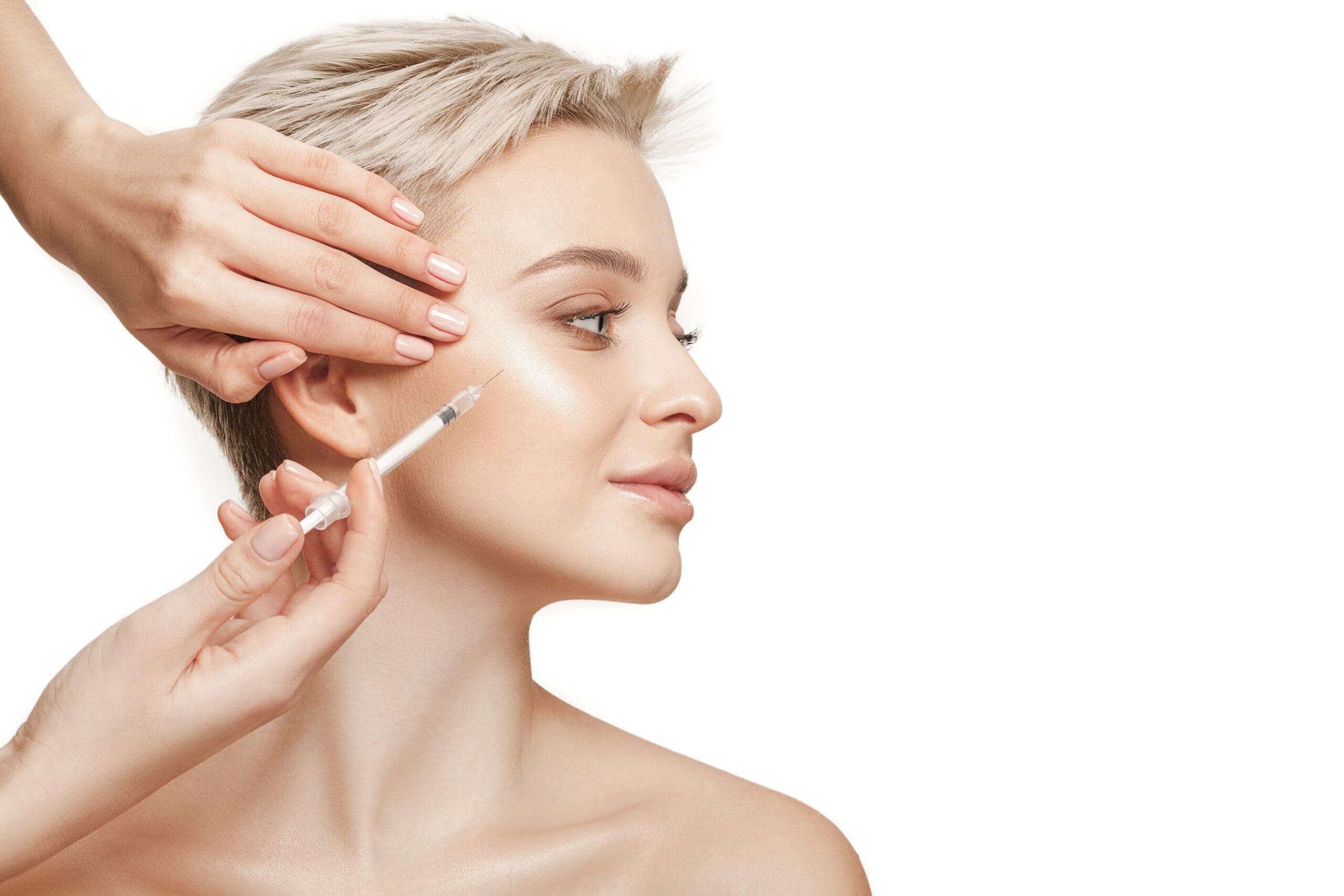
Skin Botox works by placing heavily diluted botulinum toxin into the most superficial layer of the skin, where it damps down activity in the tiny muscles and glands sitting close to the surface. The muscle that drives your expression sits deeper and is not the target. That single difference in depth is what changes the result.
The rest of this article is that sentence unpacked. If you are the sort of patient who would rather understand a mechanism than be reassured about one, this is written for you.
What is the medicine actually doing once it is in?
It is interrupting a signal. Botulinum toxin is a purified protein that temporarily reduces the contraction of whatever contractile tissue it reaches — a nerve tells a structure to work, and the toxin quietens that instruction for a while. Nothing is removed, dissolved or destroyed.
That is worth holding on to, because it explains almost every other property of Skin Botox. A treatment that quietens a signal is temporary by nature, gradual in onset, and limited strictly to structures the medicine physically reaches. All three of those follow from the chemistry rather than from anything about the technique.
Why does the depth change what the medicine does?
Because different structures live at different depths, and an injection can only act on what surrounds it.
Full-strength Botox is placed into the muscles of facial expression — the sheet of muscle across the forehead, the small muscles between the brows. Quieten those and the skin lying over them creases less when you move. That is the entire logic of a wrinkle-relaxing injection.
Skin Botox does not go there. The product is placed in the most superficial layer of the skin, and what sits at that depth is a different population of structures: the very small muscles and glands close to the surface. Quietening those produces a different outcome, because they were never the things making your forehead crease in the first place.
So the medicine is the same and the destination is not. It is closer to changing the address on an envelope than changing what is inside it.
Why does the dilution matter as much as the depth?
Depth alone would not be enough. Product placed superficially can still spread a little, and at full strength a spreading dose would eventually reach muscle it was never meant to reach.
Heavy dilution is what keeps the effect where it was put. Many tiny amounts of weak product, spread widely across the treatment area through a very fine needle, act on the shallow structures they sit among without carrying enough strength downwards to matter. Depth decides the target; dilution keeps the aim honest.
This is also why the technique is unusually dependent on the person holding the needle. There is no dose that is universally correct — the doctor examines pore size, oiliness and texture first, and confirms that superficial botulinum toxin is the right tool for what you actually want changed before any of this begins.
Why would pores look smaller if nothing is taken out of them?
They do not shrink. Nothing is emptied, tightened or resurfaced.
What changes is how obvious they look. Reducing activity in the tiny muscles and glands close to the surface can make pores appear less prominent, particularly across the cheeks and nose, which is where most people notice them. The pore is still a pore; it is casting less of a shadow.
The same logic explains the texture change. Skin with fine surface irregularity catches light unevenly, which reads to the eye as roughness. Softening that irregularity means light falls more evenly, so the surface looks smoother without anything having been removed from it. An appearance change with a physical cause is still an appearance change, and it is more useful to say so than to imply a permanent structural rebuild.
Why does my skin stay matte for longer through the day?
This is the reason a good number of patients come in, and it follows from the same mechanism. Glands sitting close to the surface are among the structures within reach at that depth, and quietening their activity is what patients tend to report as their skin staying matte for longer through the day.
Two honest caveats. It is a reduction in what you notice, not a shutdown — skin that produces no oil at all is not the goal and would not be desirable. And how much difference any one person gets is not predictable from an article; it is the sort of thing the doctor reviews once the result has developed.
Why is my expression left alone if it is the same medicine?
Because the muscle that moves your face is deeper than the product went, and what did go in was too dilute to travel there in a way that counts.
That is the design intent rather than a happy accident. The treatment is not aiming at — and should not produce — the frozen look associated with full-strength injections into muscle. It is a fair thing to raise directly in the room, and a straight answer about depth and dilution is the answer you should get.
Why does the result arrive over days instead of at once?
Signal interruption is not instant. The medicine has to take effect on the structures it has reached, and those structures have to settle into their quieter state.
In practice, changes generally show over the days following treatment and continue to improve gradually rather than appearing all at once. That is why the plan includes a review after the result has developed, so it can be adjusted for next time if needed rather than guessed at on the day.
It is also why booking this a couple of days before something you care about tends to disappoint. The mechanism will not be hurried.
What does this mechanism not explain?
The limits are as informative as the effects, and they come from the same reasoning.
It does not act on pigment. Dark marks and uneven tone are a colour problem in the skin, not an activity problem in shallow muscles and glands. Nothing in this mechanism reaches them.
It does not fill or replace volume. If the concern is skin quality driven by hydration rather than surface activity, a different class of treatment such as Profhilo answers a different question, and the two are not interchangeable.
It does not treat the deeper expression lines that a wrinkle-relaxing injection into muscle addresses. That is the other treatment's job.
And it is temporary. A quietened signal returns. This clinic does not publish a fixed duration for Skin Botox specifically, and inventing one here would be worse than saying plainly that it is a question for your doctor, who can answer it with your skin in front of them.
What this means for your appointment
Botulinum toxin is a prescription medicine, and it is not suitable for everyone — it is not advised during pregnancy or breastfeeding, over active acne, active herpes, severe eczema or psoriasis, for those prone to keloid scarring, or during chemotherapy. Redness and mild swelling are common straight afterwards and generally settle within a day, bruising at the injection points is possible and more likely on blood-thinning medication, and some patients notice mild dryness or flaking that typically subsides within about a day.
None of that is decided from a website. Understanding the mechanism should help you ask sharper questions in the room, not replace the examination that answers them. A consultation is ₹500, waived off against treatment, and it is where the doctor confirms whether this mechanism is the right one for your skin.
If the explanation fits what you have been trying to change, book an appointment and put the question to a doctor.