
How Glutathione Injection Actually Works
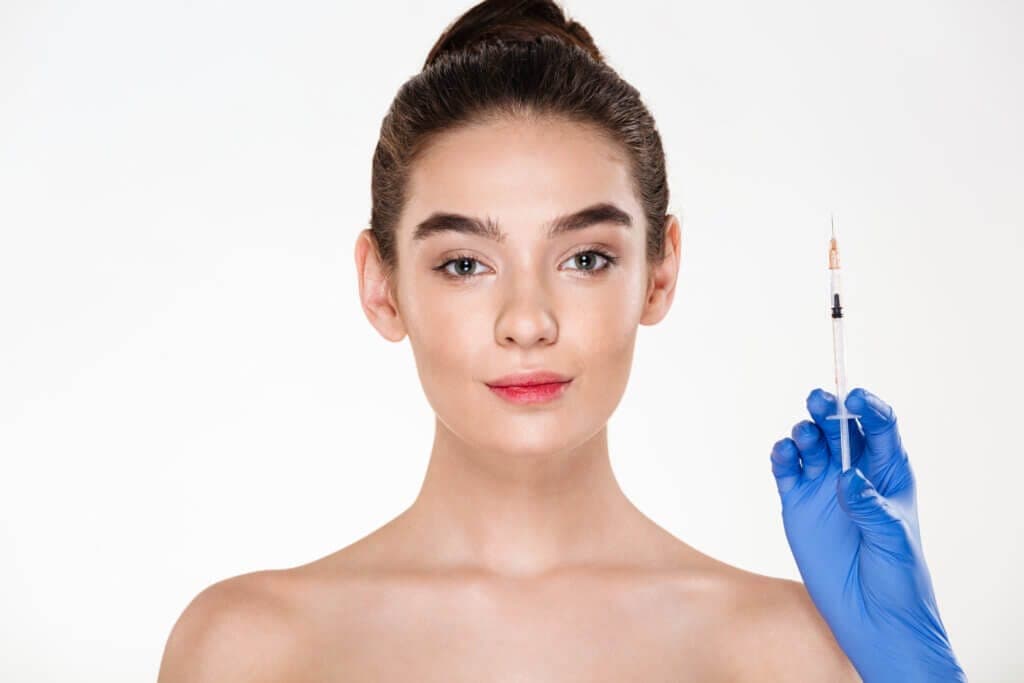
Glutathione is an antioxidant your liver already makes, and levels fall with age. Given as a supervised intravenous infusion, it works by helping the body neutralise free radicals — the oxidative damage associated with dull, tired-looking skin. Any change is gradual and cumulative: most people need four to six sessions before they notice anything, and around ten for a full course.
That is the honest one-paragraph version. What follows is the longer one, because this is a treatment where the marketing has run a long way ahead of the science and you are entitled to know exactly where the line sits before a cannula goes anywhere near you.
What is glutathione, and what does it actually do?
Glutathione is a small molecule your own cells make — three amino acids joined together — and it is one of the body's principal antioxidants. Its day job is to neutralise free radicals: reactive molecules generated by ordinary metabolism, sunlight, pollution, smoking and stress, which damage cells over time. It is also involved in tissue development and repair, and it supports the liver's own detoxification work.
Levels fall as you get older. That decline is associated with skin that looks duller, and it is the reasoning behind offering glutathione as a restorative rather than as a purely cosmetic treatment. Notice the shape of that claim: it is an association, and supporting the body's antioxidant handling is not the same thing as promising a specific change in your face.
Why an infusion rather than a tablet or a cream?
Because the intravenous route delivers glutathione directly into the bloodstream rather than relying on it surviving digestion — and that is exactly why it deserves more caution than the other routes, not less. Anything given intravenously bypasses the body's usual filters. That is the whole point of it and it is also the whole risk of it, which is why the infusion here is placed and monitored by a doctor rather than sold as a walk-in.
It is an injectable treatment, not a device treatment. There is no laser, no energy setting, no wavelength to choose. What is being controlled is dose, rate and who is suitable — decided at assessment and reviewed as the course goes on. You can read the full protocol on the glutathione injection page.
Is this a skin-lightening treatment?
No, and this is the part worth reading twice. Glutathione is very heavily marketed for skin lightening, and that use is off-label — meaning it is not what the drug is licensed for. The evidence base behind it is thin, the intravenous route is the one carrying the greatest uncertainty of the three, and this clinic does not offer it on that basis. Nobody here will tell you a lighter skin tone is a better one.
What the treatment is offered for is antioxidant support and the appearance of clarity and radiance in your own skin — over a course, and with your doctor being direct with you beforehand about what is realistic. If a clinic promises you a shade change on a drip, that promise is not coming from the evidence.
What actually happens in a session?
The first visit begins with a medical assessment rather than with treatment. Your doctor reviews your history, allergies, current medication, asthma and pregnancy status, and that conversation decides both whether glutathione is appropriate for you and at what dose. You are asked to hydrate and eat properly beforehand, to hold antihistamines for 24 hours and alcohol for 48.
On the day, a cannula is placed and saline is started. The glutathione is then run slowly at first, under observation, before completing over 45 to 60 minutes. That deliberately slow first ten minutes is not padding — it exists so that any reaction shows itself while you are being watched. Allow extra time at the first appointment for the assessment. There is no downtime, and most patients go straight back to their day.
Why does it take four to six sessions?
Because the mechanism is cumulative rather than immediate. You are supporting an ongoing biochemical process, not resurfacing anything, so nothing changes on the drive home. Most patients need four to six sessions before change is visible, and around ten for a full course, with the doctor reviewing progress along the way.
The timeline patients typically describe is gradual improvement over one to three months, and longer on deeper skin tones. Results vary from person to person and cannot be promised in advance. If someone quotes you a faster timeline than that, they are quoting marketing rather than protocol.
Who should not have it?
Glutathione is not recommended if you have asthma, and it is not given in pregnancy or while breastfeeding, or where there is known sensitivity to any component of the infusion. Tell your doctor about any respiratory condition or history of allergic reaction before treatment, not during it.
There is also a dosing reason the course is finite. Excessive or prolonged use has been associated with reduced zinc levels, which is why a course is scheduled and reviewed by a doctor rather than taken open-endedly for as long as you feel like it.
What can go wrong, and when should you contact the clinic?
The common effects are local and short-lived: stinging as the cannula goes in, and bruising, swelling or tenderness at the site afterwards. Ice helps.
Do not try to work out for yourself whether something is significant — only an examination can establish that. Contact the clinic if you notice spreading redness or increasing pain at the cannula site, or anything that is getting worse rather than settling. If after leaving you develop breathing difficulty, wheezing, a widespread rash, or swelling of the face, lips or tongue, treat that as an emergency: seek immediate medical care at the nearest emergency department and tell the clinic afterwards. Both branches are reachable on the numbers on the site during clinic hours.
Does it replace sunscreen or skincare?
No — sunscreen matters more rather than less. An antioxidant infusion does not protect you from ultraviolet light, and daily broad-spectrum sunscreen is what preserves any improvement a course gives you. Glutathione sits alongside a skincare plan; it does not stand in for one. Some patients discuss it in the same conversation as glow drips or wider IV drip therapy, and which of those is appropriate is a question for assessment rather than for a website.
What it costs, and how to decide
Glutathione IV therapy starts from ₹4,999 per session. Consultation is ₹500, waived off against treatment.
The sensible way to approach this is to come in for the assessment, ask what the doctor thinks is realistic for your skin specifically, and decide afterwards. A treatment whose evidence base is genuinely limited is one you should go into with your eyes open rather than on the strength of an advertisement. If that sounds like the conversation you want to have, book an appointment at Indiranagar or Bellandur.