
Damaged, Frizzy & Over-Processed Hair: What Actually Works, and What Only Sounds Like It Does
Damaged hair cannot be repaired in any biological sense. The visible shaft is not living tissue, so once the cuticle is cracked and the internal protein structure broken, nothing rebuilds it. Smoothing and bonding treatments improve how hair looks and behaves for a while; the only permanent fix is growing the damaged length out while protecting what grows in after it.
That is a blunt opening, and it is the single most useful thing to understand before spending money on this problem. Almost every disappointment with a frizz or damage treatment comes from expecting restoration and receiving management. Management is genuinely worth having. It is just a different product from the one the marketing implies.
Why can't damaged hair actually be repaired?
A hair follicle is living. The hair coming out of it is not. By the time a strand is visible above the scalp, it is a structure of keratin with no blood supply, no cellular machinery and no capacity to heal itself. A cut on your arm closes. A split end does not.
What we call damage is mostly two things happening to that dead structure. The cuticle — the overlapping outer layer that lies flat on healthy hair — lifts, chips and wears away, which is why damaged hair catches the light unevenly, tangles, and feels rough when you run a finger up the strand. And the protein and bond structure inside is disrupted by heat, bleach and chemical processing, which is why over-processed hair stretches, snaps and loses its shape.
Neither of those is reversible. Anything sold as "repair" is, realistically, filling and coating: depositing protein or polymer into the gaps so the strand behaves more like undamaged hair until the deposit washes out.
Then what do smoothing and bonding treatments actually do?
They do something real, and it is worth being precise about what.
Coating and filling treatments deposit material along the shaft. The cuticle lies flatter, the strand reflects light more evenly, tangling drops and frizz settles. Hair genuinely looks and feels better. It is also temporary by design, because whatever was deposited gradually washes and wears away, which is why these treatments come with a repeat schedule.
Bond-building treatments work on the chemistry inside the strand rather than the surface, and are typically used alongside chemical processing to reduce how much damage the process causes in the first place. Prevention is where they earn their keep, not restoration.
Heat-set smoothing treatments reshape the strand's behaviour so it dries smoother and straighter. That effect also grows out and washes out.
None of this is a criticism. If your hair is easier to manage, breaks less because you are fighting it less, and looks better in a Bangalore afternoon, that is a legitimate result. Just budget for it as an ongoing cost rather than a one-time repair, and be sceptical of any promise that sounds permanent — no one can promise that on a structure that is already dead.
Wait — isn't "hair botox" a treatment for frizz?
This is the name collision that brings most people to this page, and it is worth stating plainly.
In salons, "hair botox" is a marketing name for a topical deep-conditioning mask. It contains no botulinum toxin. It sits on the hair shaft, smooths and conditions it, and washes out over time. The name was borrowed because the result looks smoothing, not because there is any botulinum in the tub.
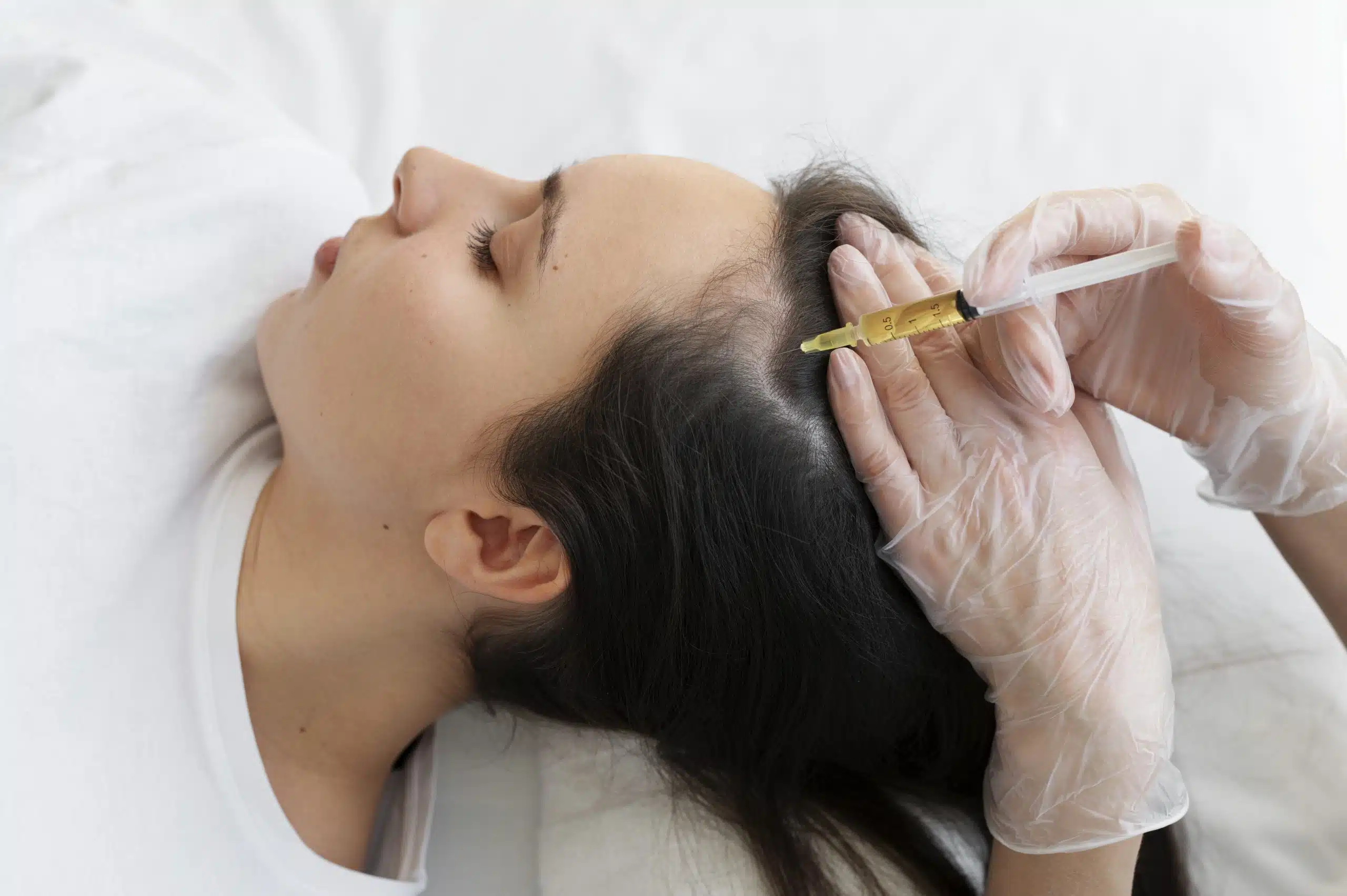
At The Aesthetic Edge, hair botox is the medical treatment the name literally describes: a doctor places fine micro-injections of botulinum toxin into the scalp to calm excessive sweating and oiliness. It is a scalp treatment. It is not applied to the hair shaft, and it is not a frizz, damage or smoothing treatment.
So if you searched "hair botox" hoping to fix over-processed hair, the honest answer is that our treatment of that name addresses a different problem entirely. Booking it expecting smoother lengths would be booking the wrong thing, and we would rather you knew that before the consultation than after it.
Is my problem the hair shaft, or the scalp?
It is a genuinely useful question, because the two get blurred constantly and they lead to completely different treatments.
Shaft problems live along the length. Frizz, split ends, roughness, breakage mid-strand, colour that will not hold, lengths that snap when you tie them up — these are damage to a dead structure, and they are addressed by protection, smoothing and time.
Scalp problems live at the root. A scalp that sweats so much a blow-dry barely survives the commute; roots that turn oily and flat by the end of every single day; the sense that scalp sweat and buildup are quietly undoing every hair treatment you invest in. Those are the problems our injectable treatment is built for.
And here is where the two do meet, without any need to overstate it: a scalp that sweats heavily usually means washing more often, and washing more often strips more from lengths that are already fragile. Calming scalp sweating and sebum means the roots stay fresher for longer, so you wash less and strip the hair less. That is an indirect benefit to your lengths, and it is not the same claim as treating the damage.
What actually protects hair from getting worse?
Since the damaged length cannot be restored, everything useful is either cosmetic management or protection of what has not been damaged yet.
Reduce the total load first. Heat, bleach, chemical relaxing and repeated colouring all cost the shaft something, and the cost is cumulative. Stacking two processes close together is where hair usually tips from "dry" into "snapping".
Then reduce friction and stress: gentler detangling, less aggressive tying, protective styling when you are out in sun and dust all day. Bangalore's combination of hard water in many areas, strong sun and a long dusty commute is a real environment for hair to survive, and heat-styling on top of it every morning is often the part that is actually breaking the strand.
Then accept the timeline. Hair grows roughly a centimetre a month, so restoring a genuinely over-processed length is measured in seasons, not weeks. A trimming schedule is not a failure to treat the problem — it is how the problem is removed.
When is this worth seeing a doctor about rather than a salon?
If the issue is unambiguously the length — frizz, dryness, split ends after a year of colouring — a salon is the appropriate place, and this article is mostly here so you know what to expect from it.
Bring it to a doctor when the picture includes the scalp or the roots: hair that is coming out rather than breaking off, visible thinning or a widening parting, an itchy, flaking, sore or persistently oily scalp, or shedding that started suddenly. Those are scalp and follicle questions, and they need examination rather than a product recommendation.
Bring it to a doctor too if scalp sweating and oiliness are the thing driving your whole hair routine — the daily washing, the blow-dry that never lasts, the resignation to flat roots by lunchtime. That is exactly the problem the injectable is for. A session takes about thirty minutes, the effect typically lasts four to six months, and there is no to minimal downtime, so most people carry on with their day normally afterwards.
It is not for everyone. Anyone with a neuromuscular disorder, and anyone pregnant or breastfeeding, should not have this treatment, and the doctor reviews your medical history at the consultation before confirming you are a candidate at all. If you have had it and something is not settling as described, contact the clinic rather than waiting.
Where to start
If you are unsure whether you are dealing with a damaged shaft, a struggling scalp, or both — which is the honest position for most people — that is the question a consultation exists to answer. The consultation is ₹500, waived off against treatment, and it is a doctor examining your scalp rather than a product being recommended to you.
Book a consultation at our Indiranagar or Bellandur clinic and describe the problem the way you actually experience it: what your hair does, when it started, and what you have already tried. That is usually enough for the shaft-versus-scalp question to answer itself.