
MNRF and Microneedling with Dermapen Together: Order, Spacing and Who Decides
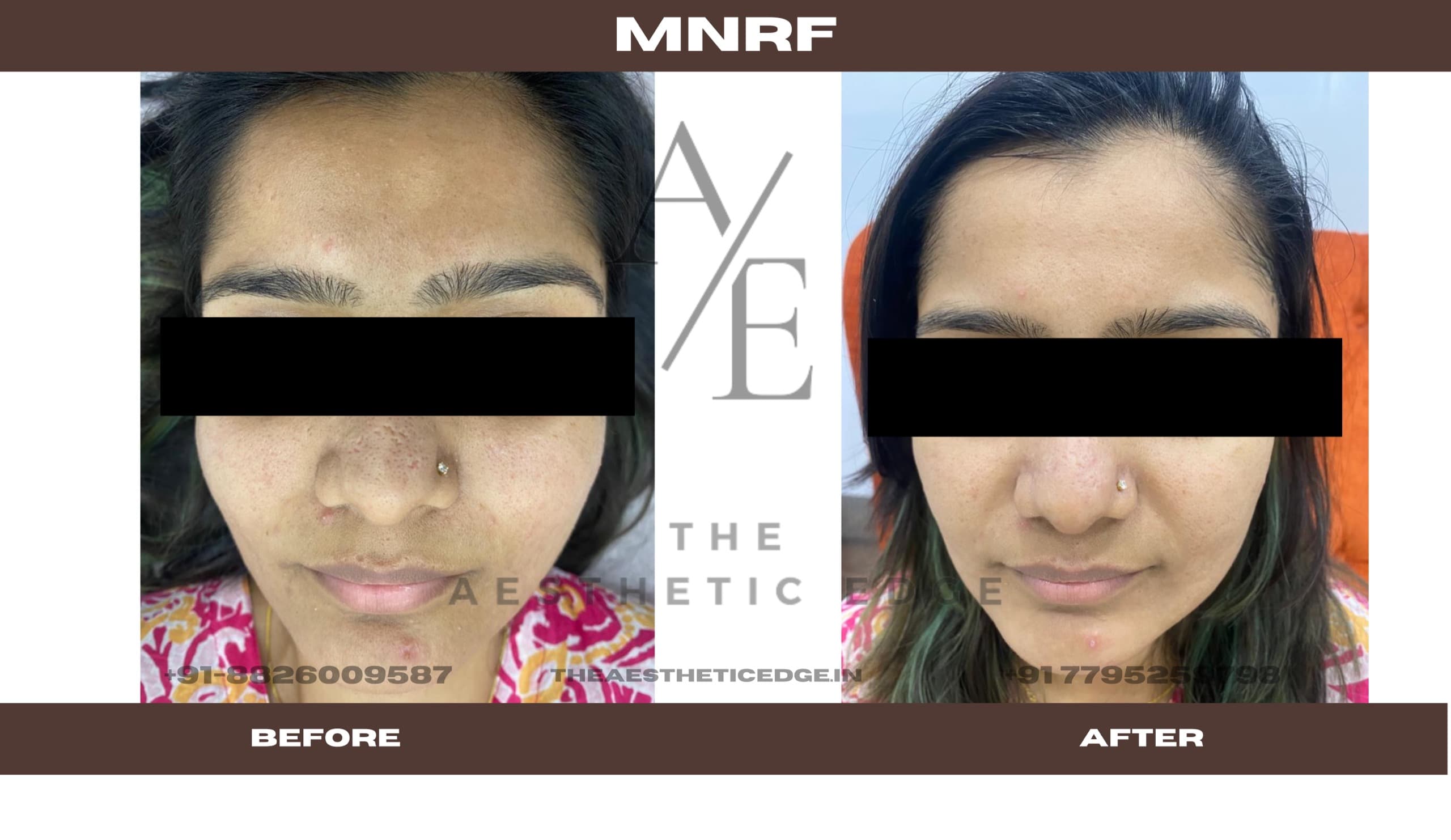
If your plan involves both MNRF and microneedling with a Dermapen, the useful question is not which of the two is stronger. It is what order they run in and how much time sits between them — and both are clinical decisions taken after an examination. Neither treatment page publishes a fixed sequence, because the right one depends on what is being treated and on how your skin has behaved so far.
That is an unsatisfying answer if you arrived hoping for a schedule, so the rest of this piece sets out what the two treatments do document, which parts of a combined plan are already decided by those documents, and which parts are genuinely open until a doctor has looked at your skin.
Why would a doctor put both on the same plan?
Because they reach different depths by different mechanisms, and a course of one does not automatically do the other's work.
Microneedling with a Dermapen creates controlled micro-channels so the skin repairs itself with new collagen and elastin, with the needle depth set to reach the layer where collagen and elastin are made. MNRF adds a second input: fine needles carry radiofrequency energy into the deeper skin layers, stimulating collagen where acne scars, open pores and early laxity actually sit.
The concern lists overlap heavily — acne scarring, open pores, uneven texture and stretch marks appear on both pages — and that overlap is exactly why patients ask which one to choose. A doctor may still want both in a plan because the same concern can exist at more than one depth on the same face: a patch of rough, blackhead-prone texture and a set of tethered scars are not necessarily answered by identical settings.
Which one comes first?
Neither page states an order, so the honest position is that it is set at your consultation once the skin has been examined.
What is documented is that both treatments open with the same kind of decision. The first step of an MNRF course is an assessment in which the doctor maps your scars, pores or laxity and sets the treatment depth and energy. The first step of a microneedling course is an assessment in which the doctor examines the scarring, pores or stretch marks, checks for anything that rules the treatment out, and sets the number of sessions. Whichever runs first, the same examination governs the settings — which is why the sequence is not something you can usefully decide from a blog post or a price list.
One documented detail is worth carrying into that conversation. The microneedling page instructs patients to leave six to twelve weeks after any laser procedure, and to avoid other skin treatments until the doctor clears them. MNRF is radiofrequency rather than a laser, so that specific interval does not transfer across on its own. What it does show is that waiting periods between energy treatments are already built into how these plans are written here, rather than being an afterthought.
How much time should sit between them?
Long enough for the collagen response already under way to finish running, and the precise gap is a doctor's call rather than a published figure.
Both treatments carry their own internal spacing, and it is substantial. An MNRF plan typically runs three to four sessions, spaced by the doctor, and the page is explicit about why: early change can be visible after the first session, but the real result builds over weeks as collagen remodels. A microneedling course typically runs six to eight sessions, spaced to let collagen remodelling complete between them, usually across several months. Where microneedling is being done on the body, sessions sit a little further apart still, because body skin heals more slowly than facial skin.
Two courses with that much built-in spacing do not compress into a short programme simply because they are on the same plan. Anyone proposing to run them back to back over a few weeks is working against the mechanism both rely on.
Can both be done in a single appointment?
Neither page describes that, so treat it as a question for your doctor rather than an option to buy off a menu.
For context on the time involved: an MNRF session runs around sixty minutes, after numbing cream has been applied. A Dermapen session involves a deep cleanse, a topical anaesthetic left on for fifteen to twenty minutes, the passes themselves, and a calming, moisturising layer to finish. These are two separate protocols with two separate depth decisions behind them.
What does aftercare look like if a plan uses both?
The stricter of the two sets of instructions is the one to follow, and on several points microneedling's are the stricter.
MNRF aftercare is written for you at the end of the session and includes strict sun protection with SPF 30 or higher, because treated skin burns easily for a couple of weeks. Microneedling aftercare goes further: no washing the face for four hours, the moisturiser and antiseptic cream you are given, lukewarm water only for forty-eight hours, SPF 50 or higher daily, no strenuous exercise for two days, and no other skin treatments until the doctor clears them.
The recoveries themselves also differ slightly. After MNRF, expect redness and mild swelling that usually settle within hours, and tiny crusts at the needle points for a few days that must be left alone rather than picked. After microneedling, expect redness, mild swelling and flaking that usually settle within a day, with occasional light bruising at deeper settings.
If you are running both, keep the written aftercare from each session rather than working from memory — the instructions are not identical, and the four-hour rule after microneedling in particular exists because the micro-channels stay open for a few hours.
What does a combined plan cost?
MNRF starts from ₹6,999 per session and microneedling with Dermapen from ₹3,999 per session. Because the session counts differ between the two, and because your own counts are set after an examination, there is no single combined figure to publish here. The consultation is ₹500, waived off against treatment.
Be wary of a quoted package total for a combined plan offered before anyone has examined your skin. The number of sessions is the variable that decides the cost, and that number is a clinical judgement.
Who should not have either treatment?
MNRF is avoided in pregnancy and breastfeeding, where there is a keloid tendency, and where there is an active skin condition such as psoriasis or eczema in the area being treated. Microneedling is avoided in pregnancy and breastfeeding, with active acne, with active herpes, and with moderate to severe chronic conditions such as eczema or psoriasis.
The active acne point catches people out. If your breakouts have not fully settled, microneedling is not the next step — and that alone can change the order of a plan. Both consultations screen for all of this before anything is booked.
What to ask when your plan is drawn up
Ask which treatment is being used for which specific concern, rather than accepting both as a bundle. Ask how many sessions of each, and what interval is planned between the two courses. Ask what the review points are — MNRF progress is photographed session by session, so there should be a documented basis for continuing or changing the plan. And ask what happens if your skin responds faster or slower than expected, because a plan written before the first session should still be able to change after it.
If you want that conversation rather than a package, book a consultation at Indiranagar or Bellandur. The ₹500 fee is waived against treatment, and the outcome of that appointment should be a sequence you understand rather than a number of sessions you have paid for in advance.