
Chemical Peel vs Microneedling with Dermapen: How to Choose
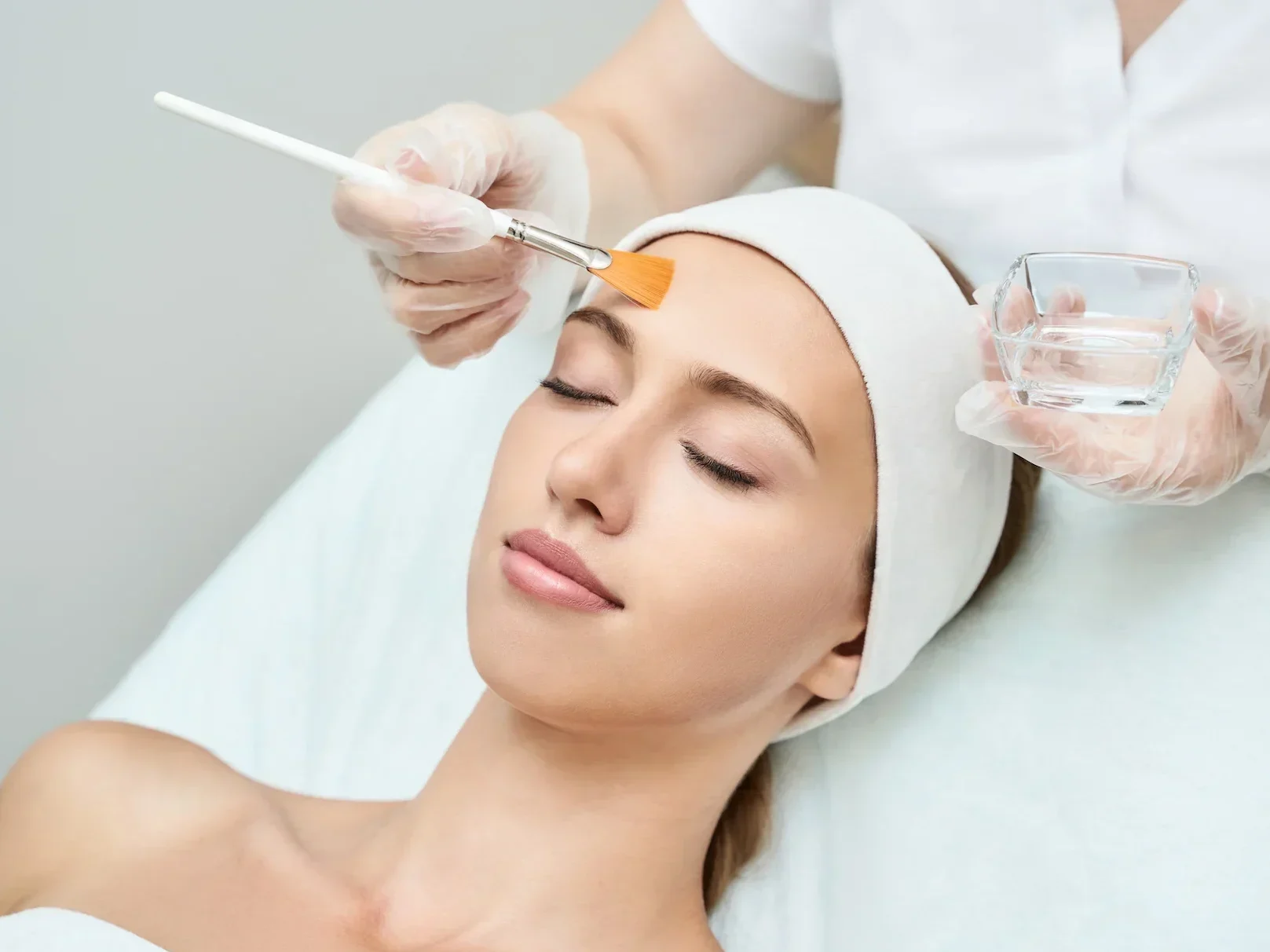
Choose a chemical peel when the concern is pigment or congestion sitting at the surface — post-acne marks, dullness, rough texture, oily and breakout-prone skin. Choose microneedling with Dermapen when the concern is a change in the skin's texture — acne scarring, open pores, stretch marks — because it works in the deeper layer where those live and a peel does not reach.
That single sentence resolves the majority of cases. The rest of this article is for the ones it does not, and for the trade-offs that follow whichever way you go.
What is the actual difference between the two?
The layer each one acts on, and the direction of the work.
A chemical peel applies a controlled solution that loosens spent surface cells so newer skin comes through. It is subtractive: something comes off, and what is underneath is exposed.
Microneedling with Dermapen creates controlled micro-channels so the skin rebuilds itself with new collagen and elastin. It is constructive: nothing synthetic goes in and nothing is removed, and the result comes from your own repair response. That is why the improvement builds gradually and holds.
Everything below follows from those two mechanisms.
Which is better for acne marks?
Peels, usually. Flat brown or red marks left after a breakout are pigment sitting in the surface layers, and each peel lifts pigmented surface cells and encourages turnover underneath, so the marks read lighter across a course.
Microneedling does also brighten dull skin and shallow pigmentation as the surface renews — patients tend to describe it as glow — but that is a secondary effect of the remodelling rather than the treatment's main target. If pigment is the whole problem, a peel is the more direct route and the less involved one.
Which is better for acne scars?
Microneedling, clearly, and this is the row where the difference is not a matter of preference.
True acne scars are changes in the texture of the skin rather than pigment on top of it. A scar is a defect in the dermis; a peel operates above that. The chemical peel protocol says so in its own terms: a peel alone is not the usual answer for set scarring.
Microneedling prompts the skin to rebuild through a scar rather than over it, by triggering remodelling in the layer where the problem actually sits. That is the reason it is the go-to for depressed post-acne scarring where creams have done nothing.
The practical difficulty is that people cannot reliably tell their marks from their scars in a mirror, and the two often coexist on one face. That distinction is the single most valuable thing you get from an assessment.
What about open pores and rough texture?
Both help, differently, and the honest answer depends on what is driving it.
A peel clears the built-up dead layer, which is what makes skin feel and photograph smoother — often the first change people notice, and frequently after just one superficial session. If your texture concern is surface roughness and congestion, that is fast and proportionate.
Microneedling tightens the skin around pores through repeated collagen remodelling and evens out rough, blackhead-prone texture over a course. That is slower and more involved, and it is the better fit when pores are genuinely enlarged rather than simply clogged.
Rule of thumb: rough feeling skin points at a peel; visibly enlarged pores point at microneedling.
Which suits oily, congested, breakout-prone skin?
Peels, and specifically the keratolytic ones. Salicylic and similar agents clear the pore lining, which is why congested skin tends to settle between sessions.
Microneedling goes the other way here: active acne is one of the situations in which it is avoided altogether, along with pregnancy and breastfeeding, active herpes, and moderate-to-severe chronic conditions such as eczema or psoriasis. If your skin is breaking out now, that alone usually settles the order — calm the active picture first.
Does either one work on the body?
Microneedling does, and this is a genuine capability a peel does not match. Stretch marks on the abdomen, thighs and arms are commonly treated, because stretch marks are dermal scars of a different origin and respond to the same remodelling. Body skin heals more slowly than facial skin, so those sessions are spaced a little further apart.
Peels here are described in terms of area and strength — spot treatment or full face — rather than body work.
How do downtime and comfort compare?
Closer than people expect, and different in shape.
| Chemical peel | Microneedling with Dermapen | |
|---|---|---|
| On the day | Solution on for roughly 3–5 minutes, then neutralised | Topical anaesthetic for 15–20 minutes, then the Dermapen pass |
| Sensation | Tingling or warmth while the solution is on, relief once neutralised | Mild pressure or a scratchy sensation under numbing |
| Afterwards | Slight redness or flaking for a few days after a superficial peel; deeper peels flake longer | Redness, mild swelling and flaking, usually settling within a day |
| Sun rule | Out of direct sun for about a week, sunscreen daily | SPF 50 or higher daily; freshly needled skin burns and pigments easily |
| Exercise | None strenuous, and no swimming, for 24 hours | None strenuous for two days |
Microneedling's visible recovery is generally shorter but its aftercare is stricter in the first hours — no washing the face for four hours, antiseptic cream, lukewarm water for two days — because the micro-channels are briefly open. A peel's recovery is longer and more visible but less procedural.
How do sessions and cost compare?
Peels run from ₹2,999 per session; microneedling from ₹3,999 per session at The Aesthetic Edge.
Session counts differ too. Superficial peels are typically repeated several times across a few months, with medium and deep peels needing fewer. Microneedling usually runs to six to eight sessions depending on the concern, spaced so remodelling can complete between them.
Neither is the cheap option once you account for a course, and comparing per- session prices in isolation is misleading. What a course costs is settled after an assessment rather than quoted from a page.
Which should I start with?
If you want somewhere gentler to begin before considering anything more involved, a peel is a reasonable entry point and a lot of people choose it for exactly that reason. If the thing genuinely bothering you is set scarring or enlarged pores, starting with a peel spends months confirming what the distinction between pigment and texture already predicts.
Both are performed under medical supervision here, both begin with an assessment, and both can end with the honest answer that the other one suits you better. The consultation is ₹500, waived against treatment. Book a consultation and let someone look before you pick.