
Chemical Peel vs BB Glow Treatment: How to Choose
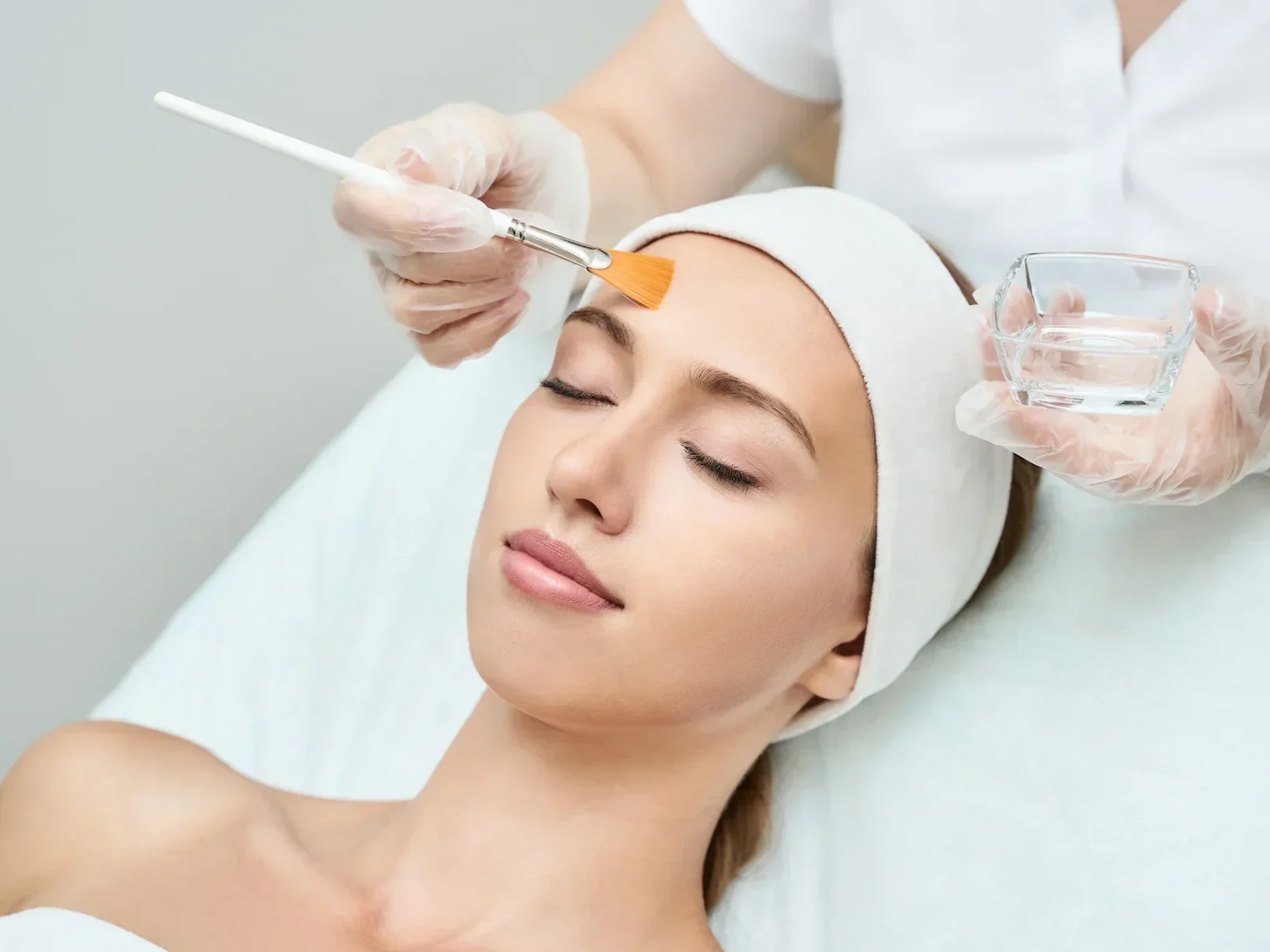
A chemical peel renews the skin you already have — a controlled solution clears the spent surface layer so newer cells come forward, improving texture and how marks and fine lines read. BB Glow does something different: a tinted, hydrating serum is worked into the upper layers with a micro-needling pen, so patchiness looks softer for several weeks at a time. Renewal versus evening out. That distinction decides almost everything else.
Both are performed by a doctor here, and both start with an assessment. What separates them is the complaint they answer well.
What is each treatment actually doing to my skin?
They work at opposite ends of the same problem. A peel takes something away; BB Glow puts something in.
With a chemical peel, a solution is brushed on for a few minutes and then neutralised. Underneath, turnover speeds up — pigmented surface cells lift, the built-up layer goes, and the skin that arrives in its place is newer. That is why the concerns it addresses are the ones that live in or just under the surface: post-acne marks, shallow discolouration, rough texture, congestion in oil-prone skin, and, at medium depth over a course, fine lines as new collagen forms during repair.
With BB Glow, a tinted serum carrying hyaluronic acid and skin-nourishing ingredients is driven into the upper layers at a controlled depth. Nothing is being resurfaced. The unevenness is still there; it simply reads as more uniform because the tint sits above it. Patients usually describe the outcome as reaching for foundation less often rather than as their skin having changed.
Which one suits old acne marks and rough texture?
The peel, fairly clearly, and this is the row where the two are not close. Marks left behind after a breakout are pigment sitting in the surface, and a course of peels lifts that pigment progressively while encouraging turnover beneath it. Texture is often the earliest thing patients notice.
One important qualifier, and it applies to both treatments: flat brown or red marks are pigment, while true acne scars are changes in the shape of the skin. A peel is commonly used across a course for the first and is not the usual answer for the second. Your doctor will tell you which of the two you are actually looking at, because it is not always obvious in a mirror.
Which one suits patchy tone I cover up every day?
BB Glow, if the goal is for bare skin to photograph and read more evenly for the next few weeks without resurfacing anything. Its own list of who it suits is precise about this: daily foundation wearers, tone that looks blotchy and tired in photographs even straight after a facial, and people who want something gradual rather than dramatic.
A peel can improve tone too — speeding up turnover improves colour, clarity and brightness, particularly where sun has dulled the skin. The difference is timescale and mechanism. The peel is asking your skin to change over months. BB Glow is producing an even finish now and holding it for a while.
How do the schedules and the recovery compare?
Different in shape, not just in length.
Sessions. Superficial peels are repeated several times across a few months; medium and deep peels need fewer. BB Glow usually runs to four to six sessions spaced roughly two weeks apart, with maintenance every four to five months afterwards.
Time in the chair. The peel solution itself stays on for about three to five minutes, varying by peel, inside a short appointment. A BB Glow session runs to about an hour including preparation.
Afterwards. A superficial peel typically leaves slight redness or flaking for a few days, and deeper peels flake more and for longer. BB Glow's downtime is minimal — mild redness or tightness that usually settles in three to four days, with no makeup and no washing for the first 24 hours.
Neither is a no-consequence appointment. Both leave skin more reactive to sun, and both come with aftercare that is doing real work rather than being polite advice.
How long does each result hold?
Peel results are long-lasting rather than permanent, ranging from months to years depending on the depth used — and sun protection is what decides where in that range you land. BB Glow holds for roughly four to six weeks from a completed course, with a top-up every four to five months, and varies with skin type, sun exposure and aftercare.
Read those two numbers together and the difference in kind becomes obvious. The peel changes the surface and then the clock starts on new sun exposure and new congestion. BB Glow is a finish that fades on a fairly predictable schedule and is renewed.
Can I have both, or do I have to pick one?
That sequencing is a decision for your doctor rather than something to plan from a website, and BB Glow's own instructions are the reason. Peels and retinol are avoided in the weeks leading up to a BB Glow session, and AHAs and BHAs are paused for the length of a BB Glow course. Stacking the two without supervision is how you get the temporary colour change and irritation that both treatments list among their side effects.
There are also situations where neither is on the table yet. Peels are postponed or reconsidered in pregnancy and breastfeeding, in diabetes for certain formulations, after recent isotretinoin or other acne treatment, and after recent cosmetic surgery. BB Glow is not offered during pregnancy or breastfeeding, over active infections, open wounds or skin cancer, or where there is a known allergy to anything in the serum.
What does each cost, and how is the choice made?
Chemical peels here start from ₹2,999 per session. What a full course comes to depends on depth, area and how many sessions your skin genuinely needs, which is settled after an assessment rather than quoted from a page.
The consultation is ₹500, waived against treatment — and it exists partly for this decision. A doctor examines skin type, tone and texture, takes a history of acid allergies and previous treatments, and patch tests before a peel is committed to; for BB Glow, skin type, active breakouts and the cause of your pigmentation are reviewed before a serum is chosen. Two people with the same description of their complaint can reasonably leave with different recommendations.
If your honest answer to "what is bothering me" is marks and texture, the peel conversation is the one to have. If it is I want my bare skin to look even without doing this every morning, start with BB Glow. If you cannot tell which, that is a completely normal place to be — book a consultation at Indiranagar or Bellandur and have someone look at the skin rather than the description of it.