
Are You a Good Candidate for Lip Micropigmentation? An Honest Checklist
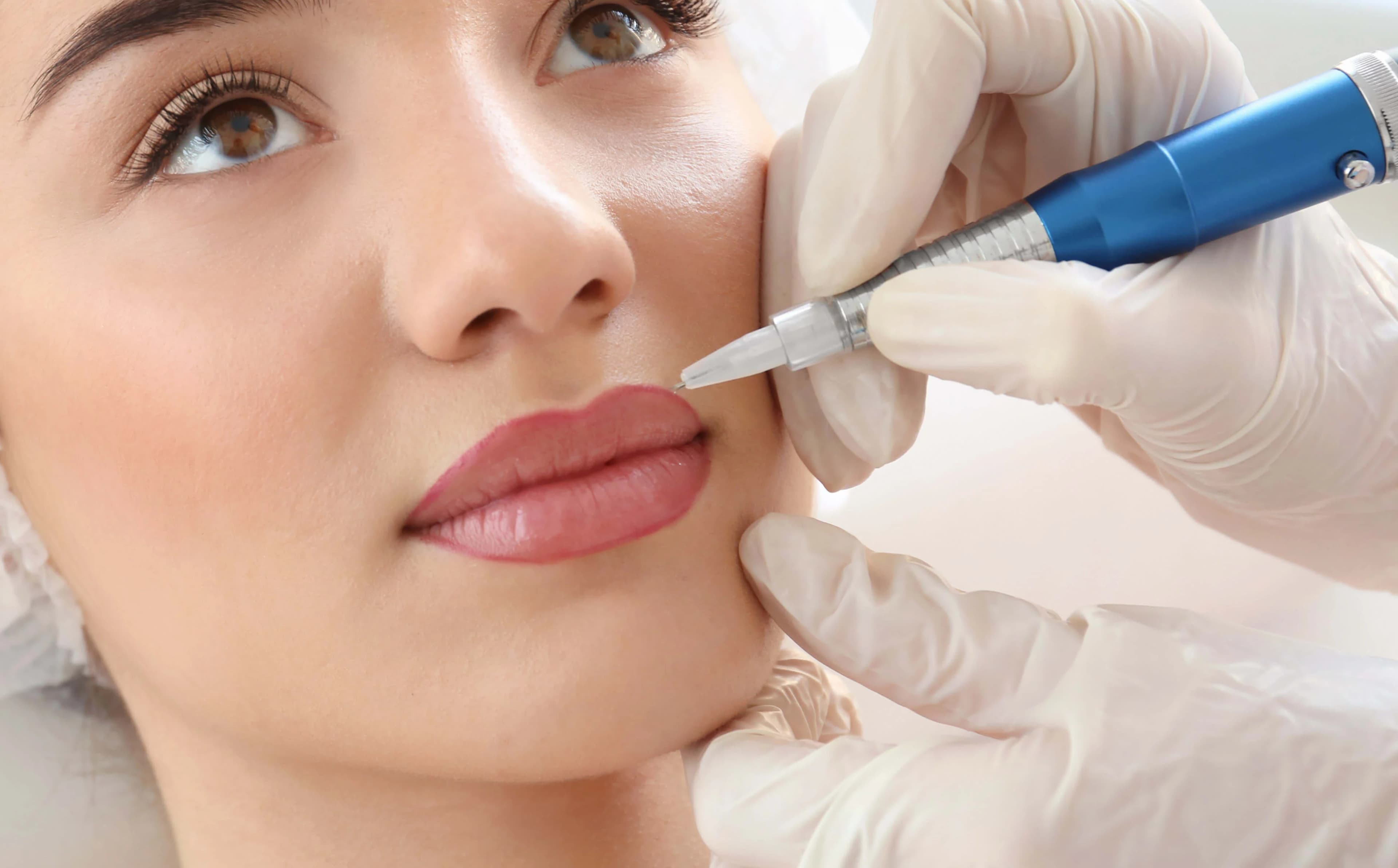
Lip micropigmentation suits people whose lips are pale, uneven or losing definition, who wear lip colour daily and would rather not. It suits you less well if you get cold sores, if you are pregnant or breastfeeding, if your lip colour has changed for a reason nobody has explained, or if you want fuller lips rather than better colour. Candidacy is decided in person.
That last sentence is not a hedge. What follows is the honest version of the checklist a doctor works through, including the half that most pages skip.
Who is this genuinely for?
Three complaints bring most people to a lip consultation, and all three are reasonable ones.
"I reapply lipstick five times a day and it still fades by noon." If lip colour is a chore you repeat rather than a choice you enjoy, an even base tone removes the chore. You can still layer any lipstick over it exactly as before, or wear nothing at all.
"My lips look pale and washed out without colour." Definition softens with age, and some people simply have very little natural pigment. Pigment placed at a controlled depth restores tone and border rather than drawing a new mouth on.
"Uneven pigmentation makes my lips look dark or patchy, and I hate going bare-faced." This is the one that needs the most care, and it is covered in its own section below, because whether it is a good candidacy signal depends entirely on the cause.
If your goal is a soft, natural evenness — lip micropigmentation is aimed squarely at that. If your goal is a dramatic, high-contrast lipstick look, it is not; the technique is deliberately subtle.
Who should not have it, or not yet?
Some of these rule the procedure out. Most of them mean not today, which is a different and much more common answer.
Anyone with an active cold sore, blister, weeping skin, or an infection on or around the lips. Placing pigment into skin that is already inflamed or infected is not a judgement call to make on the day. The appointment moves.
Anyone with a history of cold sores at all — this needs raising before you book. The trauma of the procedure can trigger an outbreak in people who carry the virus, which is unpleasant and disturbs the healing pigment. Say so even if your last one was years ago. It changes the plan; it does not necessarily rule you out, and what the plan becomes is a conversation with the doctor rather than something to arrange yourself.
Anyone pregnant or breastfeeding. Raise it plainly at the consultation.
Anyone with a known allergy to pigments or tattoo inks. Reactions to pigment are uncommon but real, and a known history changes the assessment. Ask what pigments are used.
Anyone whose lip colour has changed and nobody knows why. This one deserves a section of its own.
Why does an unexplained change in lip colour stop the process?
Because covering something is not the same as treating it.
The assessment here starts by asking why the lips are dark, not which shade to use. Hyperpigmentation, smoking, sun, iron deficiency and a reaction to a product all produce darker lips and none of them respond to the same plan. Persistent discolouration is worth a medical look before any cosmetic work, because causes like iron deficiency, medication or a product reaction need treating rather than covering.
Where the cause looks medical rather than cosmetic, you will be told so before any pigment is placed. That is a good outcome even though it feels like a delay — it is the difference between a clinic assessing you and a clinic selling to you.
Note also what the treatment does not do: it does not lighten skin. Where colour correction is appropriate, pigment evens out discolouration towards a natural pink tone. If lightening is what you are hoping for, the honest answer is that this is the wrong procedure.
What else does the doctor need to know?
Bring the whole picture, not the parts you think are relevant.
Everything you take. Prescription medicines, supplements and anything started recently. Some affect how skin bleeds or heals; some are themselves a cause of lip discolouration. Never stop a prescribed medicine to qualify for a cosmetic appointment — bring the list and let the doctor weigh it.
Any condition that affects healing or immunity. Say it out loud rather than deciding for yourself whether it matters. Whether it changes anything is a medical judgement, and it is one made in the room with your history in front of the doctor.
Any permanent makeup you have already had, anywhere. Existing pigment sits under whatever goes in next and changes how new colour heals. Bring photographs from before that work if you have them. Correction of somebody else's work is a real and common request, but whether it is possible depends on how saturated and how deep the existing pigment is — assessed in person, not from a photograph.
Are you a candidate for the commitment, not just the procedure?
This is the part people skip, and it disqualifies more would-be patients than any medical reason.
Can you attend twice? The course is one primary session plus a touch-up at six weeks, and the touch-up is where the final colour is settled. A course stopped halfway is a result judged before it is finished.
Can you give up the first week? Day one is swollen and much darker than agreed. Days two to four flake. Days five to ten look far too light. If that week contains your wedding, you have booked at the wrong time — count backwards from the event and allow for the whole course.
Can you leave it alone? Not picking flakes, and following the written before-and-aftercare sheet, is most of what separates a clean heal from a patchy one.
Are you comfortable with semi-permanent? The colour softens over years rather than washing off, and removal, if you ever want it, is slow, takes several laser sessions, and cannot be promised to be complete. If that sits badly with you, that is useful information now rather than later.
What if I am not a candidate for this?
Then the consultation has done its job, and it is often not the end of the conversation.
Uneven tone across the wider face, rather than the lips specifically, is a different problem with different answers — a chemical peel works on surface texture and marks, and BB Glow softens the look of uneven tone for weeks at a time. Both have their own suitability rules and their own recovery, and both are decided by the same doctor-led assessment rather than chosen from a menu.
The point of an in-person assessment is that it can say no, or not yet, or something else first.
Where to find out
You cannot settle this from an article, and you should be wary of anyone who tells you otherwise online. Bring your history, your medication list and your questions, and let a doctor look at your actual lips.
Sessions start at ₹10,999 each, across a course of a primary session plus the six-week touch-up. To find out where you stand, book an appointment. Consultation ₹500, waived against treatment.