
Are You a Good Candidate for Eyebrow Microblading? An Honest Checklist
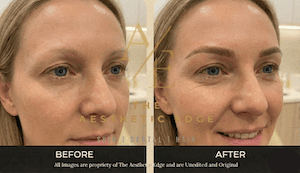
Microblading suits sparse, over-plucked or uneven brows in someone who would rather stop drawing them on every morning. It suits very oily skin less well, and it is not appropriate while the skin in the brow area is broken, inflamed or infected. Candidacy is decided in person, on your skin, rather than from a list.
That last sentence is the important one, and everything below it is context for the conversation rather than a substitute for it. Nothing here is a diagnosis and none of it is something to settle on your own.
Which brow complaints does microblading genuinely answer?
Three, mostly. Brows that take fifteen minutes every morning and are gone by lunchtime. Brows that years of threading left too thin for anything to fill naturally. And the feeling of looking tired or unlike yourself without makeup on.
Eyebrow microblading places individual hair-like strokes mapped to your face shape, bone structure and skin tone, so what it delivers is a fuller, tidier version of your own brow that survives the gym, the pool and the monsoon. If that is the problem you are trying to solve, you are in the right place.
Does my skin type change the answer?
It changes the technique more often than it changes the yes or no. Oily skin holds crisp hair strokes less well than dry or normal skin — the strokes tend to blur and soften faster — which is why a practitioner may recommend ombré brows or a combination of the two instead.
Ombré builds a soft, shaded gradient, lighter at the front and more defined towards the tail, rather than individual strokes. It is offered here alongside classic microblading, and which one suits you is decided at the consultation after your skin has actually been looked at. Being told your skin will hold a different technique better is useful information, not a rejection.
Who should not have microblading?
This is the half most pages skip, so here it is plainly. Some of what follows rules the treatment out; some of it only changes when it can happen. Which applies to you is a judgement made in person.
Raise all of the following before anything is booked:
Anything currently going on with the skin in the brow area — a spot, an open scratch, a rash, a flare of eczema or psoriasis, or any sign of infection. Pigment work needs intact skin, and an area that is inflamed today is a reason to wait rather than to push on.
Any allergy you have ever had, and specifically any reaction to hair dye, pigments, plasters, latex, or a numbing agent at the dentist. Both a pigment and a topical anaesthetic are used here.
Any condition or medication that affects bleeding or healing, including blood-thinning medication. Never stop a prescribed medicine on your own judgement — disclose it and let a doctor decide what, if anything, needs to change.
Any tendency to keloid or thickened, raised scars.
Pregnancy or breastfeeding.
Anything that is currently affecting your immune system, or a recent course of strong acne medication, a recent peel or laser treatment in the area.
Read that as a list of things to bring up, not as a list to score yourself against. It exists because these are the disclosures that most often change the plan — and because the alternative, finding out halfway through, is worse for everyone.
Why does previous brow pigment matter so much?
Because it does not go away when new work goes over it. Old pigment sits underneath, which constrains both the shape that can be achieved and the colour that can be used on top.
That does not automatically rule you out. It does mean the assessment has to include what is already there, which is why we ask for photographs and for you to arrive with no brow makeup on. In some cases the honest answer is that lightening the existing work has to come first, and that is a longer road than starting from bare skin.
Am I a candidate if I want a dramatically different brow?
Only within reason, and you will be told where the line is before anything is placed. The brow is mapped to your face shape and bone structure rather than copied from a photograph, and the shape is agreed with you in a mirror before the procedure begins.
If what you want will not sit convincingly on your face, the mapping stage is where that conversation happens — while it is still a drawing, and while changing it costs nothing.
What if I cannot give it a quiet fortnight?
Then the answer is "not yet" rather than "no". Brows look slightly darker for the first few days and settle within a week or two, and the aftercare through the first week is light but genuinely meant to be followed.
The second appointment matters just as much. Microblading is a two-session course — the initial sitting, then a touch-up once healing is complete — and someone who cannot return for the touch-up is not really a candidate for the treatment, only for half of it.
Is there a right age for this?
It is an adult treatment, and beyond that age matters less than skin does. Brows thin with time, so plenty of people come to this later rather than earlier, and skin quality at any age is part of what the assessment covers.
How is candidacy actually decided?
By looking. The first stage is a study of your face shape, skin type and natural hair growth, followed by a mapped brow shape agreed with you. Both are done by certified professionals under doctor supervision, which is the appropriate setting for anything that breaks skin and places pigment near the eye.
If you are also considering other pigment work such as lip micropigmentation, each area is assessed on its own terms — being suitable for one does not settle the other.
What if the answer is no, or not now?
You will be told, and told why. Sometimes it is a matter of waiting for skin to settle or for a course of medication to finish; sometimes it is a different technique; occasionally it is that microblading is not the right answer to what is bothering you at all.
The consultation is ₹500, waived against treatment, and microblading itself is ₹10,999 per session with the plan confirmed in person. If you would rather find out honestly than find out afterwards, that is exactly what the appointment is for — book one and bring your questions.