
What Actually Happens During a Hydra Medi Facial: A Step-by-Step Walkthrough
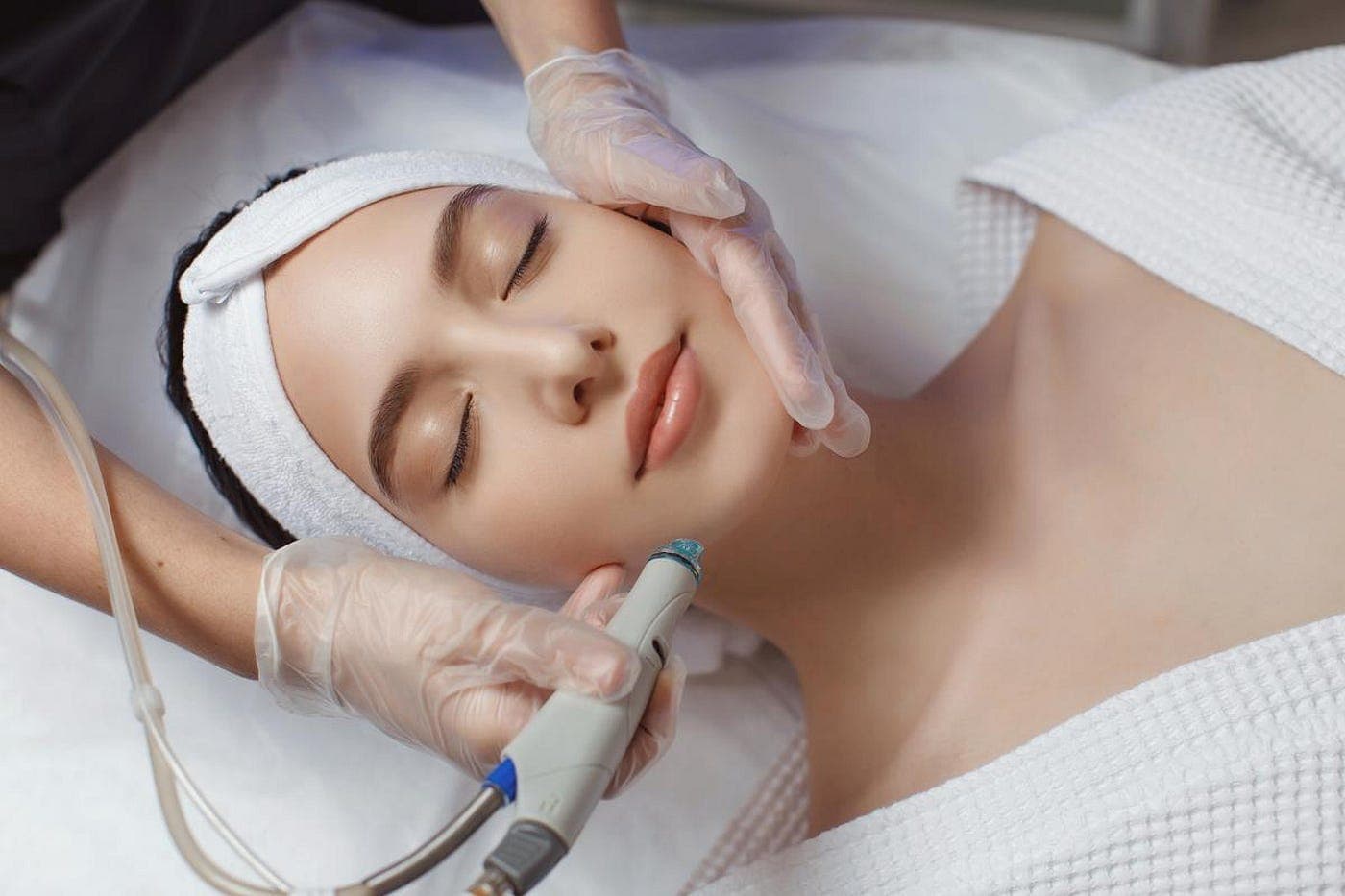
Your appointment runs as twelve short stages, one after another, in a single sitting. A doctor looks at your skin first, then the face is cleansed, the device cleanses and exfoliates, a mild acid pass loosens what is blocking your pores, suction lifts it out, two serum infusions go in, oxygenation drives them home, and moisturiser and sunscreen finish the appointment. Nothing is left on your skin to peel later.
If you have never had a clinical facial and the phrase "acid pass" is doing unhelpful things to your imagination, this walkthrough is written for you. Each stage below is what it is for and what it feels like.
Does anyone examine my skin before starting?
Yes — that is stage one, and it is the stage that can stop the appointment. Your doctor checks your skin type and rules out anything active. Sunburn, a rosacea flare, an infected breakout: any of these make a facial the wrong call that day, and you would be asked to come back rather than pressed to continue.
Come with a clean face where you can. Makeup comes off at the clinic regardless.
What are the first two cleansing stages?
Cleanse. Makeup, sunscreen and the day's grime come off first, so that everything afterwards is acting on skin rather than on what has settled over it. Ordinary, and skippable in nobody's routine.
Vortex cleanse. Now the device takes over. Its cleansing tip lifts loosened debris away using fluid and gentle suction, rather than scrubbing at your face. This is the moment most first-timers relax, because the sensation is cool and oddly undramatic — closer to a firm, wet massage than to anything abrasive.
What does the exfoliation feel like?
Mild. Dead surface cells are lifted so that the skin underneath is primed and the actives coming later are absorbed rather than left sitting on a dull layer. You will feel movement and light traction, not grit.
Is the acid step a peel? Will I flake afterwards?
No, and no. A mild acid blend is passed over the skin to soften whatever is blocking your pores. It is a facial-strength pass: nothing is left on long enough to cause the shedding people associate with peels. If flaking is what has kept you away from clinical treatments, this is the paragraph to remember.
A chemical peel is a genuinely different treatment, worked at a depth this facial does not go to, with its own recovery. Your session here includes one as a complimentary add-on — a ₹1,999 treatment on its own — but the peel and the facial are separate things doing separate work.
Does the extraction hurt?
This is the question people actually arrive with, so here is the plain answer: extraction is done by suction, not by fingers. Softened blackheads and congestion are drawn out. What that replaces is squeezing — and it replaces the bruising that squeezing tends to leave behind.
You feel a distinct pull, strongest across the nose. Most people describe it as strange rather than painful, and the areas that need more attention get a second targeted pass — usually nose, chin and the centre of the forehead — rather than a harder pass over the whole face. If anything is genuinely uncomfortable at any point, say so; there is no reason to endure a facial in silence.
What goes into my skin afterwards?
Two infusions, in a deliberate order.
Hydrating actives go in first, while the skin is freshly cleared. That is the point in the sitting where they penetrate most effectively — clearing the surface and then infusing is the entire logic of the protocol.
Antioxidant actives follow. These nutrient-rich serums are what drive the brightness and the texture change the treatment is booked for, so if you are here for the glow, this is the stage buying it.
What is the oxygenation stage doing?
Driving the session's actives in. Oxygenation supports your skin's own repair rather than adding anything further to it, and it is the reason the sequence finishes here instead of finishing with a serum left on the surface to evaporate on the way home.
How does the appointment end?
With two stages nobody should treat as an afterthought.
Moisturiser and seal. A moisturiser goes on to hold the hydration in, which is what carries the result between monthly sessions rather than letting it fade within days.
Sunscreen. Freshly exfoliated skin burns more easily than usual. Sunscreen is applied before you leave, and it is not optional for the week that follows. In Bangalore, where the sun is not seasonal, that instruction matters more than patients expect.
Can I go straight back to work?
Yes. There is nothing to recover from — that is the treatment's defining feature. Some patients get mild redness or itching, which settles quickly. Hold off on exercise for a couple of days while the skin regenerates, and use the home-care products you are advised.
Should redness persist beyond a day, or your skin feel properly irritated rather than briefly sensitive, tell the clinic instead of managing it yourself.
When will I see the result?
Many patients notice refined texture and a more even, radiant tone after this one session, holding for several weeks with sensible home care. Booking before an event is one of the commonest reasons people come — leave a few days rather than going the same day, so any transient redness has entirely gone.
For a lasting change in tone you are in different territory: uneven pigmentation is the job of a peel, and if the ask is for bare skin to read as more even for weeks at a stretch, BB Glow is its own conversation. A facial is not those treatments and does not pretend to be.
Booking your first one
Sessions start from ₹2,999 per treatment, and the complimentary peel is included each time. Consultation is ₹500, waived against treatment.
If you are nervous, say so when you arrive — the skin review at the start is the natural moment to raise it, and knowing which stage you are dreading lets the person treating you talk you through it before it happens. Book an appointment at Indiranagar or Bellandur, or read the full protocol on the Hydra Medi Facial page first.