
What Changes the Cost of Masseter Botox (Jaw Slimming) in India
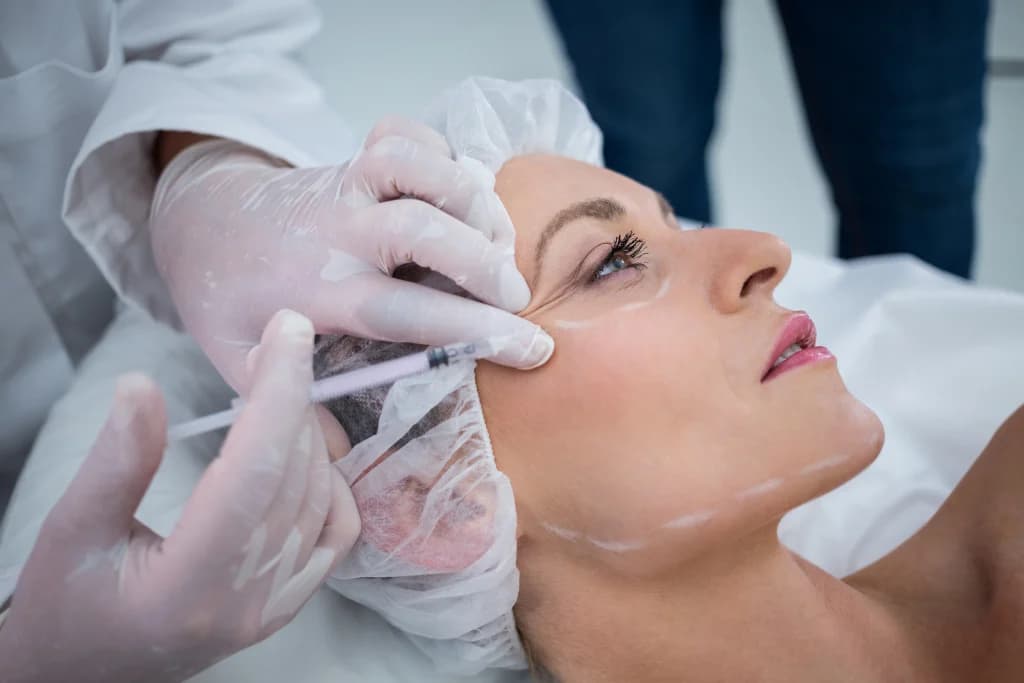
There is no single price for jaw slimming injections, because the treatment is billed by the unit and the number of units follows the size of your own chewing muscle. Botulinum toxin starts from ₹299 per unit at this clinic. What moves the total from there is muscle bulk, whether your two sides need matching amounts, how often you choose to repeat it, and what the quote does and does not cover.
This post is about the mechanism behind the number rather than the number itself. Anyone who gives you a figure before feeling the muscle has skipped the step the figure depends on.
Why is it priced per unit rather than per treatment?
Because the dose is not the same from one person to the next, and a flat treatment price would have to assume it was.
Masseter Botox (Jaw Slimming) works by relaxing the masseter, the thick muscle at the angle of the jaw that bulks up when it is overactive. Masseter size varies a great deal between people. The doctor palpates each side at rest and while you clench, and plans units per side from what is genuinely there rather than from a template. Unit-based pricing is what allows that plan to be honest — you pay for the dose your muscle needs, not for an average someone else's muscle set.
It also means the arithmetic is transparent to you. Ask how many units are planned per side and you can follow the quote yourself.
How much does the muscle itself change the total?
More than any other single factor, and this is the part patients underestimate.
The masseter is a large, strong muscle. The clinic is explicit that it needs considerably more units than the typical wrinkle areas that Botox is usually associated with, because it sits at a different depth and takes a higher dose to relax. Two people can walk in with the same complaint about a wide lower face and leave with meaningfully different bills, simply because one has a heavier muscle than the other.
Habit plays into it too. A muscle that has been clenching hard for years is usually a bigger muscle than one that has not — so the same history that brings someone in is often the history that raises their dose.
Do the two sides cost the same?
Frequently not, and a quote that assumes they do has not been individualised.
The clinic's own note is that the two sides often differ, and that units per side are planned separately from the examination. Most people chew more on one side than the other without ever noticing, and over years that shows up as asymmetry in the muscle. Where it does, the doctor doses each side to what it actually is, which is what keeps the result even rather than merely smaller.
If you are quoted a single per-side number applied twice without anyone having examined both sides, that is worth asking about.
Does a repeat session cost the same as the first?
Not necessarily, and the direction of travel is usually favourable.
The effect typically holds for four to six months, and as it fades the muscle gradually returns to its previous activity, so keeping the result means repeating the treatment. But the clinic also notes that with repeated treatment, the muscle often stays reduced for longer between sessions. A muscle that has been relaxed for months and has reduced in bulk is not the same muscle the doctor first assessed.
The practical consequence is that maintenance is not automatically an identical charge on an identical calendar. It is re-assessed. Budget for a repeating cost, but not necessarily for the same interval forever.
Is the consultation part of the price?
The consultation is ₹500 and is waived against treatment if you go ahead. That matters more than the amount, because it means an honest "no, this is not your treatment" costs you very little.
That outcome is a real possibility rather than a formality. Where a broad lower face owes more to bone structure or soft tissue than to an enlarged masseter, relaxing the muscle will not deliver what you have in mind — and where the concern turns out to be volume or contour, dermal fillers answer a different question with different economics. Finding that out at the examination is considerably cheaper than finding it out at six weeks.
What should a quote include beyond the injection?
Ask, because this is where two apparently similar quotes stop being comparable.
The item most worth pinning down is the review. Slimming builds gradually, so a review is set for around six weeks — the point at which symmetry can be judged and any small top-up decided. Whether that review, and any top-up it leads to, sits inside the original quote or arrives as a separate charge is a fair question to ask before you agree to anything, and a clinic that has thought about it will have a clear answer.
Also worth confirming: whether the figure you have been given is per side or in total. It is an easy thing to hear wrongly in a consulting room.
Why do city-to-city comparisons mislead?
Because they compare a headline against a headline while the variable that matters sits underneath both.
A figure quoted in one city against a figure quoted in another tells you very little if the two doses differ, and doses differ because muscles differ. A lower per-unit rate on a higher unit count is not a saving. This page therefore does not publish a national range, and you should be a little wary of pages that do — the honest version of that number would have to be a range so wide it carried no information.
What does travel between clinics is the qualification of the person holding the needle, and it is the variable with real consequences. The muscles that move your smile sit close to the masseter, and a temporary smile change or asymmetry is a recognised risk of poor placement. It is uncommon and it wears off as the effect fades, but it is exactly why the injection points are mapped while you clench and why this is a doctor-led procedure rather than a counter service. Botulinum toxin is a prescription medicine; the screening and the mapping are part of what the fee buys.
How do you compare two quotes fairly?
Put them side by side on four questions rather than on the headline figure.
- What is the per-unit rate, and how many units are planned per side?
- Who examined the muscle before that number was produced?
- Is the six-week review included, and what happens if a top-up is needed?
- Who will actually perform the injection, and what is their experience with masseter anatomy specifically?
If a clinic cannot answer the second and fourth without hesitating, the first is not the number to be weighing.
What if the plan changes on the day?
It can, and it should be discussed rather than adjusted silently.
The assessment establishes whether what is bothering you is the shape of the jaw, the clenching, or both, and that answer feeds into the dose. Someone who arrives asking about their photographs and turns out to be clenching heavily is having a slightly different conversation by the end of the examination. Ask for the revised plan and the revised total together, before anything is drawn up.
Getting a real number
The only figure that will apply to you is the one produced after a doctor has felt the muscle. Book an appointment at Indiranagar or Bellandur, bring your full medication list including anything over the counter, and expect to leave with a unit count per side rather than a bracket.