
Jaw Slimming Injections: The Korea Trend, Assessed for Indian Skin
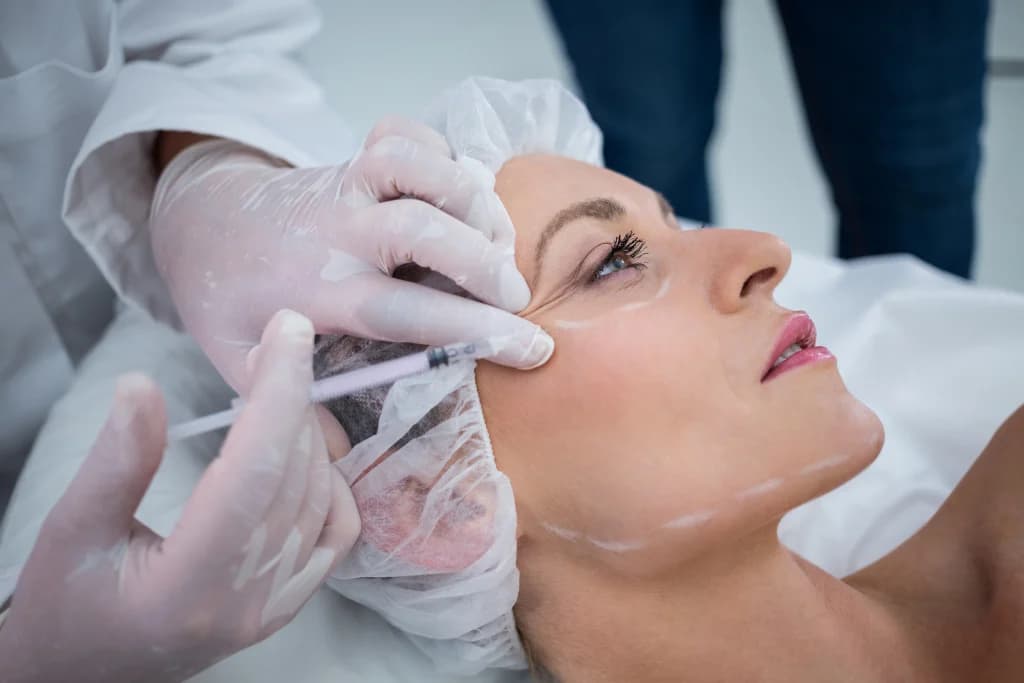
Jaw slimming injections place botulinum toxin into the masseter, the thick chewing muscle at the angle of the jaw. Where that muscle is overactive it bulks up, and relaxing it lets a square lower face soften gradually over four to six weeks while clenching eases. The technique reached most Indian feeds through Korean aesthetics, but what it can change in any one person is decided by their own muscle, not by a trend.
That gap — between what the videos promise and what the anatomy allows — is the whole reason this post exists. Masseter Botox (Jaw Slimming) is a real treatment with a documented timeline and documented limits, and almost none of that survives the trip through a thirty-second reel.
Where did the jaw slimming trend come from?
Korean aesthetic practice popularised treating the masseter as a contouring option rather than only a medical one, and short-form video carried it outward. What travelled well was the before-and-after. What travelled badly was everything that makes the result possible: that this is a prescription medicine, that the dose is worked out from a muscle a doctor has physically felt, and that the change appears over weeks rather than at the end of the clip.
The Indian audience for it is now substantial, and search interest in masseter treatment has been climbing locally. That is not itself a reason to have it. It is a reason to understand it before someone sells it to you.
Does the evidence behind it hold up?
The mechanism is not in question, and it is unusually easy to describe. The masseter closes the jaw. Like any muscle, it grows with heavy use. Botulinum toxin reduces how forcefully it contracts, so an overworked masseter stops overworking and gradually reduces in bulk. The face shape follows the muscle.
Two things about that mechanism are worth holding on to, because trend content tends to drop both. First, the change is not immediate — softening starts from around two weeks and the full slimming builds over four to six weeks, because the muscle has to physically reduce once it stops overworking. Second, it is not permanent. The effect typically lasts four to six months, after which the muscle gradually returns to its previous activity unless the treatment is repeated.
Does jaw slimming suit Indian faces?
There is no face shape that this treatment is for, and there is no face shape that needs correcting. A wider or squarer lower face is an ordinary human variation, common across every population including this one, and it is not a flaw waiting to be fixed. The only question worth asking is whether it bothers you — the patients who come in for this generally say the same thing, which is that their face looks wider in photographs than it feels in the mirror.
The more useful question for an Indian reader is not about ethnicity but about cause, because the injection acts on one tissue only. It relaxes a muscle. If the width of your lower face comes mainly from bone structure, or from soft tissue rather than from an enlarged masseter, then relaxing that muscle will not deliver what the videos showed. This is exactly why the doctor palpates each masseter at rest and while you clench before agreeing to treat anything — the examination exists so that the answer can honestly be no.
Nor is this a substitute for surgery. Masseter Botox is an injection into a muscle, and it does not reshape bone. Surgical jaw contouring is a different procedure in a different specialty; if that is what a result you have seen actually involved, an injectable will not reproduce it.
What does the treatment involve in practice?
The session itself is short — roughly fifteen to thirty minutes. The skin over each masseter is cleansed and the injection points marked while you clench, so the muscle's real bulk and borders are visible rather than assumed. A few fine-needle points go into each side. Most patients describe a brief sting rather than pain, and downtime is minimal enough that most people go back to work the same day.
Placement is the part that earns the clinic setting. The muscles that move your smile sit close to the masseter, and toxin drifting into them is the recognised cause of a temporary smile change or visible asymmetry. It is rare, it wears off as the effect fades, and it is the specific reason this injection should be mapped and given by a doctor rather than treated as a menu item.
Does it help teeth grinding as well?
Reducing the masseter's contraction force takes the power out of clenching and grinding, which is why the clinic treats this as much as a functional treatment as an aesthetic one. Patients who grind often notice easier mornings and less jaw tension within the first couple of weeks — usually before any visible slimming has appeared at all.
That said, grinding and jaw pain are medical matters, and nothing you read online can tell you whether you have either. If you wake with a tight, tired jaw, bring it to the consultation and let the examination decide what is going on. Which of the two goals matters more to you — the shape or the clenching — genuinely changes how the treatment is dosed.
What are the trade-offs nobody puts in the video?
Chewing tough food can feel tiring for the first days while the muscle adjusts and neighbouring muscles take up the work; it settles within days to a couple of weeks. Bruising and tenderness at the injection points happen occasionally, more so if you take blood-thinning medication or fish oil, and clear within a few days. A short-lived headache is occasionally reported after botulinum toxin treatment and passes on its own.
There are also people for whom this treatment is not advised at all — including during pregnancy or breastfeeding, with certain neuromuscular conditions such as myasthenia gravis, or with an active infection at the injection site. Botulinum toxin is a prescription medicine, and the consultation exists partly to screen for exactly this. Tell the doctor about everything you take, blood thinners included.
So is it worth doing?
The honest answer is that it depends on something a trend cannot know, which is what your masseter is actually doing. Botox at this clinic is priced per unit, and the masseter needs considerably more units than a forehead does, so there is no single figure to quote — how many you need depends on your muscle bulk and often differs between the two sides. Unit counts and the total are confirmed at consultation, once a doctor has examined the muscle.
One reassurance is built into the treatment itself: because the effect wears off over months rather than being permanent, a first session is a low-commitment way to find out whether the change suits you.
If you would like an examination rather than an opinion from a feed, a consultation is ₹500, waived against treatment if you go ahead. You can book an appointment at either clinic, and if the assessment points somewhere else entirely — to Botox for expression lines, or to dermal fillers for volume rather than muscle — the doctor will tell you that instead.