
Hydra Medi Facials on Indian Skin: What Changes, and Why It Matters
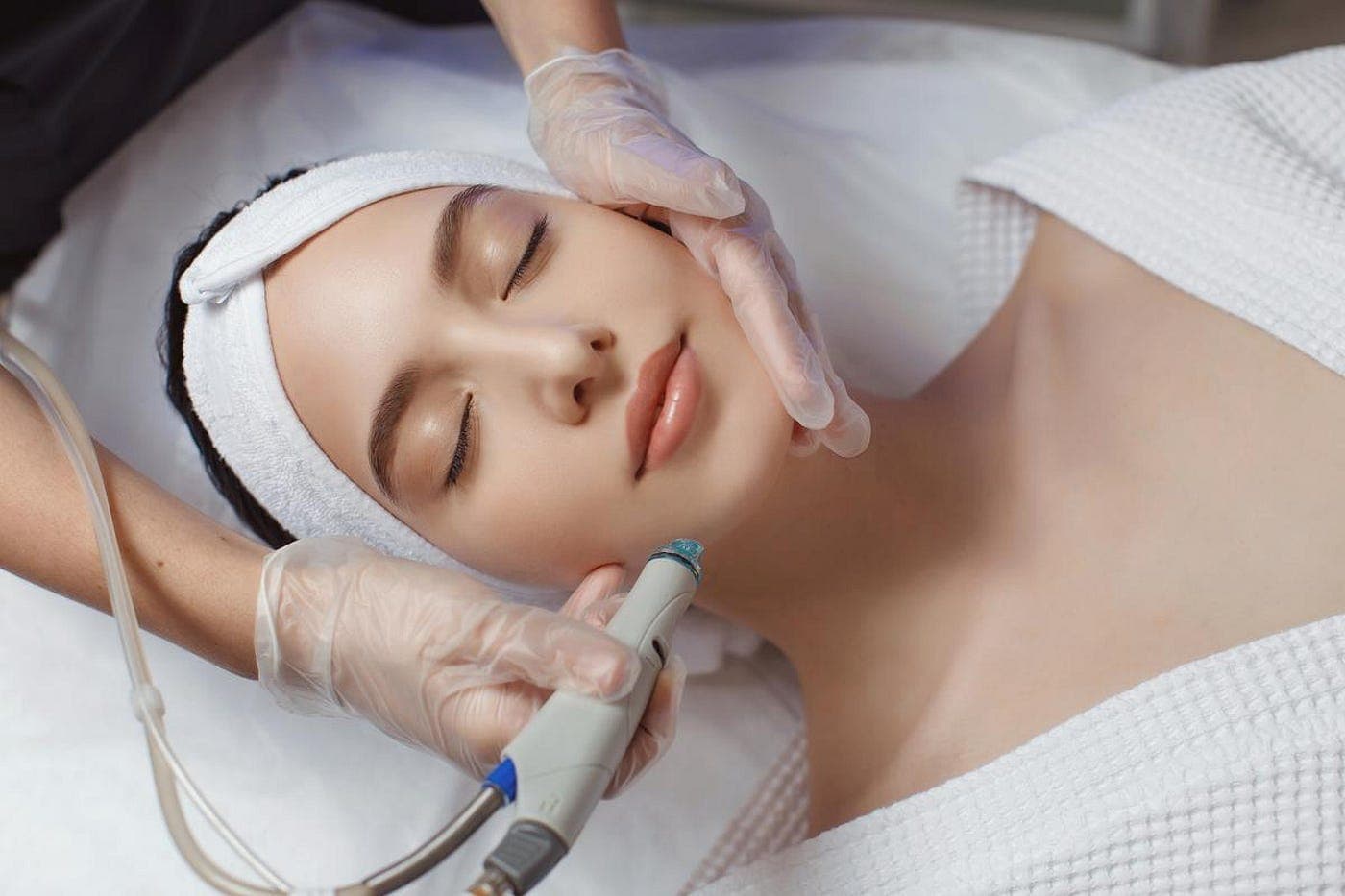
On skin in the Fitzpatrick IV to VI range, the question to ask of any facial is not how strong it is but how little inflammation it leaves behind. Deeper skin tends to answer irritation with pigment, so a treatment that clears congestion without wounding the surface is doing the more useful job. That is the design brief a Hydra Medi Facial is built to.
Why does skin tone change the calculation?
Because pigment-producing cells in deeper skin are more easily provoked. When skin is inflamed — by a spot, a burn, a scratch, a treatment pushed too hard — those cells can respond by depositing extra pigment where the inflammation was. The mark that follows often outlasts the original problem by months.
This is the single most important difference between skincare advice written for Europe or North America and advice that holds up here. A lot of international content is organised around a simple assumption: stronger is faster, and downtime is the price. On Indian skin that trade can go badly, and the aftermath is a patch of discolouration nobody wanted to treat in the first place.
It also explains a pattern we see constantly at consultation. Patients arrive having been told to avoid clinics altogether, because a cousin or a colleague had a bad experience with something aggressive. That caution is reasonable. It is also, applied to everything indiscriminately, why people put up with congested skin for years.
What does this facial do differently?
Four things, and none of them is dramatic. That is the point.
Congestion comes out by suction, not by fingers. The device draws softened blackheads and build-up out through a vortex tip. Manual squeezing bruises the tissue around a blocked pore, and bruised tissue on brown skin is precisely where a mark tends to settle in. Removing that step removes a common cause of the problem people are usually trying to fix.
The acid pass is a facial-strength pass, not a peel. A mild acid blend softens what is blocking pores, and nothing is left on the skin long enough to cause flaking. It is doing a loosening job, not a resurfacing one.
Extra effort is placed, not raised. Where congestion is heavier — usually the nose, the chin and the centre of the forehead — the protocol runs a second pass over those areas rather than a harder pass over your whole face. That is a meaningful distinction on reactive skin: intensity is targeted at the few centimetres that need it.
The session ends by putting things back. Hydrating actives, then antioxidant actives, then oxygenation to drive them in, then moisturiser and sunscreen. Skin leaves cleared and sealed rather than stripped, which matters because a compromised barrier is itself an inflammatory state.
The protocol also carries anti-inflammatory and anti-bacterial elements, which is why it is generally tolerated well by sensitive and breakout-prone skin.
What about device settings and wavelengths?
That question belongs to a different treatment, and it is worth being clear about it because so much Indian skin advice online is really laser advice.
Wavelength and energy settings are the central safety conversation for laser treatments on deeper skin, where the wrong choice genuinely can cause pigmentary change. A Hydra Medi Facial has no light source and no heat. There is no wavelength to select, so that particular risk does not arise here.
What is adjusted is the practical shape of the session — where the congestion pass goes, and whether a facial is the right call for you today at all. The specifics for your skin are settled by the doctor at the consultation rather than by a fixed menu, and if you are on retinoids or have had a recent peel, that is exactly the sort of thing to raise before the session rather than during it.
Will it lighten my skin?
No, and it is not trying to.
This deserves plain language, because "brightening" is a heavily loaded word in the Indian market and it is used to sell things it should not. What the treatment produces is a more even, radiant tone and refined texture — a cleared, well-hydrated surface reflecting light evenly, not a change to your natural colour. Most patients see that after a single session, and it holds for several weeks with sensible home care.
The same clarification applies to BB Glow, which people frequently assume is a whitening treatment. It is not. It places a tinted serum into the upper layers of the skin so tone reads more evenly for a few weeks, and the effect fades as skin renews itself. Nothing about it bleaches or lightens your natural colour.
What will it not fix?
Melasma, post-inflammatory marks and acne scarring. These come up in almost every consultation, and they are not what a maintenance facial addresses.
If old marks are the actual complaint, a chemical peel chosen for your skin type is the more honest starting point — and note the words "chosen for your skin type", because a peel that is too strong for deeper skin causes pigmentation rather than clearing it. That is why depth and solution are selected after an assessment and a patch test, always, before a first full treatment.
The useful framing is this: the facial is for how your skin is behaving. Marks already sitting in the skin are a separate plan, sometimes run before the maintenance rhythm starts and sometimes alongside it.
Who should postpone?
Anyone with an active rosacea flare, sunburn or an infected breakout. These are reasons to reschedule rather than push through, because a treatment over inflamed skin is exactly the situation that leaves a mark. It is also not performed during pregnancy — mention it at consultation and your doctor will suggest an alternative.
After a session, sunscreen for the following week is part of the treatment rather than a suggestion. Melanin offers some baseline protection, but freshly exfoliated skin burns more easily regardless of tone, and sun exposure is one of the reliable ways to darken an existing mark.
Starting sensibly
A Hydra Medi Facial starts from ₹2,999 per treatment, with a complimentary chemical peel included in every session — a ₹1,999 treatment on its own. The consultation is ₹500 and is waived against treatment.
Come prepared to describe what your skin has done in the past, not just what it looks like now: how it healed after a spot, whether marks linger, how it reacted to anything you have tried. On deeper skin that history is more useful to a doctor than a photograph.
Book a consultation and let the assessment decide what your skin should be given, and in what order.