
Glass Skin: The Korean Trend, Assessed for Indian Skin and Weather
Glass skin describes a surface smooth and hydrated enough to reflect light evenly, the way glass does. It is a texture goal, not a colour goal, and that distinction gets lost the moment the idea crosses into the Indian market. The principles behind it — barrier care, gentle exfoliation, thin layered hydration, daily sun protection — travel here well. The photographs do not.
What is glass skin actually describing?
An optical effect. Light striking an even, well-hydrated surface bounces off in roughly one direction, and your eye reads that as luminosity. Light striking a rough or flaky surface scatters, and the same face reads as dull. Everything in the Korean routine is aimed at the first outcome.
The method that produces it is genuinely different from the Western instinct. Where a lot of Western skincare reaches for one strong active, Korean practice leans on repetition and restraint: a double cleanse, gentle rather than aggressive exfoliation, several thin serum layers instead of one rich cream, and a great deal of attention to the skin barrier. The premise is that thin repeated steps absorb better and provoke the skin less.
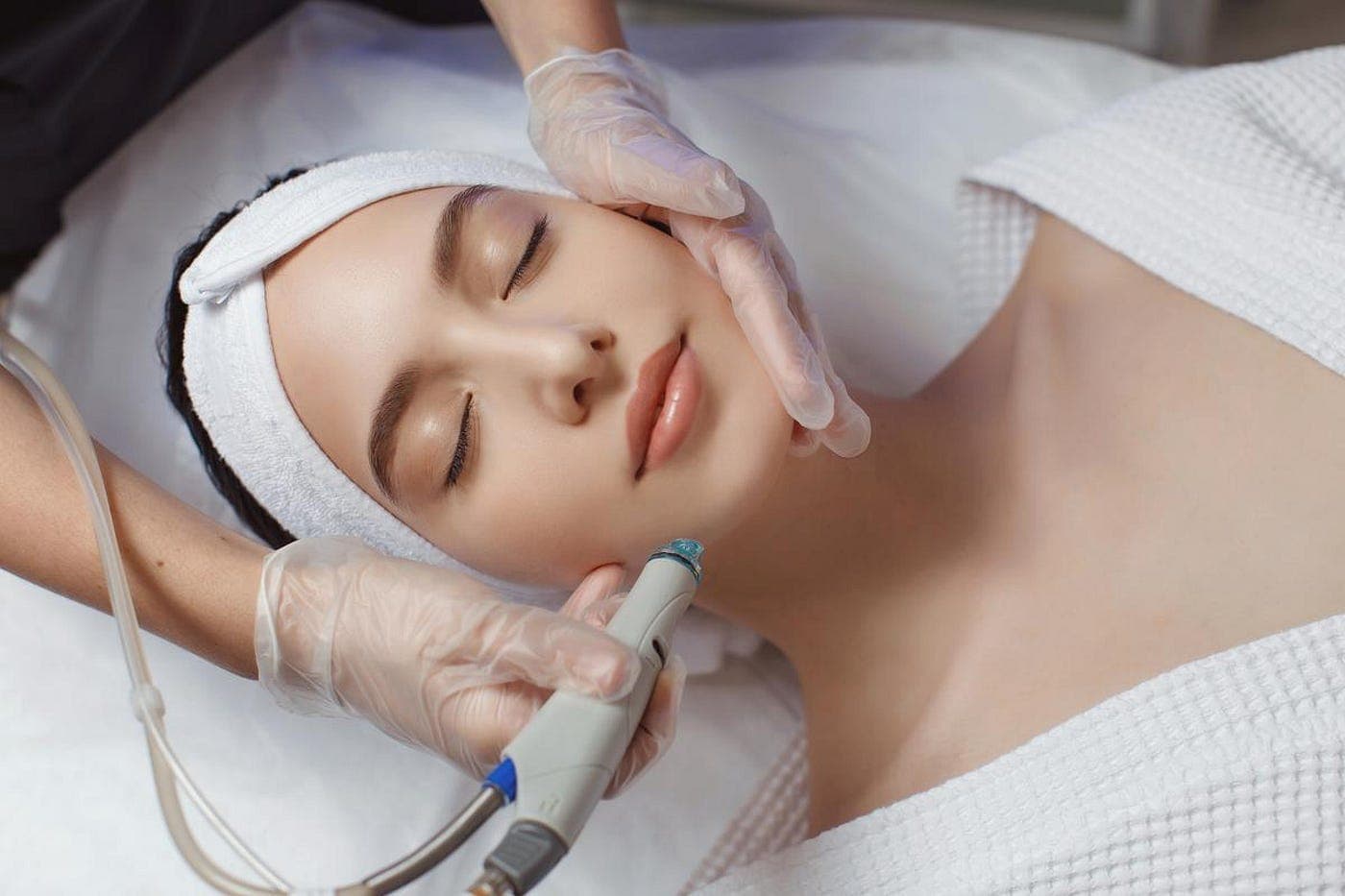
That premise is not marketing. It is the same reasoning behind a Hydra Medi Facial, where exfoliating first is what lets the actives reach past a dull surface layer instead of sitting on top of it, and oxygenation at the end is what drives them in. Sequence over strength.
Does glass skin mean fair skin?
No, and this is the part worth being firm about.
In Korea the phrase describes light reflection. In India it is frequently repackaged alongside fairness language, and the two get treated as one product. They are not related. A deep skin tone with an even, well-hydrated surface reflects light exactly as glass skin describes; a pale complexion with rough, dehydrated skin does not.
We say the same about BB Glow, which people often assume is a lightening treatment: it is not. It places a tinted serum into the upper layers of the skin so tone reads more evenly for a few weeks at a time, and the effect fades as skin renews itself. It does not bleach and it does not change your natural colour.
If a clinic sells you glass skin and delivers a lightening pitch, they have changed the subject.
Is the trend supported by anything, or is it filters?
Both, in different proportions than the feed suggests.
The routine is sound and unglamorous. Cleansing properly, exfoliating gently and regularly, hydrating in thin layers, protecting the barrier and wearing sunscreen daily is a defensible skincare plan in any country. Nothing in it is exotic and nothing in it is new.
What is not real is the finish in the videos. Skin in those clips is lit, filtered and often retouched, and no facial closes a pore. Pores are structural. A cleared, well-hydrated pore looks smaller because it is not packed with build-up and the surface around it is even — that is a genuine change and it is not the same as the pore disappearing. Anyone promising flawless skin from a facial is overselling it, and setting you up to feel a real result was a failure.
Does the routine suit Indian skin?
The philosophy suits it unusually well.
Deeper skin tends to respond to inflammation by producing pigment, so the mark left behind by an over-aggressive treatment can outlast the concern it was meant to address. A method built on gentleness and repetition rather than intensity is therefore a sensible fit, not merely a fashionable one. It is one of the few global skincare trends whose central instinct works in our favour.
The caution is about what you layer, not how gently. Long routines borrowed step-for-step from Korean influencers often include several occlusive products designed for cold, dry winters. On oily or combination skin in a warm climate, stacking those can leave you congested — which is the opposite of the surface you were aiming for.
Does it suit Bangalore weather?
Partly, and the adjustments are small.
Seoul's winter is cold and dry, and a heavy layered routine makes sense against it. Bangalore's default is mild and often humid, with a dusty commute layered over the top. Your skin is losing less water to the weather and picking up more grime from the road, so the balance shifts: less occlusion, more thorough cleansing, and honest attention to congestion.
Air conditioning complicates it in the other direction. Eight or nine hours in a cooled office is genuinely drying, which is why plenty of people here have skin that is both oily by evening and dehydrated underneath. Layered hydration suits that combination better than a single rich cream does.
Sunscreen is the one step nobody here should treat as optional. Bangalore's UV does not take a season off, and freshly exfoliated skin burns more easily for several days after any exfoliating treatment.
Where does a clinic fit into a glass-skin routine?
At the clearing and hydrating step, which is the part home care does least well.
A monthly Hydra Medi Facial cleanses and infuses actives, exfoliates dead cells, and oxygenates so those actives absorb. Congestion is drawn out by suction rather than squeezed. Most patients see refined texture and a more even, radiant tone from the first session, holding several weeks with good home care. It suits all skin types, including sensitive skin. We also run a longer, fourteen-step layered version of the same protocol for anyone who wants the extended Korean sequence — worth asking about at consultation.
If your real complaint is texture from old acne marks rather than surface dullness, a chemical peel at a depth chosen for your skin type is the better first move, with a patch test before any full treatment.
None of it is permanent. This is maintenance, and the results come from regularity rather than from a single spectacular session.
Trying it sensibly
A Hydra Medi Facial starts from ₹2,999 per treatment, with a complimentary chemical peel included in every session — a ₹1,999 treatment on its own. The consultation is ₹500, waived against treatment.
Bring the routine you have actually been following, including anything you added after watching a video. Half of a good consultation is working out which of your fourteen steps are doing something and which are just there.
Book a consultation and get a version of the routine built for your skin and this climate rather than for someone else's winter.